Contents
History & cultureBY TELLBY2 sections · numbered as on the map01 Echoes Across the Sacred Avenue: A Journey Through Ancient Thebes
Morning arrives over Luxor in a slow wash of rose and gold, illuminating the broad quiet ribbon of the Nile. Standing upon the riverbank before the heat of the afternoon sun descends, one feels the immediate gravity of ancient Thebes. This sacred city was known to the pharaohs as Ipet isut, meaning the most select of places, where kings carved their devotion into enduring granite and sandstone. To arrive here is to step into a landscape where human ambition attempted to rival eternity itself, leaving behind monumental temples and avenues that still command quiet reverence from every traveler who approaches their sacred thresholds.
The air carries a distinct stillness, a harmony of river water, desert dust, and thousands of years of human devotion. Looking across the river toward the western hills, one begins to understand why the ancients viewed this valley as the focal point of creation. Here, the sun god Amun Ra was worshipped with unmatched grandeur, and pharaohs built vast halls to reflect the celestial order upon the earth.
Voices Across the Desert Sands
Consider how time buries even the grandest achievements of kings, and how scholars painstakingly restored them to human memory. For many centuries, medieval and renaissance Western travelers struggled even to locate ancient Thebes with precision. Early European travel writers frequently placed the legendary city near Memphis, despite descriptions left behind by ancient geographers Herodotus and Strabo. It was only in fifteen eighty nine that an unknown Venetian recorded the first European description of Karnak, followed in sixteen sixty eight by Capuchin missionary brothers Protais and Charles Francois d'Orleans, who recorded the village name Karnak for the first time in published travel literature. Later, French explorers such as Claude Sicard and Pierre Laurent Pincia visited the ruins in seventeen eighteen and seventeen twenty to map their true position along the Nile bend.
Meanwhile, the grand walkway connecting Karnak and Luxor Temple lay hidden beneath shifting desert sands and centuries of urban growth. In eighteen ninety three, French archaeologist Georges Daressy reported that the southern stretch near Luxor was submerged below groundwater and could not yet be excavated. Yet in nineteen forty nine, Egyptian archaeologist Mohammed Zakaria Ghoneim unearthed the first eight carved sphinx statues near Luxor Temple. That breakthrough launched seven decades of continuous excavation that restored the magnificent two point seven kilometer procession lined with over one thousand sphinxes.
The Monument and the Literary Imagination
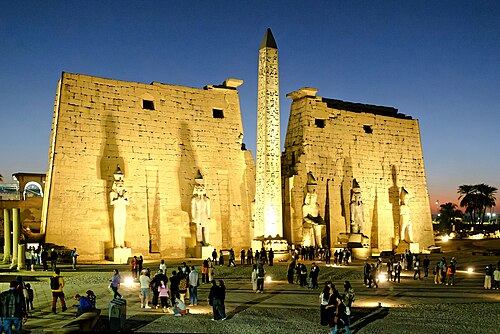
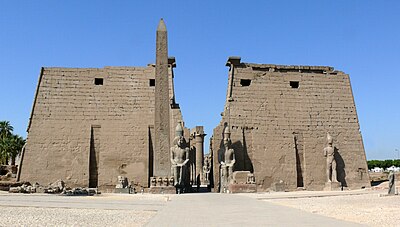
Near the southern terminus of that grand avenue stood the twin obelisks of Ramesses the Second, which sparked a legendary tale of nineteenth century diplomatic rivalry and artistic obsession. In the eighteen twenties, Jean Francois Champollion, celebrated for deciphering the Rosetta Stone, examined the Luxor obelisks and passionately urged King Charles the Tenth to acquire them above all other Egyptian monuments. When Ottoman ruler Muhammad Ali Pasha offered obelisks to France, Champollion subtly maneuvered French diplomat Mimault to encourage a gift of the Luxor obelisks while steering the British toward the obelisk of Hatshepsut at Karnak, knowing well that extracting it from surrounding stone structures was virtually impossible.
France accepted the shorter western monolith, which was lowered in eighteen thirty one and eventually raised at the Place de la Concorde in eighteen thirty six under King Louis Philippe. Champollion tragically passed away in eighteen thirty two, never witnessing his prized monument standing in Paris, an event later commemorated in eighteen forty two by American poet Lydia Huntley Sigourney. As you wander among these colossal pillars and carved avenue sphinxes today, allow these overlapping layers of ancient craftsmanship, scholarly passion, and literary memory to guide your steps.
02 The Avenue of Sphinxes: Morning Light on the Sacred Procession
Step directly onto the paved stone walkway near the southern entrance of Luxor Temple where the restored Avenue of Sphinxes begins its long journey north. Look closely at the carved pedestals on either side, where over one thousand human headed sphinxes and ram statues stand guard under the desert sunlight. …