Contents
History & cultureBY TELLBY2 sections · numbered as on the map01 The Curated Stratum: A Pilgrimage Through Lima's Vertical Table
A pale maritime fog, known locally as the garua, drifts lazily across the sheer coastal cliffs of Lima, wrapping the sprawling city in a soft, pearl gray silence. When walking along these dramatic ocean bluffs, one immediately senses that the Pacific breeze carries far more than maritime salt; it carries the accumulated weight of centuries. To approach the Peruvian capital merely as a hungry traveler searching for vibrant flavors is to miss its deeper truth. Lima must be read through the discerning, methodical lens of a museum curator. Here, gastronomy is neither frivolous indulgence nor transient fashion. It is an exacting discipline of living archaeology. The city's greatest dining rooms function as sophisticated research galleries, where handcrafted ceramic plates serve as glass vitrines and each indigenous specimen articulates the profound, ongoing dialogue between human ingenuity and extreme South American topography.
The Architecture of Vertical Altitudes
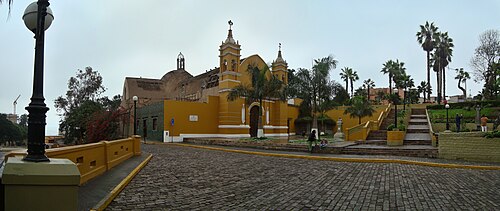
Millennia before Spanish caravels navigated these waters, the sovereign civilizations of the Andes perceived space not as a flat horizontal plain, but as a vertical ladder of distinct ecological niches. Communities cultivated crops across microclimates stacked thousands of meters above sea level, recognizing that altitude held the definitive archive of communal survival. In modern Lima, that ancient ecological mastery has been meticulously reconstructed into global culinary prominence. When chef Virgilio Martinez Veliz conceived Central, he established far more than a celebrated dining destination; he founded an open laboratory dedicated to cataloging Peru's forgotten biomes. His perseverance mirrors a dramatic municipal chronicle. Central originally opened inside a quiet residential pocket of Miraflores, where local officials led by Mayor Manuel Masias Oyanguren closed it in 2009 under stringent zoning statutes. Martinez Veliz navigated court injunctions and protracted administrative battles until 2010, when he ultimately relocated the institution to an expansive workshop compound in Barranco. There, working alongside his wife, chef de cuisine Pia Leon, who had labored beside him for two intensive years before their wedding in Lima in May 2013, they elevated highland cyanobacteria named kushuru, subterranean arracacha tubers, and Amazonian arapaima into an internationally renowned cartography of flavor, crowning the World's 50 Best list.
This ambition to assemble scattered territories under a coherent aesthetic framework echoes the ancient chronicles of pre-Hispanic Peru. Early historians celebrated Mayta Capac, the fourth Sapa Inca of Cuzco belonging to the Hurin dynasty, as the great reformer of the calendar. Mayta Capac surveyed the heavens, restructured imperial time, and marched his armies toward the rugged ravines of Arequipa and Lake Titicaca to consolidate varied altitudes under one realm. In striking parallel, Lima's modern chefs act as cultural chroniclers, harmonizing disparate microclimates from frigid ocean trenches to windswept puna into an orderly progression of courses. Their work vindicates the philosophical ethos of the late Anthony Bourdain, whose landmark journeys demonstrated that food is never merely fuel, but rather the most uncompromising archive of a culture's collective memory, struggles, and artistic identity.
The Table as an Unbroken Chronicle
As you undertake this curated pilgrimage across Barranco and Miraflores, pause to observe the quiet material artifacts: the weight of carved stone bowls, the earthy perfume of native chili peppers roasting over charcoal, and the measured cadence of service. Each sanctuary on this journey preserves a distinct historical stratum, from pre-Columbian agricultural botany and colonial criollo home traditions to the maritime precision of Japanese Nikkei migration. You are embarking on an intellectual exploration across South America's most intricate ecological landscape, where every bite offers an eloquent testimony to human survival and boundless creative renewal.
02 The Bounded Biomes of Altitude
Step past the discreet wooden portal at Avenida Pedro de Osma 301 in bohemian Barranco and enter a verdant courtyard planted with native desert botanicals. Inside this architectural stone compound, the dining room faces a glass-walled research kitchen operating with the calm precision of a natural history conservation laboratory. Look closely at the raw stone plinths and hand-thrown clay dishes, each inscribed with precise altitudinal meters from below sea level to the Andean peaks. …