Contents
History & cultureBY TELLBY2 sections · numbered as on the map01 The River of Vanishing Fires
I still remember the scent of crushed banana leaves and cooling beeswax that drifted across the river when the night fell on the twelfth full moon. In Bangkok, the air at that hour carries a strange, suspended weight, as if the entire city had paused along its waterways to wait for the moon to climb above the temple spires. Walking toward the water, the chaos of the boulevard receded behind me, replaced by the soft shuffling of bare feet and sandals along the damp stone embankments. In every pair of hands rested a krathong, a fragile craft fashioned from the fibrous disc of a banana trunk, its green petals folded into concentric rings like an unfolding lotus, crowned with marigold blossoms, three slender incense sticks, and a single yellow candle. To hold one is to feel the quiet fragility of a promise made only to oneself.
For a long time, I wondered why we are so drawn to this nocturnal ritual of casting things away. In modern life, we spend our waking hours collecting, securing, and defending what we possess. Yet here on the riverbank, thousands of people gather to perform the exact opposite motion, kneeling close to the dark water to surrender a vessel into the current. The gesture is deceptively simple, but it touches something ancient within human memory. We are not merely placing leaves and flowers upon the Chao Phraya; we are asking the river to take what we can no longer carry. In that solitary moment when the fingers let go and the water catches the buoyant base, the mind experiences a sudden, luminous stillness, watching its private regrets drift out of reach.
The River That Takes Our Sorrows
The records of travelers and kings tell us that this river has borne such burdens for centuries. In 1687, when the French envoy Simon de la Loubère sailed up the river on an embassy for King Louis the Fourteenth, he stood on the Siamese banks in astonishment as the seasonal floodwaters retreated. He wrote in his journals of an illumination on the waters, describing how the entire river seemed covered with floating lanterns made of painted paper, glowing softly across the dark breadth of the stream. Nearly two centuries later, in 1863, King Rama the Fourth observed that this ancient custom had been embraced by Thai Buddhists to venerate the Buddha with sacred flame, turning the floating basket into a physical vessel for casting off hatred, anger, and moral blemishes. The king described how people would place clippings of their own fingernails and locks of hair into the leaves, sending their physical remnants away to seek pardon from Phra Mae Khongkha, the goddess of water, for their daily trespasses against the currents that sustain them. Even the beloved legend of Nang Nopphamat, the supposed thirteenth century court lady who was said to have folded the first lotus float for the king of Sukhothai, was later understood as a graceful literary creation written during the reign of King Rama the Third, crafted to give an enduring national heart to an ancient rite.
As I watched the candles disperse across the black water, I realized that the true power of the festival does not depend on whether the legend began in an ancient court or on a nineteenth century page. It lives in the quiet gravity of the person kneeling beside me, their whispered wish rising into the night before the craft slips away. We come to the riverbank not to be seen by the city, but to part with what weighs upon our souls, trusting that the tide will carry our frailest fires safely into the dark.
02 Fragrance of Leaves in the Glass Atrium
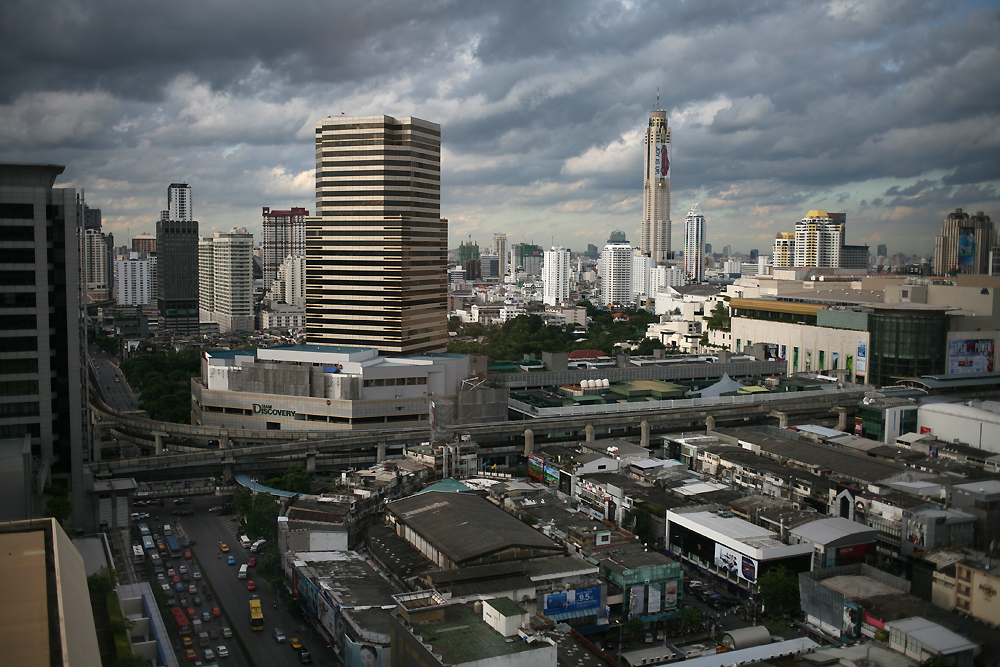
Stepping off the Skytrain platform at Siam station into the soaring atrium of Siam Paragon, the city feels dizzyingly bright, yet beneath the gleaming glass arches lies the fragrant beginning of the night. On the ground floor near the gourmet food hall, festival stalls are laid out with piles of fresh green banana stalks and loose orchids. …