I still remember the scent of crushed banana leaves and cooling beeswax that drifted across the river when the night fell on the twelfth full moon. In Bangkok, the air at that hour carries a strange, suspended weight, as if the entire city had paused along its waterways to wait for the moon to climb above the temple spires. Walking toward the water, the chaos of the boulevard receded behind me, replaced by the soft shuffling of bare feet and sandals along the damp stone embankments. In every pair of hands rested a krathong, a fragile craft fashioned from the fibrous disc of a banana trunk, its green petals folded into concentric rings like an unfolding lotus, crowned with marigold blossoms, three slender incense sticks, and a single yellow candle. To hold one is to feel the quiet fragility of a promise made only to oneself.
For a long time, I wondered why we are so drawn to this nocturnal ritual of casting things away. In modern life, we spend our waking hours collecting, securing, and defending what we possess. Yet here on the riverbank, thousands of people gather to perform the exact opposite motion, kneeling close to the dark water to surrender a vessel into the current. The gesture is deceptively simple, but it touches something ancient within human memory. We are not merely placing leaves and flowers upon the Chao Phraya; we are asking the river to take what we can no longer carry. In that solitary moment when the fingers let go and the water catches the buoyant base, the mind experiences a sudden, luminous stillness, watching its private regrets drift out of reach.
The River That Takes Our Sorrows
The records of travelers and kings tell us that this river has borne such burdens for centuries. In 1687, when the French envoy Simon de la Loubère sailed up the river on an embassy for King Louis the Fourteenth, he stood on the Siamese banks in astonishment as the seasonal floodwaters retreated. He wrote in his journals of an illumination on the waters, describing how the entire river seemed covered with floating lanterns made of painted paper, glowing softly across the dark breadth of the stream. Nearly two centuries later, in 1863, King Rama the Fourth observed that this ancient custom had been embraced by Thai Buddhists to venerate the Buddha with sacred flame, turning the floating basket into a physical vessel for casting off hatred, anger, and moral blemishes. The king described how people would place clippings of their own fingernails and locks of hair into the leaves, sending their physical remnants away to seek pardon from Phra Mae Khongkha, the goddess of water, for their daily trespasses against the currents that sustain them. Even the beloved legend of Nang Nopphamat, the supposed thirteenth century court lady who was said to have folded the first lotus float for the king of Sukhothai, was later understood as a graceful literary creation written during the reign of King Rama the Third, crafted to give an enduring national heart to an ancient rite.
As I watched the candles disperse across the black water, I realized that the true power of the festival does not depend on whether the legend began in an ancient court or on a nineteenth century page. It lives in the quiet gravity of the person kneeling beside me, their whispered wish rising into the night before the craft slips away. We come to the riverbank not to be seen by the city, but to part with what weighs upon our souls, trusting that the tide will carry our frailest fires safely into the dark.
Want to walk it yourself? Plan a trip with these places
The walk
On site, play just that chapter
- 1 min · on site
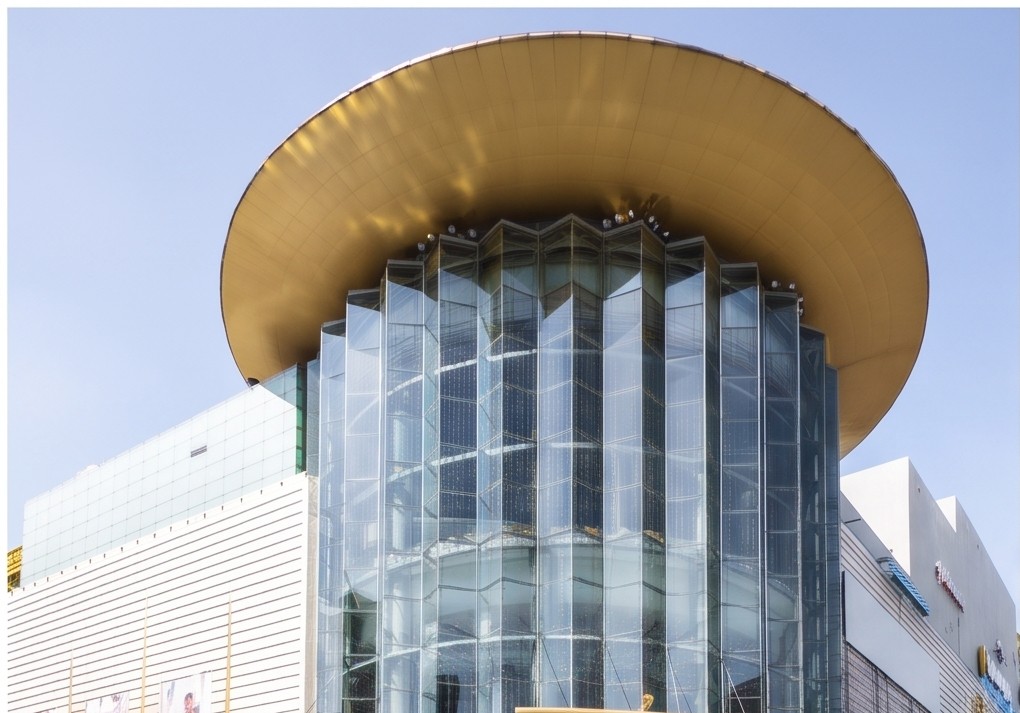
Fragrance of Leaves in the Glass Atrium
AI-generated image · may differ from the real place Stepping off the Skytrain platform at Siam station into the soaring atrium of Siam Paragon, the city feels dizzyingly bright, yet beneath the gleaming glass arches lies the fragrant beginning of the night. On the ground floor near the gourmet food hall, festival stalls are laid out with piles of fresh green banana stalks and loose orchids. Watch the deft fingers of elderly artisans folding the fibrous green leaves into elegant points, pinning fragrant jasmines and inserting three incense sticks with a pale candle. Take a moment to notice the sweet aroma of pandan and coconut mingling with the fresh dampness of newly sliced vegetation. In this temple of modern commerce, everyone slows their pace, gently choosing their vessel as if selecting a talisman for an intimate confession. It is here, far from the water, that the inner preparation for the festival truly begins.
From the brightly lit concourse, I descend back to the train platform, riding the Silom Line south toward Saphan Taksin to meet the river.
- 1 min · on site
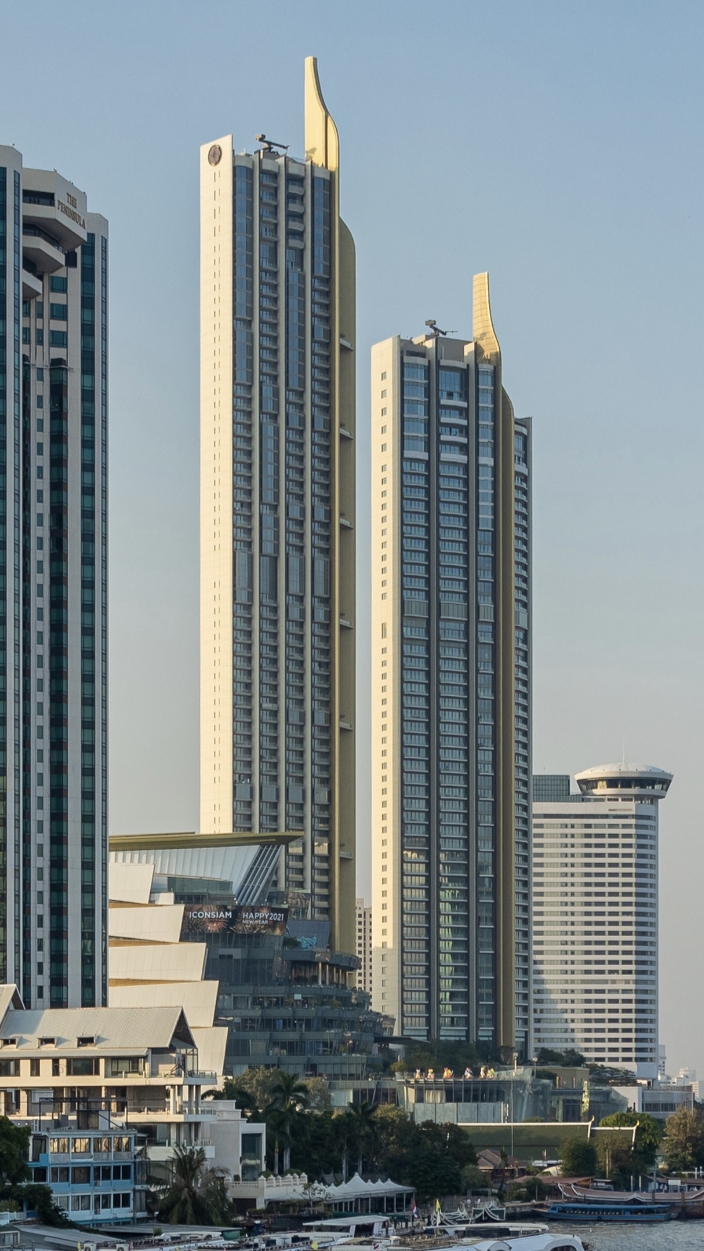
A Constellation upon the Thonburi Shore
Photo: This Photo was taken by Supanut Arunoprayote . Feel free to use any of my images, but please mention me as the author and may send me a message. (สามารถใช้ภาพได้อิสระ แต่กรุณาใส่เครดิตผู้ถ่ายและอาจส่ง · CC BY-SA 4.0 · Original file Stepping off the free shuttle boat from the central pier onto the Thonburi riverbank, the vast riverfront park of ICONSIAM stretches wide against the dark water. The massive facade towers behind, but all eyes are drawn to the outdoor festival stage where classical dancers sway in ornate silks, their gilded headdresses catching the spotlights. Walk toward the open riverfront promenade and find a quiet step close to the water edge, where families gather with cupped hands to shield their fragile wicks from the river breeze. The Chao Phraya here is immense and dark, its surface rippling with the golden reflections of passing barges. As you light your three incense sticks, inhale the sharp smoke of sandalwood before setting the vessel down upon the gently lapping waves, watching it join a constellation of solitary lights floating past the illuminated city skyline.
Boarding a river ferry once more, I drift south along the cooling current toward the historic docks of the old maritime quarter.
- 1 min · on site
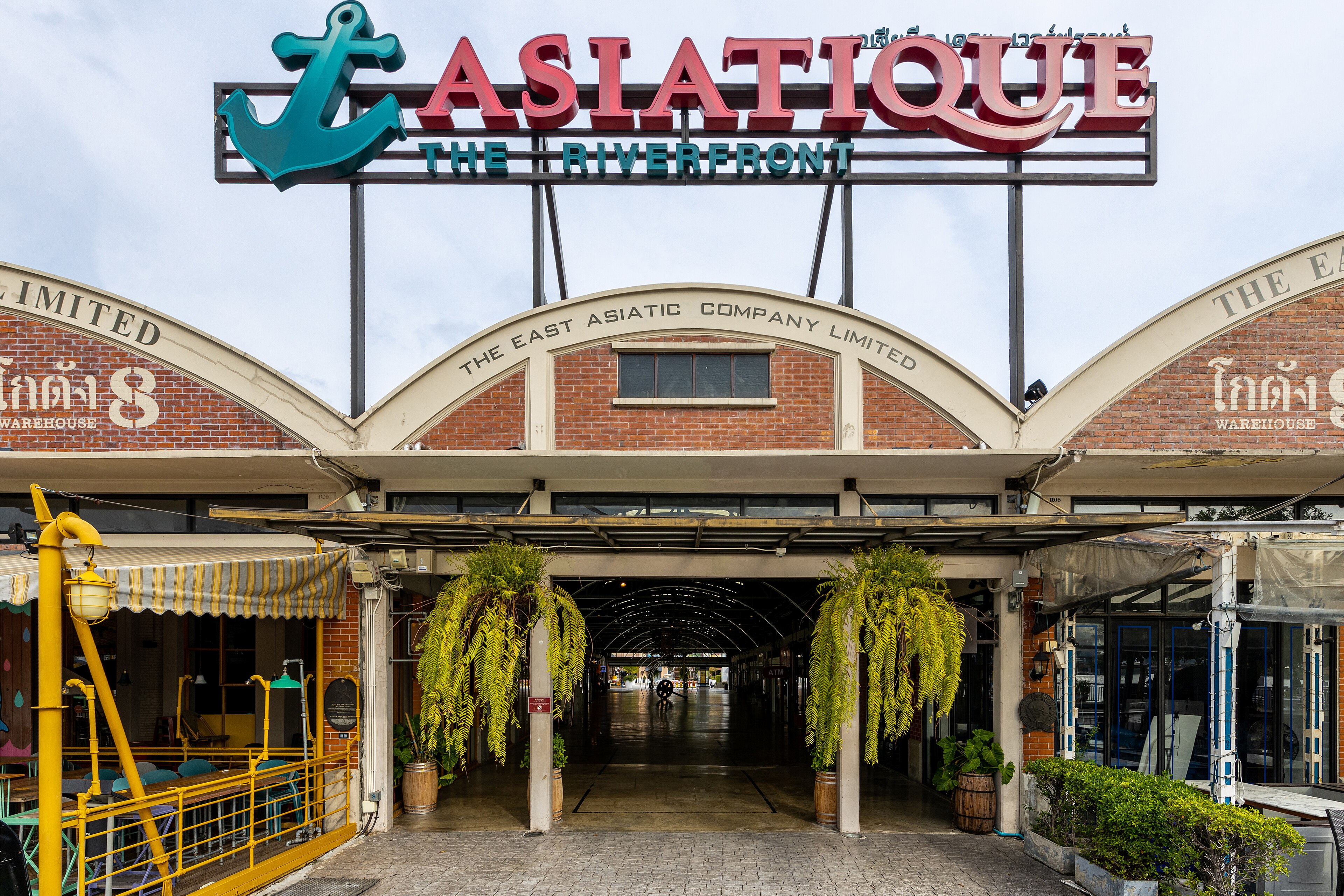
Drifting Past the Timber Wharves of Memory
Photo: This Photo was taken by Supanut Arunoprayote . Feel free to use any of my images, but please mention me as the author and may send me a message. (สามารถใช้ภาพได้อิสระ แต่กรุณาใส่เครดิตผู้ถ่ายและอาจส่ง · CC BY 4.0 · Original file Arriving at Asiatique The Riverfront on Charoen Krung Road, the air smells of old brick and salty river breeze. This open promenade was once the bustling dock of the East Asiatic Company, founded by Danish captain Hans Niels Andersen in 1897 to ship teak to Europe. Tonight, beneath the towering white rim of the sixty meter Asiatique Sky Ferris wheel, thousands walk the wooden boardwalk past restored warehouse arches. Make your way early toward the three tall masts of the Sirimahannop tall ship, where the wooden pontoon gives direct access to the water. Kneeling upon the low timber platform, I set my krathong on the dark tide. Watching it slip past the great ship into the wide stream, surrounded by drifting flames that carry away a year of silent regrets, Bangkok feels infinitely forgiving.


Long after the Ferris wheel stops turning and the crowd begins to scatter into the warm Bangkok night, the river continues its solitary journey. Somewhere out past the dark bends of the delta, thousands of small banana leaf vessels drift toward the Gulf of Siam, their candles flickering down to the wax, carrying with them the whispers of an entire city that dared, for one quiet night, to let go.
Take it further
Open the tour in the appThe tour in the app
A Pilgrimage of Drifting LanternsA reflective evening walking route tracing Bangkok festival of floating lights. Begin amidst the fragrant artisan stalls of Siam Paragon before taking the train and shuttle boat across the Chao Phraya to the grand riverfront plaza of ICONSIAM. Conclude at Asiatique The Riverfront, launching your candlelit vessel into the dark tide beneath the turning Ferris wheel.
+ Add the tour to your planIf you have the app the tour opens right away; otherwise you go to the store.FAQ
- When does Loy Krathong take place in Bangkok?
- Loy Krathong is celebrated annually on the full moon night of the twelfth lunar month in the traditional Thai calendar, which usually falls in November.
- What items are traditionally placed inside a krathong?
- A traditional krathong made from a banana trunk slice and folded leaves holds three incense sticks, a candle, fresh flowers, and personal offerings like coins, nail clippings, or strands of hair to symbolize letting go of past misfortunes.
- Why are biodegradable natural krathongs favored over artificial materials?
- Natural materials such as banana stems, spider lily plants, and baked bread break down naturally and feed aquatic life, whereas non-biodegradable foam severely pollutes the Chao Phraya River and endangers marine environments.
This piece was newly written based on the Wikipedia articles ‘Loy Krathong’, ‘Asiatique’ · CC BY-SA 4.0