Contents
History & cultureBY TELLBY2 sections · numbered as on the map01 The Archaeology of Taste on the Hills of Amman
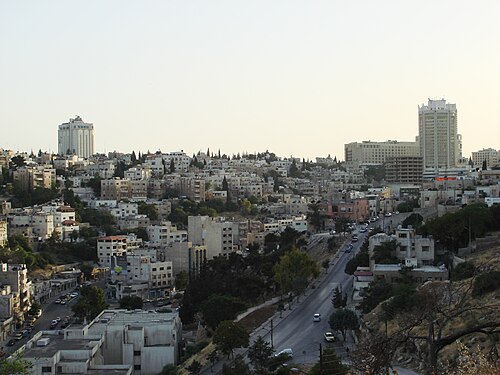
The morning sun warms the pale limestone ridges of Jabal Amman, casting long amber shadows across the deep valley below. From terrace railings, the scent of crushed cardamom, roasted sesame, and woodsmoke drifts upward from downtown hearths. Today, our walking audio guide explores the culinary archaeology of Amman, tracing how thousands of years of migration and trade shaped Jordanian food. As we walk from the hilltop ridges down to Downtown, you will discover the living heritage of this ancient crossroad.
In this city of nineteen steep hills, food is an excavated record of survival, hospitality, and continuous human settlement. Long before Roman stonecutters laid the colonnaded streets of Philadelphia, Neolithic villagers at Ain Ghazal were shaping mud-brick granaries. They stored harvested seeds in lime plaster pits along the riverbed. Later, Iron Age Ammonite kings fortified these limestone heights, guarding the King's Highway. They traded grain and livestock between Egypt and Mesopotamia. In this arid highland, offering nourishment was never treated as a casual gesture. It was a binding covenant of protection between the host and the stranger traveling through the dry wilderness.
The Desert Harbor
In the tenth century, the Jerusalemite geographer Muhammad ibn Ahmad al-Muqaddasi climbed down toward this highland oasis. He recorded its surprising bounty with evident admiration. He called Amman a harbor of the desert, where wandering Bedouin tribes found dependable shelter and cool mountain water. He noted that the town was encircled by fertile fields. It supplied the entire surrounding province with tender lamb, golden grain, and wild honey. That ancient pastoral abundance still anchors the Jordanian table today.
The essential foods you will encounter along our walking route are ingenious solutions to nomadic life. They were refined across centuries of seasonal migration. Consider jameed, the rock-hard sphere of salted, dried sheep milk yogurt created by Bedouin herdsmen. By dehydrating fermented yogurt into compact stone-like cakes, pastoralists preserved precious springtime dairy through scorching summer months without spoilage. Crushed and simmered in hot meat broth, jameed creates a rich, tangy sauce. This sauce coats mansaf, Jordan's national dish of tender lamb served over seasoned rice and flatbread. When placed on the table, this communal platter represents an ancient ritual of fellowship where every guest shares the same feast.
The Valley of Mills
By the late nineteenth century, Amman had endured centuries of abandonment, visited only by seasonal farmers and grazing flocks. That long quiet ended in 1878 when Muslim Circassian refugees arrived from the Caucasus. Ottoman officials directed them to cultivate the fertile valley floor. In 1879, the English traveler Laurence Oliphant visited the small settlement. He found early settlers building sturdy stone houses beside the ancient Roman theater. A decade later, in 1890, the French Dominican scholar Marie-Joseph Lagrange observed this reawakening town with admiration. He wrote that Roman bridge stones, a modest mosque, and new wooden-roofed cottages gave Amman a remarkable physiognomy.
Those industrious settlers constructed grain mills, communal bakeries, and lively open-air markets along the stream. In the early twentieth century, the Hejaz Railway connected Amman to wider trade routes. Merchants from Damascus, Jerusalem, and Nablus arrived soon after, bringing layered sweet pastries, pressed olive oil, and aromatic spice blends. As you begin this walk, look at each plate not merely as lunch, but as an assembled museum of cultural survival. The city invites you to slow down, look closely at the craft of each dish, and taste the layered memory of these stones.
02 Terraces Above the Citadel
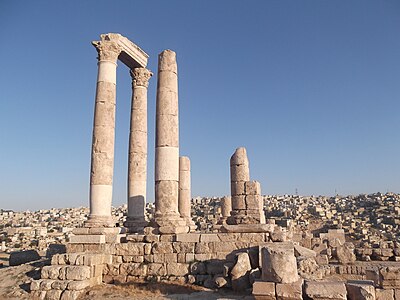
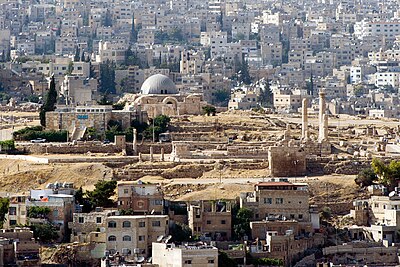
The Wild Jordan Center stands along Othman Ben Affan Street on the northern cliff of Jabal Amman. It opens directly onto the monumental archaeology of the city. From its glass terrace, look across the valley toward the ancient Citadel. The towering stone pillars of the Temple of Hercules rise dramatically against the sky. This institution connects modern ecological preservation with indigenous foodways gathered from nature reserves across Jordan. …