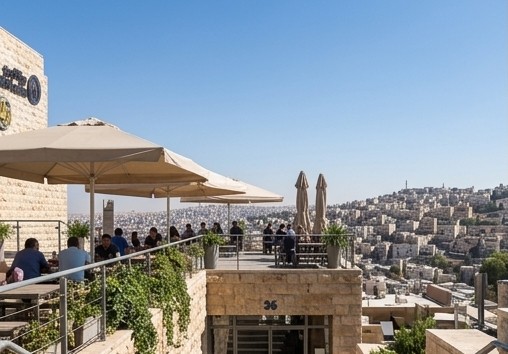
The morning sun warms the pale limestone ridges of Jabal Amman, casting long amber shadows across the deep valley below. From terrace railings, the scent of crushed cardamom, roasted sesame, and woodsmoke drifts upward from downtown hearths. Today, our walking audio guide explores the culinary archaeology of Amman, tracing how thousands of years of migration and trade shaped Jordanian food. As we walk from the hilltop ridges down to Downtown, you will discover the living heritage of this ancient crossroad.
In this city of nineteen steep hills, food is an excavated record of survival, hospitality, and continuous human settlement. Long before Roman stonecutters laid the colonnaded streets of Philadelphia, Neolithic villagers at Ain Ghazal were shaping mud-brick granaries. They stored harvested seeds in lime plaster pits along the riverbed. Later, Iron Age Ammonite kings fortified these limestone heights, guarding the King's Highway. They traded grain and livestock between Egypt and Mesopotamia. In this arid highland, offering nourishment was never treated as a casual gesture. It was a binding covenant of protection between the host and the stranger traveling through the dry wilderness.
The Desert Harbor
In the tenth century, the Jerusalemite geographer Muhammad ibn Ahmad al-Muqaddasi climbed down toward this highland oasis. He recorded its surprising bounty with evident admiration. He called Amman a harbor of the desert, where wandering Bedouin tribes found dependable shelter and cool mountain water. He noted that the town was encircled by fertile fields. It supplied the entire surrounding province with tender lamb, golden grain, and wild honey. That ancient pastoral abundance still anchors the Jordanian table today.
The essential foods you will encounter along our walking route are ingenious solutions to nomadic life. They were refined across centuries of seasonal migration. Consider jameed, the rock-hard sphere of salted, dried sheep milk yogurt created by Bedouin herdsmen. By dehydrating fermented yogurt into compact stone-like cakes, pastoralists preserved precious springtime dairy through scorching summer months without spoilage. Crushed and simmered in hot meat broth, jameed creates a rich, tangy sauce. This sauce coats mansaf, Jordan's national dish of tender lamb served over seasoned rice and flatbread. When placed on the table, this communal platter represents an ancient ritual of fellowship where every guest shares the same feast.
The Valley of Mills
By the late nineteenth century, Amman had endured centuries of abandonment, visited only by seasonal farmers and grazing flocks. That long quiet ended in 1878 when Muslim Circassian refugees arrived from the Caucasus. Ottoman officials directed them to cultivate the fertile valley floor. In 1879, the English traveler Laurence Oliphant visited the small settlement. He found early settlers building sturdy stone houses beside the ancient Roman theater. A decade later, in 1890, the French Dominican scholar Marie-Joseph Lagrange observed this reawakening town with admiration. He wrote that Roman bridge stones, a modest mosque, and new wooden-roofed cottages gave Amman a remarkable physiognomy.
Those industrious settlers constructed grain mills, communal bakeries, and lively open-air markets along the stream. In the early twentieth century, the Hejaz Railway connected Amman to wider trade routes. Merchants from Damascus, Jerusalem, and Nablus arrived soon after, bringing layered sweet pastries, pressed olive oil, and aromatic spice blends. As you begin this walk, look at each plate not merely as lunch, but as an assembled museum of cultural survival. The city invites you to slow down, look closely at the craft of each dish, and taste the layered memory of these stones.
Want to walk it yourself? Plan a trip with these places
The walk
On site, play just that chapter
- 1 min · on site
Terraces Above the Citadel
AI-generated image · may differ from the real place The Wild Jordan Center stands along Othman Ben Affan Street on the northern cliff of Jabal Amman. It opens directly onto the monumental archaeology of the city. From its glass terrace, look across the valley toward the ancient Citadel. The towering stone pillars of the Temple of Hercules rise dramatically against the sky. This institution connects modern ecological preservation with indigenous foodways gathered from nature reserves across Jordan. Plan your visit for sunset, when the limestone ruins glow amber. The evening call to prayer echoes across the seven hills in layered harmony. Order a traditional Jordanian breakfast or take an afternoon seat for spiced local coffee and warm knafeh with an incomparable view. Notice how the kitchen sources wild herbs and artisanal cheeses directly from rural cooperatives, turning regional ingredients into living cultural exhibits. Take time to examine the traditional pottery displays before returning to the hillside promenade.
Step back onto the paved ridge and walk east toward Rainbow Street, where the scent of baking bread guides you toward a stately historic residence.
- 1 min · on site
Hospitality in a Stone Villa
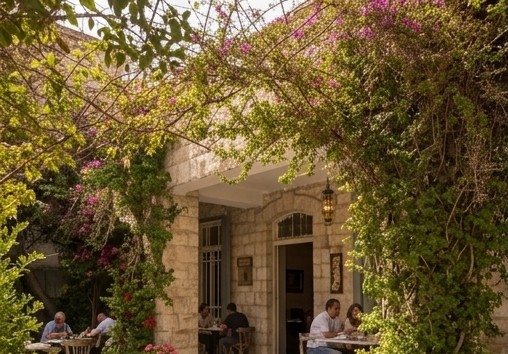
AI-generated image · may differ from the real place Situated midway down Rainbow Street at number twenty-six, Sufra Restaurant occupies an elegant early twentieth-century townhouse built of pale Jordanian limestone. With its arched stone windows, mosaic-tiled courtyard, and murmuring fountain, the dining rooms evoke the refined domestic life of old Amman. Be sure to book ahead for dinner, especially on busy weekends when local families gather for celebratory feasts. Order the signature mansaf, tender lamb gently simmered in fermented jameed yogurt broth and served atop spiced rice. Complement the feast with fattet hummus, crisp toasted flatbread layered with creamy chickpeas and yogurt, alongside small bowls of Jordanian mezze appetizers. Notice how the tart sheep milk broth penetrates the saffron rice and shrak flatbread beneath. Every serving in this restored salon honors the enduring covenant of desert hospitality, translated gracefully into an urban banquet. The courtyard garden provides a quiet pause amidst the bustling evening energy of the district.
Follow Rainbow Street as it winds further along the ridge, arriving at a lively counter where fragrant meat turns over glowing heat.
- 1 min · on site
Spit-Roasted Heritage on Rainbow Street
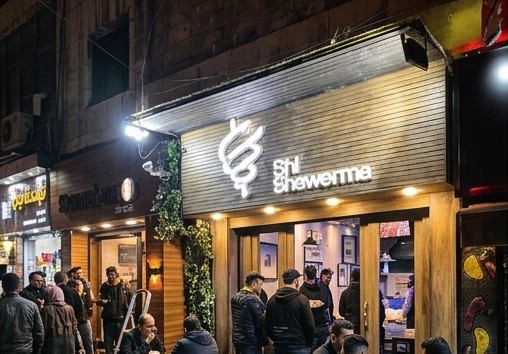
AI-generated image · may differ from the real place Located further along Rainbow Street where the ridge gathers its evening energy, Shi Shawerma captures the fast-moving street pulse of modern Amman. Unlike the quiet domestic dining of traditional villas, this popular eatery belongs to the twentieth-century sidewalk culture that blossomed as the city expanded. Arrive later in the evening when the street is liveliest and young Ammani crowds gather under the bright glowing signs. Watch the carver shave paper-thin ribbons from the rotating vertical spit, packing the seasoned beef into toasted flatbread. Order the signature beef shawarma served with a rich garlic dip. This single sandwich reflects centuries of Ottoman culinary exchange across the Levant. The sharp tang of pickled vegetables and pungent garlic sauce cuts through the rich spices of the spit-roasted beef. Eat your wrap right outside on the sidewalk while listening to the vibrant chatter of the neighborhood. It is street dining at its most immediate and unpretentious.
From the lively heights of the ridge, descend the stone stairways into the valley floor, where sweet orange blossom syrup perfumes the downtown alleyways.
- 1 min · on site
The Sweet Heart of Downtown
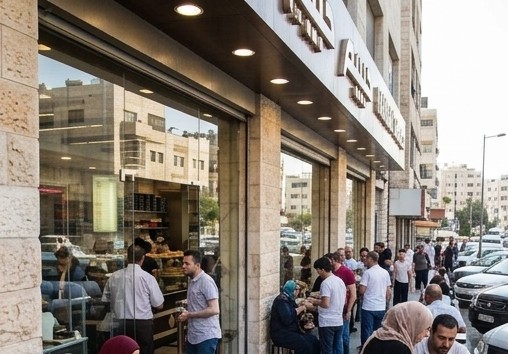
AI-generated image · may differ from the real place Tucked into Al-Azhar Street in the historic basin of Downtown Amman, Habibah Sweets has drawn devoted dessert lovers since the mid-twentieth century. Founded by skilled confectioners from Nablus, this modest shop anchors the Levantine pastry tradition in the bustling heart of the capital. Instead of taking your box away, eat the knafeh fresh in-store, joining the cheerful crowd standing shoulder to shoulder in the narrow passage. Order a warm portion of knafeh, watching the masters lift steaming slices from enormous round copper trays heated over low burners. Notice how the golden crust of shredded dough conceals stretchy, mild cheese, finished with sweet scented syrup and bright green pistachios. The pastry makers work with rhythmic precision, cutting and flipping portions onto small paper plates in a continuous performance of culinary craft. The contrast between hot melted cheese and crisp buttery pastry provides a definitive taste of historic Downtown. Enjoying a warm plate here connects you directly with generations of city dwellers.
As dusk settles across Amman, the limestone hills soften to amber, and the evening breeze carries the distant clatter of spoons and conversation from hundreds of neighborhood tables. The journey through these hillside terraces, historic family courtyards, and bustling downtown passages reveals that Jordanian gastronomy is far more than an assortment of recipes. It is a living architecture of survival, migration, and radical hospitality, built patiently across thousands of years. Whether savoring the nomadic endurance of sun-dried jameed or sharing the sweet communal warmth of fresh knafeh, you have stepped inside a culture where every meal remains an open invitation to belong.
Take it further
Open the tour in the appThe tour in the app
From Hilltop Terraces to Downtown Ovens: A Culinary Archaeology of AmmanA curated walking exploration connecting Jabal Amman's historic hilltop ridges to the bustling valley floor of Downtown. Experience indigenous culinary traditions across four iconic culinary venues, tasting pastoral mansaf feasts, sizzling street-side shawarma, and freshly baked artisanal knafeh while taking in panoramic views of the ancient Roman Citadel along the way.
+ Add the tour to your planIf you have the app the tour opens right away; otherwise you go to the store.FAQ
- What is the historical significance of mansaf in Jordanian culture?
- Mansaf is Jordan's national dish, deeply rooted in Bedouin pastoral tradition. It centers on tender lamb gently simmered in fermented, sun-dried sheep milk yogurt called jameed, served over seasoned rice and paper-thin shrak flatbread on a wide communal platter that symbolizes radical desert hospitality and kinship.
- Why is it customary to eat knafeh fresh on site in downtown Amman?
- Freshly baked knafeh offers an immediate and delicate textural contrast between the crisp shredded pastry threads on top and the warm, molten mild cheese beneath, best savored straight from the steaming round copper trays before the floral syrup settles.
- How does Amman's topography shape its culinary neighborhoods?
- Amman was built across nineteen steep limestone hills and valleys. The higher hills, such as Jabal Amman, host tranquil heritage residences, shaded courtyards, and scenic view terraces, while the lower downtown basin concentrates bustling street food vendors, historic sweetshops, and open-air produce markets.
This piece was newly written based on the Wikipedia articles ‘Amman’ · CC BY-SA 4.0