Contents
History & cultureBY TELLBY2 sections · numbered as on the map01 The Architecture of Vertigo
Before dawn breaks across the vast expanse of the south Atlantic, Rio de Janeiro rests suspended between the cool maritime mist of the ocean and the immovable mass of primeval granite. To approach this shoreline along a winding mountain pass or through the golden haze of an early morning flight is to understand why travelers, poets, and chroniclers have forever struggled to capture this impossible geography in plain prose. The city does not merely sit upon its natural landscape; it is thrust violently into vertical amphitheaters of stone where maritime moisture, shifting cloud banks, and equatorial glare continually alter the color of the day. One looks outward from these soaring heights not to inspect a rational map of civic commerce, but to confront an ancient tension between human longing and geological permanence, where every high terrace, knife-edge ridge, and hidden belvedere offers an intoxicating vantage on beauty, memory, and solitude.
The Obsession of the Solitary Craftsman
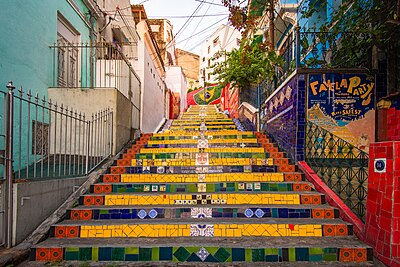
Centuries ago, when Portuguese navigators first entered this sheltered bay beneath the dark monoliths, they perceived an empire in the contours of the rock, naming mountains after the square topsails of their vessels. Yet it was the restless eccentrics and nighttime wanderers who truly defined how we perceive these heights today. In the bohemian quarters of Lapa, where eighteenth-century aqueduct arches once channeled cool mountain spring water directly into the bustling city plazas, the Chilean painter Jorge Selaron began in nineteen ninety an astonishing, solitary pilgrimage across the fractured stone steps outside his modest doorway. Mocked initially by skeptical neighbors for plastering shards of blue, yellow, and green porcelain into dilapidated mortar, Selaron gradually surrendered his entire livelihood to the slope. To finance more than two thousand ceramic fragments gathered from sixty countries across the globe, he spent decades painting twenty-five thousand portraits of an enigmatic pregnant woman, declaring to any wanderer who paused beside him that his crazy and magnificent dream would cease only when death arrived on those very stairs.
Arias and Altars Above the Forest Canopy
Further inland, where the tangled roots of the Tijuca rainforest press against domestic courtyards, another romantic devotion endures inside the grounds of Parque Lage. There, in the vibrant nineteen twenties, industrialist Henrique Lage commissioned Italian architect Mario Vodret to reconstruct an Italianate mansion for his beloved wife, the celebrated lyric singer Gabriella Besanzoni. Lage designed a tranquil courtyard plunge pool bordered by classical colonnades where her rich mezzo-soprano voice could soar into the humid evening air and reverberate against the precipitous granite crown of Corcovado. Even earlier, around sixteen eighty, Father Clemente Martins de Matos had acquired the steep wilderness of Dona Marta, choosing not to dedicate the ridge to a canonized saint, but consecrating the mountain instead to the memory of his deceased mother, Marta Figueira de Matos, before carving out the rugged trail that eventually became Rua Sao Clemente.
Rio de Janeiro has always possessed this strange alchemical power: it absorbs private grief, solitary obsession, and aristocratic devotion, transforming them into public horizons that belong to everyone and no one at once. As you ascend these stone lookouts today, you do not simply gaze upon a panorama of sea and jungle; you inhabit the lingering yearnings of those who stood before this vast blue abyss of Atlantic sky and dared to engrave their devotion into the living stone, leaving behind sanctuaries where the soul can pause, listen, and look beyond itself.
02 White Arches in the Dusk
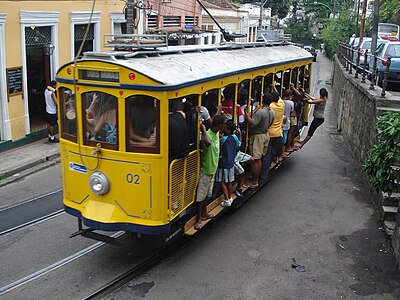
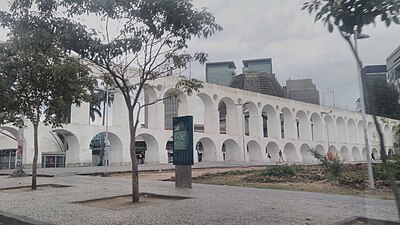
Stand before the monumental white aqueduct of Lapa as late afternoon dissolves into tropical dusk. Inaugurated in seventeen fifty to bring fresh water from the Carioca River to city fountains, these forty-two soaring Roman arches were transformed over a century ago into a viaduct carrying the rattling yellow streetcars of Santa Teresa across the urban canyon. …