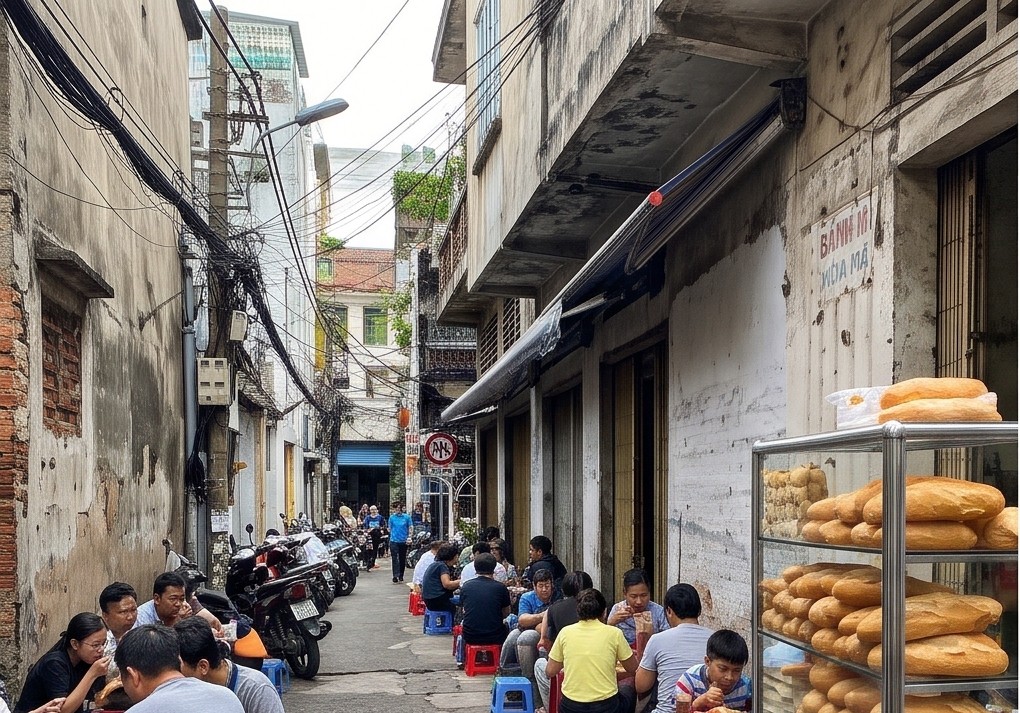
Dawn arrives in this southern metropolis not with a sudden blare of daylight, but as a slow, humid infusion through the narrow seams between colonial plaster and corrugated zinc. Long before the arterial avenues succumb to their frantic tides of motorbikes, the city breathes through its alleys, those secluded domestic passages known as hem, where private lives spill effortlessly onto worn stone tiles and the perfume of roasted coffee beans mingles with the vapor of simmering stock. To walk here in the twilight before the heat thickens is to step away from the glossy geometry of modern development into an older, subterranean logic. One begins to realize that the true soul of this place was never designed by royal decrees or municipal engineers; it was composed by survivors, traders, and poets who sought refuge in shaded corners, carving out intimate sanctuaries where time itself seems to hesitate and pool like morning rain.
The Chroniclers of the Embankment
In the mid-nineteen-fifties, the French aristocrat, author, and adventurer Gontran de Poncins took up residence inside the modest Sun Wah hotel along the riverbank community of Cho Lon. He had deliberately abandoned the fashionable salons and grand boulevards of European Saigon, drawn instead to the Chinese quarter because he suspected that the ancient customs and living cadence of a civilization often endure longer in remote settlements than in the motherland itself. With sketchbook and fountain pen, he spent his months documenting the quiet rituals of craftsmen, the herbalists along the old canal of Hai Thuong Lan Ong, and the unhurried tea houses, capturing an ancient world that had transplanted itself across maritime routes and survived centuries of political storms. Decades earlier, in the eighteen-sixties, the blind patriot poet Nguyen Dinh Chieu had already recorded the strange arrival of foreign bread in his mourning verses, marking the very first cultural collisions between East and West on Cochinchinese soil.
That restless transformative spirit found its most enduring everyday expression following the nineteen-fifty-four partition, when more than a million northern migrants crossed the seventeenth parallel into Saigon. Among those newcomers were Le Minh Ngoc and Nguyen Thi Tinh, who established a modest bakery named Hoa Ma in District Three. It was here, in nineteen-fifty-eight, that they began stuffing crisp baguettes with native cold cuts, pate, and pickled vegetables, liberating bread from the luxury breakfast tables of colonial officers and offering it directly to working hands on the street. Further west, along the storied waterway where horse-drawn trams had once linked the two twin cities in the late nineteenth century, the legendary merchant Quach Dam had already shaped the physical silhouette of Cho Lon by funding the great pavilion of Binh Tay Market, demonstrating how migrant enterprise could anchor an entire district in communal dignity and commercial vitality.
The Grammar of the Shadows
To wander these shaded precincts in the cool mist of dawn is to experience a living manuscript that is continually revised upon low plastic stools. The traveler who leaves behind the grand monuments finds that Saigon reveals its deepest truths not through marble facades or triumphant arches, but in the intimate grammar of its alleys: the rhythmic scrape of a metal spatula against an iron pan, the drifting perfume of medicinal roots drying in courtyard baskets, and the quiet dignity of communities that have quietly sheltered their heritage against the rushing current of modern time.
Want to walk it yourself? Plan a trip with these places
The walk
On site, play just that chapter
- 1 min · on site
The Sizzling Pan of Cao Thang
AI-generated image · may differ from the real place Here on Cao Thang, morning does not negotiate with the clock; it unfurls upon low plastic stools set against a weathered corridor of crumbling plaster. You have arrived at the cradle of modern street bread, founded in nineteen-fifty-eight by northern refugees who understood that breakfast could be both an anchor and an art form. Pull up a stool right along the alleyway curb and call for banh mi chao. Look closely as the sizzling tin skillet arrives, bubbling with fried eggs, slices of spiced ham, and a rich smear of dark liver pate that dissolves into savory richness against hot fat. Tear off the jagged tip of the warm, airy baguette, press it into the molten yolk, and listen to the waking murmur of District Three. Arriving early is essential, as the kitchen closes the moment the morning crowd disperses into the workday.
Wipe the crisp crumbs from your fingertips and wander deeper southwest into the dense residential grid toward Ban Co Market.
- 1 min · on site
The Chessboard Maze of Flavors
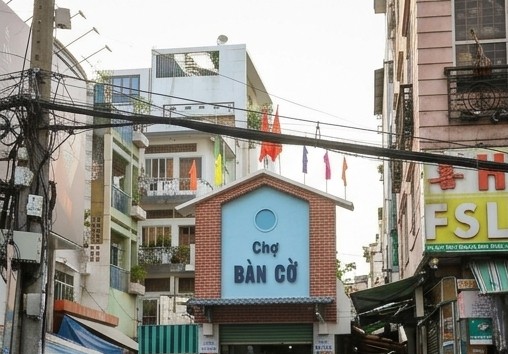
AI-generated image · may differ from the real place Named after the rigid grid of a chessboard, Ban Co reveals none of that geometrical austerity once you step beneath its sheltering tarpaulins. The market is an organic labyrinth of sensory abundance, where the damp stone pathways narrow until shoulders brush against vibrant bundles of fresh herbs and mounds of freshly grated coconut. Keep small banknotes folded in your pocket and follow the drift of charcoal smoke into the inner aisles. Here, elderly cooks preside over deep bowls of bun thit nuong, ladling crushed peanuts and pickled radish over charred pork, while nearby vendors steam translucent saucers of banh beo topped with savory shrimp flakes and crispy pork rind. Take a seat on a narrow bench among the neighborhood shoppers and watch how this community sustains its domestic intimacy amidst the frantic pace of the surrounding city.
From this maze of culinary stalls, continue west into the historic expanse of Cho Lon where the old merchant streets meet the canal.
- 1 min · on site
The Pavilion of the Merchant Embankment
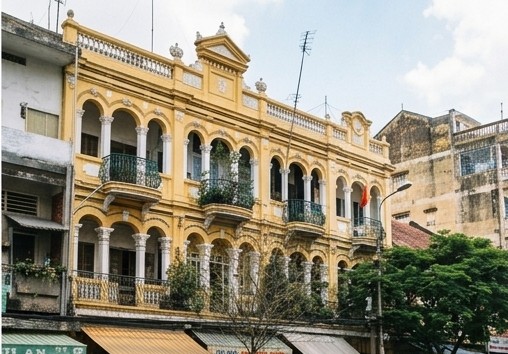
AI-generated image · may differ from the real place Entering Cho Lon is like crossing an invisible boundary into another century, where the ghost of the old Chinese canal settlement still dictates the rhythm of daily trade. Step into the grand pavilion of Binh Tay Market just as the first amber rays strike its sweeping Chinese eaves, built a century ago through the vision of the merchant Quach Dam. It is best explored entirely on foot in the gentle cool of early morning, before the heavy midday heat settles over the wholesale stalls and throngs of buyers. Wander past the fragrant sacks of dried mushrooms and star anise, then drift quietly into the neighboring heritage temple courtyards where enormous spiral incense coils slowly burn from vaulted rafters. In this vast quarter, where generations of southern migrants and Cantonese merchants built their sanctuary, history remains an intimate, living presence.
As the midday heat ascends and the alleys retreat into drowsy stillness, one realizes that the true luxury of this city is not found in air-conditioned sanctuaries, but in having shared an unhurried morning with those who keep its memories alive.
Take it further
Open the tour in the appThe tour in the app
Morning Passage from Cao Thang to the EmbankmentThis early morning walking journey begins with a piping skillet of eggs and pate along the quiet curbs of District Three, wanders through the tight sensory food alleys of Ban Co Market, and concludes amid the historic Chinese architectural heritage and temple courtyards of Binh Tay Market.
+ Add the tour to your planIf you have the app the tour opens right away; otherwise you go to the store.FAQ
- Why is it important to set out so early for this walk?
- Banh Mi Hoa Ma operates exclusively for the early morning breakfast crowd, and exploring Cho Lon on foot in the early morning allows you to admire its temple courtyards and markets before the midday heat and traffic arrive.
- What should I prepare before navigating the stalls of Ban Co Market?
- Carry small cash denominations in your pocket, as the market vendors in the inner aisles run small traditional stalls where electronic payment is rare.