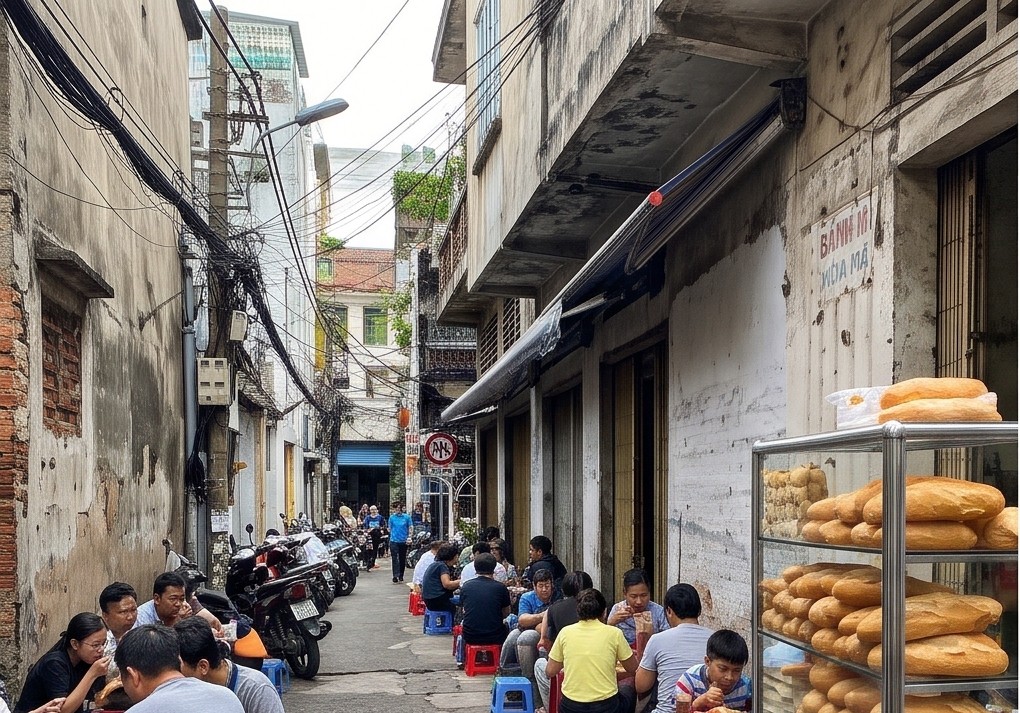
I still remember the silver light of my very first morning in Saigon. Stepping out into the dawn air, the city felt less like a waking metropolis and more like an enormous open kitchen stirring to life under a canopy of ancient rain trees. A gentle humidity clung to the pavement, carrying the aroma of dark roasted coffee dripping slowly through tin filters, simmering star anise, and the unmistakable, buttery warmth of baguettes pulled fresh from neighborhood ovens. In that quiet hour before millions of motorbikes claimed the asphalt, women in conical hats arranged small towers of cucumbers and bunches of sawtooth coriander on low wooden carts. I found myself drawn down an alleyway, following nothing more than the scent of sizzling shallots and charcoal smoke. In the soft morning glow, the simple act of breaking bread becomes a gesture of pure belonging. Food here has never been a mere pause between destinations. It is the very rhythm by which the city breathes, an intimate language spoken on low plastic stools where strangers sit knee to knee, sharing the silent fellowship of the morning table as the city stirs.
The Geometry of Migration and Flour
To understand the table of this southern metropolis, one must understand how many journeys have converged upon its bowls and baskets. When you taste a crusty roll or a fragrant bowl of broth, you are tasting a geography shaped by displacement, resilience, and reinvention. Following the partition of the country in the nineteen fifties, more than a million northern migrants journeyed south, carrying with them family recipes, regional dialect, and culinary traditions that permanently transformed the local streetscape. Bakers Lê Minh Ngọc and Nguyễn Thị Tịnh arrived during that great wave of migration and opened a humble shop named Hòa Mã in District Three, helping pioneer the habit of stuffing seasoned meats and French liver pâté into a split loaf for workers on the move. Centuries earlier, poet Nguyễn Đình Chiểu had noted the arrival of Western bread in his verses, back when wheat was an exotic import reserved exclusively for the wealthy. It was only when inventive local bakers began blending inexpensive rice flour into the dough during the wartime disruptions of wheat supplies that the baguette became impossibly light, crisp, and truly Vietnamese, accessible to every ordinary person on the street.
Poetry in the Charcoal Smoke
That northern heritage also carried the poetry of the grill. Decades ago in Hanoi, the writer Thạch Lam captured the hypnotic pull of bún chả, recounting how a traveling scholar from the countryside caught the scent of pork fat sizzling over glowing coals and was moved to compose verses on the spot, proclaiming that the charcoal smoke rising like mountain mist could turn any hungry wanderer into a poet. Sitting on the low sidewalks of Ho Chi Minh City today, watching the smoke of grilled pork patties curl into the humid canopy of tamarind trees, that same transformation takes hold of the senses. Food here is an act of communal memory, storytelling, and deep affection. The street stall is both a living archive and a sanctuary of daily life. Every herb torn by hand, every spoonful of amber broth, and every warm crust broken open on a busy street corner reminds you that you are not merely dining in a city. You are taking part in its enduring will to survive, to adapt, and to welcome whoever pulls up a stool into its ongoing story.
Want to walk it yourself? Plan a trip with these places
The walk
On site, play just that chapter
- 1 min · on site
Breakfast in the Alley of Origins
AI-generated image · may differ from the real place Slip away from the rushing traffic of Cao Thang street in District Three and turn into the quiet alley where Bánh Mì Hòa Mã has stood since the late nineteen fifties. Find an empty plastic stool nestled against the peeling pastel wall, right beneath the shade of overhanging tropical foliage. The right order here is the classic skillet breakfast, served sizzling hot in a small tin pan loaded with two sunny eggs, fried pork roll, and rich liver pâté. Tear off a piece of the warm baguette, whose crust shatters like delicate parchment, and drag it through the runny yolk and rich pan juices. This modest alleyway is where northern migrants Lê Minh Ngọc and Nguyễn Thị Tịnh helped give birth to the modern morning ritual of Saigon. Come in the early morning light while the cool air lingers, because once the morning rush fades, the shutters come down and the alley returns to silence.
When you have brushed the last breadcrumbs from your lap, take a leisurely stroll north through the leafy residential avenues of District Three toward Ky Dong street.
- 1 min · on site
A Simmering Basin of Northern Memory
AI-generated image · may differ from the real place Turn onto Ky Dong street and look for number eight, where the gentle clatter of ceramic spoons announces Pho Anh. Step into the open dining room and choose a table near the towering stainless stockpots, where beef bones and roasted spices have been simmering since before sunrise. When your bowl of beef noodle soup arrives, study the surface first, admiring the clear broth glistening with tiny amber droplets and laden with tender slices of rare beef and springy beef balls. The essential guide cue here is to request a generous side plate of fresh herbs and blanched bean sprouts. Inhale the aroma of cinnamon and charred ginger before tearing in culantro leaves and Thai basil with your bare fingers. Squeeze a fresh lime wedge over the broth, stir gently, and let the gentle heat warm you from the inside out.
Step back into the midday breeze and wander southeast past colonial villas toward the lush greenery of Tao Dan Park until you reach Truong Dinh street.
- 1 min · on site
The Smoke That Makes Poets of Strangers
AI-generated image · may differ from the real place Follow the irresistible scent of charcoal smoke to twenty nine Truong Dinh street, just a short walk from the shade of Tao Dan Park. At Bún Chả Hà Nội, the grill man works in rhythmic waves, fanning glowing coals that hiss as droplets of marinated pork belly drip onto the embers. Take a seat and wait for the warm ceramic bowl of amber fish sauce, bobbing with grilled pork patties and thin slices of crisp green papaya. Beside it sits a snowy mound of delicate rice vermicelli and a garden of lettuce and perilla. The crucial cue here is never to pour the sauce over your noodles; instead, lift a small nest of cold vermicelli with your chopsticks, plunge it into the warm seasoned broth with a bite of charred pork, and eat them together in one harmonious mouthful.
Leave the charcoal embers behind and walk south past the park gates, crossing the boulevard into the buzzing heart of District One toward Le Thi Rieng street.
- 1 min · on site
The Grand Bounty of the Evening Loaf
As twilight settles over District One, make your way to twenty six Le Thi Rieng street, where a lively queue invariably spills out along the sidewalk in front of Bánh Mì Huynh Hoa. Watch through the glass counter as nimble hands construct each sandwich with breathtaking speed and theatrical generosity. Here, the famous special baguette is built like an architectural monument, piled thick with velvety liver pâté, multiple layers of cured cold cuts, and tender pork sausage, all balanced by crisp cucumber spears and pickled daikon. The secret here is to order the special sandwich to share, because its sheer weight and abundance can easily satisfy two hungry travelers. Step aside onto the pavement, grip the paper wrapper firmly, and bite through the resounding crackle of crust into a rich, savory burst of chili and coriander.
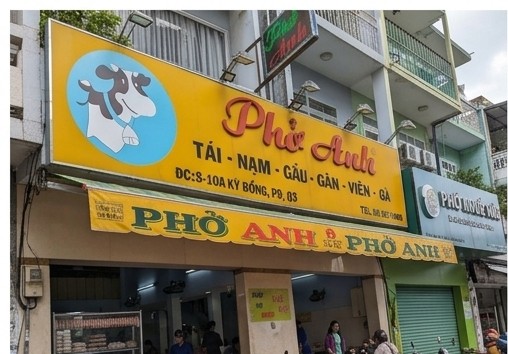
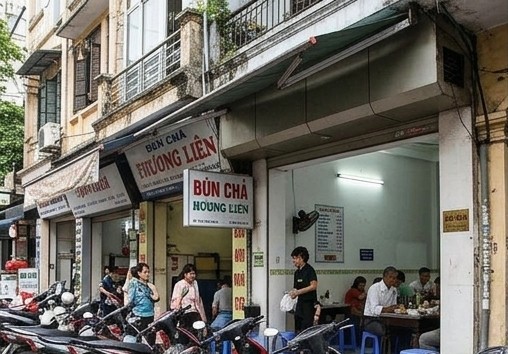
Long after the clatter of porcelain spoons and the hiss of charcoal grills have faded into the humid night, it is the quiet generosity of Saigon street food that stays with you. To sit on a low stool in an alleyway, cradling a bowl of broth or breaking bread, is to partake in a living history woven from migration, memory, and grace. The city asks nothing of you except an appetite and an open heart, offering in return a seat at a table that has welcomed wanderers for generations.
Take it further
Open the tour in the appThe tour in the app
A Memoirist Walk Through Saigon Food TraditionsThis intimate walking journey traces four essential culinary landmarks across District Three and District One. Beginning with an early morning alleyway skillet breakfast, the route winds through simmering northern noodle cauldrons and charcoal grilled specialties, culminating in an abundant evening street loaf shared under city lights.
+ Add the tour to your planIf you have the app the tour opens right away; otherwise you go to the store.FAQ
- What is the proper way to eat the vermicelli at Bún Chả Hà Nội?
- Take small portions of the cold rice noodles with your chopsticks and dip them directly into the warm dipping broth containing the pork patties and pickled papaya, rather than pouring the broth over your noodle bowl.
- Why is Bánh Mì Hòa Mã considered significant in Vietnamese culinary history?
- Opened by northern migrants in the late nineteen fifties, it was one of the earliest shops in Saigon to pair bread with local fillings and skillet cooked meats, helping establish the beloved daily breakfast ritual.