Morning arrives in Istanbul not as a sudden burst of harsh sunlight, but as a soft gray veil slipping gently off the towering domes of Sultanahmet. Walking down the damp cobblestone lanes of the ancient city, the crisp autumn air carries the aroma of roasted chestnuts, freshly brewed black tea, and the faint salty breeze drifting upward from the Bosphorus strait. My feet carry me almost automatically toward the quiet silhouette of historical bathhouses, where warm steam has drifted through carved stone chimneys for well over four hundred years. To step inside an Ottoman hammam is to leave the relentless rhythm of linear time behind. It is an intimate ritual of surrender, where the noise of the modern metropolis slowly dissolves into the soothing drip of water against marble basins and the soft resonance of barefoot steps echoes under vaulted ceilings.
The bathhouse in Istanbul was never intended merely as a functional place to wash away the physical dust of long journeys. It flourished for centuries as the vibrant social heart of Ottoman urban life, a sacred sanctuary where sultans, grand viziers, court poets, and neighborhood residents gathered on equal terms across the heated marble floors. In historical eras when women lived mostly within the secluded quarters of domestic homes, the hammam offered an indispensable realm of freedom, community, and joy. Here, mothers thoughtfully selected future brides for their sons, old friends exchanged neighborhood stories, and festive gatherings were celebrated with sweet fruit sherbets, ripe pomegranates, and dried figs laid out on woven linen cloths. The classical architecture itself was masterfully designed by royal visionaries to guide the visitor through deliberate stages of physical and mental cleansing, moving from the cool reception lounge known as the camekan, into the warm intermediate halls, and finally entering the radiant hot room under a dome pierced by glass star skylights.
Echoes of Water and Imperial Stone
Rich history vibrates quietly within these thick stone walls. In the sixteenth century, Sultan Suleiman the Magnificent defied long standing court traditions by freeing and legally marrying his beloved concubine Hürrem Sultan. To honor her status, Hürrem Sultan commissioned the chief imperial architect Mimar Sinan to construct a grand bathhouse right between Hagia Sophia and the Blue Mosque. Decades later, Nurbanu Sultan, the powerful mother of Sultan Murad III, directed Sinan to build the magnificent Çemberlitaş Hamam along Divan Yolu, the ancient processional highway that once connected Constantinople to Rome. Its archway was embellished with gold thuluth calligraphy by court poet Sa'i-i Da'i praising her generosity. In the eighteenth century, Sultan Mahmud I funded his library in Hagia Sophia through the revenue of Cağaloğlu Hamam, which would later welcome iconic figures including nursing pioneer Florence Nightingale and King Edward VIII.
The Sanctuaried Heart
As I lie back upon the smooth heated marble stone at the center of the hot room, watching shafts of morning light stream through tiny glass stars in the dome, every accumulated tension of travel evaporates into the mist. The firm stroke of the coarse goat hair kese glove gently removes the past, while billows of lavender scented olive oil soap foam envelop the skin in soothing warmth. You do not visit an Istanbul hammam simply to pamper the body. You come to listen to the whispers of forgotten centuries, to feel the enduring harmony of water and stone, and to rediscover the profound peace that emerges when you allow yourself to sit quietly in the present moment.
Want to walk it yourself? Plan a trip with these places
The walk
On site, play just that chapter
- 1 min · on site
Sanctuary Between Domes

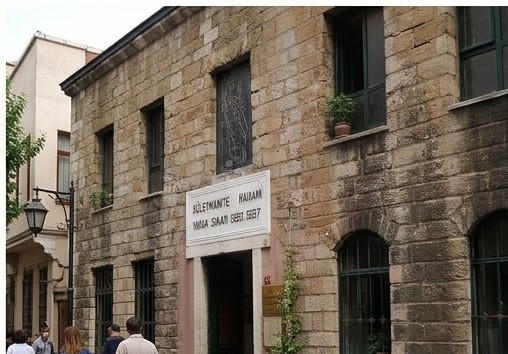
Photo: VikiPicture · CC BY-SA 3.0 · Original file Standing directly between the towering dome of Hagia Sophia and the blue tiled minarets of the Sultan Ahmed Mosque at Ayasofya Square, you find Hürrem Sultan Hamamı. Designed in fifteen fifty six by the master imperial architect Mimar Sinan for Roxelana, the beloved wife of Sultan Suleiman the Magnificent, this structure displays unmatched symmetrical elegance. As you cross the threshold into the cool reception lounge, notice how the twin bathing sections for men and women sit side by side, a rare layout in classical Ottoman bathhouses. Inside the warm hararet chamber, sunbeams stream down through glass skylights onto the smooth marble göbek taşı stone. Here, your bath attendant performs the traditional kese exfoliation followed by clouds of lavender scented olive oil soap foam and relaxing body oils. To ensure your spot for this royal indulgence, book your private bath session well ahead of time, especially if you visit during a busy weekend.
From this imperial square, walk three minutes west along the historic tramline toward the quiet side street leading to our next bathhouse.
- 1 min · on site
Baroque Marble and Royal Legacy
AI-generated image · may differ from the real place Located along Professor Kazım İsmail Gürkan Street in Sultanahmet, Cağaloğlu Hamam represents one of the final major bathhouses built during the golden Ottoman era. Constructed in seventeen forty one under Sultan Mahmud I to generate revenue for his library inside Hagia Sophia, its architecture gracefully blends classical Ottoman forms with Baroque flourishes. Over the centuries, luminaries ranging from nursing pioneer Florence Nightingale to King Edward VIII and ballet master Rudolf Nureyev have sought rest under its soaring stone vaults. Before passing through the wooden doors into the bathing area, linger in the grand entrance hall to take photos of the ornate marble fountain, as photography is strictly prohibited inside the bath itself. Surrender your body to the timeless kese scrub, rich olive oil foam massage, and nourishing scented oil treatment upon the heated central marble.
Step back out into the crisp air and stroll five minutes south toward the ancient processional road of Divan Yolu.
- 1 min · on site
Poetry Upon Divan Yolu
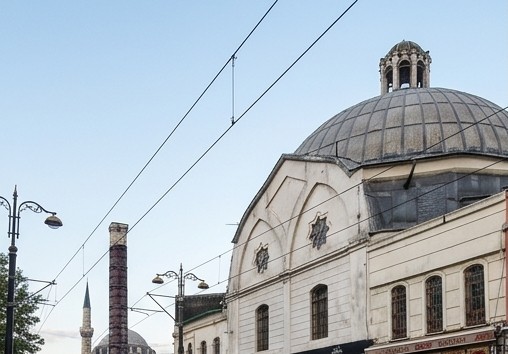
AI-generated image · may differ from the real place Positioned beside the Çemberlitaş tram stop on Divan Yolu, the ancient processional road that once connected Constantinople to Rome, stands Çemberlitaş Hamamı. Commissioned in fifteen eighty four by Nurbanu Sultan, Mother of Sultan Murad III, and built by master architect Mimar Sinan, it was designed as a lasting charitable foundation for the city. Before entering, pause at the men's entrance to admire the elegant gold thuluth calligraphy written by court poet Sa'i-i Da'i praising Nurbanu's grand benevolence and the soothing warm baths. Inside the hot hararet room, lie back upon the hexagonal marble stone beneath Sinan's glass star skylights while the bath attendant performs the revitalizing kese scrub. You can pack light for this visit, as clean cotton pestemal wraps, soft towels, and traditional wooden bathing sandals are provided upon your arrival.
Walk fifteen minutes northwest up the third hill past the lively alleys of the Grand Bazaar toward Süleymaniye.
- 1 min · on site
Acoustic Harmony and Family Warmth
AI-generated image · may differ from the real place Nestled on Mimar Sinan Street on the third hill of Istanbul, Süleymaniye Hamamı forms an integral part of the grand Süleymaniye Mosque complex overlooking the historic peninsula below. Built by Mimar Sinan between fifteen fifty and fifteen fifty seven for Sultan Suleiman the Magnificent, this bathhouse features subtle architectural innovations, including acoustic hollow jars embedded inside the stone dome structure. Unlike many historical bathhouses that enforce strict gender separation, Süleymaniye Hamamı specializes in welcoming couples and family groups to experience the traditional bath ritual together in a warm setting. Gaze up at the soft light filtering through the stone dome while enjoying a traditional kese scrub and soothing foam massage side by side upon the heated stone. Be sure to confirm your session arrangements before arriving to guarantee your preferred time slot for your upcoming visit.
Descend the historic hill toward the Golden Horn and stroll across Galata Bridge to the waterfront neighborhood of Tophane.
- 1 min · on site
The Admiral's Daylight Dome
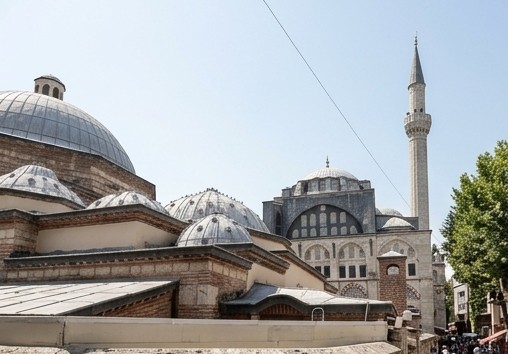
AI-generated image · may differ from the real place Found on Hamam Street in Tophane near the scenic Bosphorus waterfront, Kılıç Ali Paşa Hamamı stands as a breathtaking masterpiece of late sixteenth century Ottoman naval architecture. Commissioned by the Italian born privateer turned Ottoman Grand Admiral Kılıç Ali Paşa, it was constructed on reclaimed shoreline land by the imperial architect Mimar Sinan. Following a meticulous multi year restoration led by architect Cafer Bozkurt, the bathhouse shines under a dramatic fourteen meter main dome filled with streaming natural daylight. Lie upon the glowing marble center as sunlight streams through the dome skylights, enjoying a thorough kese scrub and cloudlike soap foam massage delivered by expert bath attendants. After your rejuvenating bath ritual, allow ample time to linger in the serene camekan lounge, sipping warm tea while resting on plush cushions under the soaring timber roof.
Walk ten minutes uphill along the cobblestones of Turnacıbaşı Street into the heart of Beyoğlu.
- 1 min · on site
Five Centuries in Pera
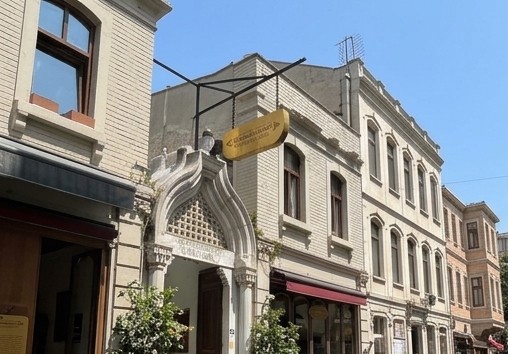
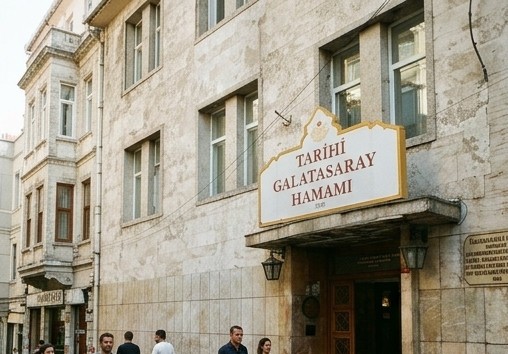
AI-generated image · may differ from the real place Situated at Turnacıbaşı Street Number Eight in Beyoğlu, Galatasaray Hamam sits right near the historic Galatasaray Museum and school grounds in the vibrant artistic heart of Pera. Originally commissioned in fourteen eighty one by Sultan Bayezid II as part of the imperial Galatasaray educational complex, this bathhouse has welcomed bathers for well over five centuries. Inside the hot hararet room, the polished marble basins and central heated stone offer an atmosphere of quiet reflection amidst the lively energy of the modern city around you. To enjoy the most serene experience possible, schedule your visit for a quiet weekday morning when the bathhouse is peaceful, unhurried, and pleasantly quiet. Surrender to the classic kese scrub and foam massage, concluding your journey across Istanbul's historic bathhouses with a profound sense of physical and mental renewal.

As dusk falls over the Bosphorus, the warmth of the hammam remains embedded deep within the skin. In this city where empires rise and crumble into history, the sanctuary of stone and steam endures, reminding us that to pause is to belong.
Take it further
Open the tour in the appThe tour in the app
Historic Hammam Walking SanctuaryEmbark on a serene walking tour across Istanbul's historic peninsula and Beyoğlu. Discover six centuries of Ottoman bath architecture, from Mimar Sinan's imperial domes to Baroque marble halls, offering deep relaxation, traditional kese scrubbing rituals, and tranquil tea lounges.
+ Add the tour to your planIf you have the app the tour opens right away; otherwise you go to the store.FAQ
- What should I bring to a traditional Turkish hammam?
- Most historic hammams provide cotton pestemal wraps, towels, and slippers upon entry. You may bring your own swimwear if preferred, though traditional wraps are standard.
- Is advance booking necessary for historic bathhouses in Istanbul?
- Advance reservations are highly recommended, particularly for popular sites like Hürrem Sultan Hamamı and Cağaloğlu Hamam during weekend hours.
- What is the difference between kese scrubbing and foam massage?
- The kese scrub uses a coarse goat hair mitt to gently exfoliate dead skin, while the köpük foam massage envelopes the body in rich olive oil soap bubbles to cleanse and relax muscles.