There is a peculiar slant of autumn light that strikes the aged stone facades of Barcelona just before midday, a golden angle that seems to soften the resolve of the working metropolis and summon an ancient, collective thirst. Across shaded historic squares, beneath weathered neoclassical arches, and along the plane-tree lined avenues of the Eixample, heavy wooden doors swing inward, tiled floorboards creak, and the gentle pop of a cork signals that the sacred hour of vermut has officially arrived. In this proud Mediterranean capital, the apéritif is neither an idle distraction nor a hurried prelude to lunch. It is a venerable secular liturgy, a deliberate suspension of ordinary time where neighbors, wanderers, and lifelong companions converge around polished zinc counters and marble bistro tables to sip an amber elixir perfumed with wild wormwood, bitter gentian root, Seville orange peel, and Mediterranean mountain herbs. The drink carries an unmistakable rustic depth, sharp enough to awaken an appetite yet softened by the natural sweetness of aged local grapes and the warmth of midday conversation.
The Apothecary and the Literary Refuge
To partake in vermut here is to touch an intimate thread of urban memory, artisan craft, and literary contemplation that has quietly sustained Catalan city life for generations. Long before modern cocktail cultures crossed continents, neighborhood bodegas were dispensing fortified wines steeped in secret blends of medicinal botanicals. The craft found its definitive regional standard through nineteenth-century pioneers like Don Augustus Perucchi, who founded the territory's first artisanal vermouth house in eighteen seventy-six, using centenarian oak casks and traditional macerations to define the flavor of the city. Over the decades, these unpretentious neighborhood taverns evolved into essential sanctuaries for creative spirits, bohemians, journalists, and political thinkers who sought refuge from tumultuous streets. The beloved Catalan storyteller and satirist Pere Calders found enduring inspiration in these dimly illuminated establishments, observing the tender absurdities and bittersweet ironies of everyday human existence over a sparkling glass. The clinking of heavy vintage soda siphons, the hum of animated debates, and the lingering aroma of aged oak formed the quiet background music of his literary imagination.
The Slow Geography of the Counter
As you walk these storied avenues with this audio companion in your ears, let the hurried tempo of modern sightseeing quietly fade away. You are entering living spaces that have vigorously defended their soul against the homogenizing tides of contemporary life. In these dim tavern sanctums, dusty demijohns and dark wooden barrels still line high timber rafters, sepia-toned mirrors reflect the slow drift of midday light, and glass cases overflow with the salty treasures of the sea. To embrace the vermut hour as locals do, simply surrender to the rhythm of the room. Stand shoulder to shoulder with gray-haired regulars, watch the barman spear a spicy pickled chili, a green Manzanilla olive, and a shimmering anchovy onto a wooden toothpick, and listen to the sharp hiss of carbonated seltz splashing into dark mahogany vermut over a single cube of crystal ice. It is an honest, bittersweet communion of salt, brine, vinegar, and botanical spice, offering a quiet, lingering reminder that the finest moments of travel cannot be scheduled on an itinerary, but only savored in the gentle embrace of the present.
Let each sip ground your footsteps as you journey across the city's cobblestones, leaving behind the glossy storefronts for the comforting embrace of worn wooden thresholds and time-tested hospitality. Here, in the unhurried companionship of the bodega, Barcelona reveals its true domestic warmth, one small glass and one shared plate at a time.
Want to walk it yourself? Plan a trip with these places
The walk
On site, play just that chapter
- 1 min · on site
Barrels, Brine, and the Gràcia Alchemist
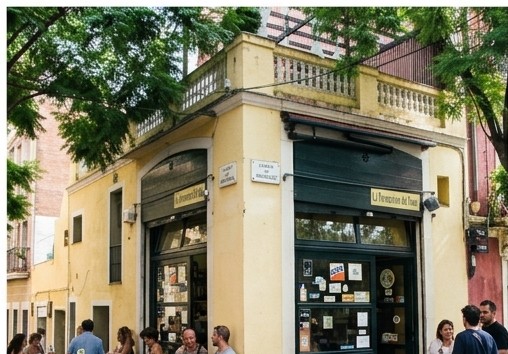
AI-generated image · may differ from the real place Wander into the heart of Gràcia along Carrer de Joan Blanques until you spot the unassuming doorway of La Vermuteria del Tano, where the atmosphere feels suspended in a golden, unvarnished past. Push past the curtain and take in the magnificent dark wooden casks stacked high behind the worn bar, filling the narrow space with aromas of aged oak and macerated botanicals. Here, the house pours Perucchi vermut, drawn straight from heritage traditions that date back to the late nineteenth century. Look up at the vintage photographs and antique memorabilia lining the timber walls while you secure a spot near the zinc counter. Order a glass of the house Perucchi alongside a selection of canned seafood tapas, including plump Galician mussels, briny tinned anchovies, and skewers of banderillas laden with pickled peppers and olives. The intense salt and vinegar cut through the herbal sweetness of the wine, creating an intoxicating harmony that defines true neighborhood life.
Leave the village intimacy of Gràcia behind and walk southward into the elegant avenues of the Eixample until you reach the leafy promenade of Rambla de Catalunya.
- 1 min · on site
Subterranean Whispers Beneath Rambla de Catalunya

Photo: Alexreboll · CC BY-SA 4.0 · Original file Along the bustling canopy of Rambla de Catalunya, keep your eyes cast low to discover the modest stone entryway of La Bodegueta, descending a short flight of steps into a subterranean sanctuary that has welcomed intellectuals and weary walkers since the early twentieth century. The air down here is delightfully cool, redolent of seasoned wine barrels, old plaster, and cured hams. Squeeze onto a dark timber bench beside an authentic wooden cask table and observe the bustling movement of the servers navigating the tight quarters. Order a glass of chilled dark vermut garnished with an orange slice, and pair it with a plate of crisp patates braves drizzled in piquant red sauce alongside delicate seitons en vinagre, white anchovies glistening in garlic and vinegar. The juxtaposition of the rich, spicy potatoes and the bright maritime acidity against the bitter herbs of the vermut forms an essential stop before wandering deeper into the modernist district.
Emerge back into the bright sunlight and trace the pedestrian grid southwest along Carrer del Consell de Cent until you find a minimalist corner that revitalized the ritual.
- 1 min · on site
The Modern Rebirth of the Ritual Bar
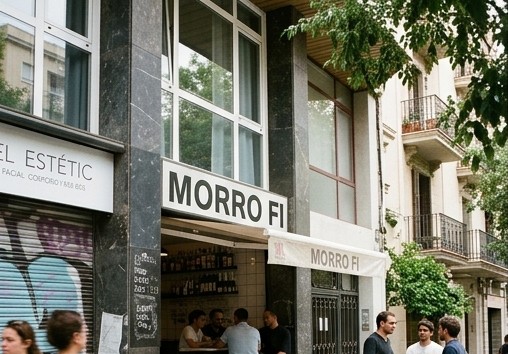
AI-generated image · may differ from the real place On the corner of Carrer del Consell de Cent, you will encounter Morro Fi, a small, luminous jewel that single-handedly spearheaded the renaissance of vermut culture in contemporary Barcelona. There are no dusty antiquities here, but rather a crisp, graphic aesthetic and an infectious midday energy that spills onto the sidewalk. If the few outdoor tables are occupied, make your way directly inside and claim an elbow length of counter space at the compact bar, where the conversation flows with sparkling vigor. Point toward the tap to request their celebrated house vermut, served over clear ice with an olive and an orange twist. To accompany the drink, call for their legendary gilda, an olive, pickled guindilla pepper, and anchovy skewered together, flanked by glistening boquerones and plump green olives. The sharp burst of brine and chili awakens the palate, proving that tradition thrives best when stripped of pretension and served with sincere passion.
Stroll southward across the broad boulevards into the literary heart of Sant Antoni, following the easy drift of locals toward Carrer del Parlament.
- 1 min · on site
Literary Shadows in a Hidden Courtyard
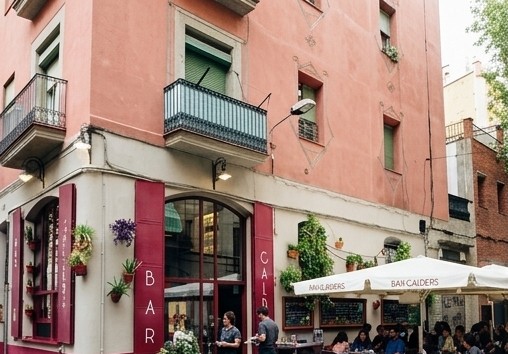
AI-generated image · may differ from the real place Follow Carrer del Parlament until you reach number twenty-five, where a discreet passage leads into the vibrant open-air courtyard of Bar Calders, named in affectionate tribute to the whimsical Catalan author Pere Calders. The walls inside are adorned with literary homages, playful illustrations, and shelves of books that echo the writer's ironic and fantastical vision of ordinary Barcelona life. Find a metal chair out on the sunlit terrace, where neighborhood artists and families gather for an unhurried aperitif amidst lively debates. Order a glass of their spiced house vermut accompanied by a classic gilda skewer and a basket of freshly fried croquetes de pernil, whose crisp exterior gives way to velvety, savory ham. Savor the lively people-watching as cyclists glide past the passage entrance, feeling the gentle continuity between the literary imagination of Calders and the enduring conviviality of the Catalan afternoon.
Cut east past the grand sweep of the Parallel avenue, diving into the shadowy, twisting alleys of the Raval just behind the great market halls.
- 1 min · on site
Bohemian Haven Behind the Market Stalls
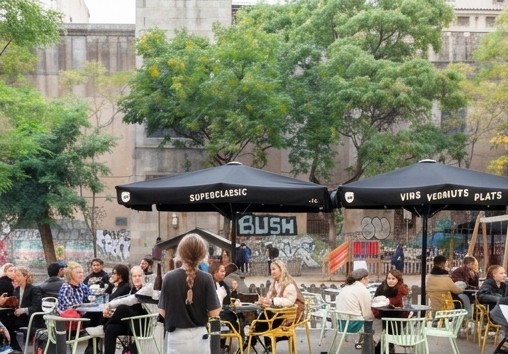
AI-generated image · may differ from the real place Tucked into Carrer de les Floristes de la Rambla, just steps from the lively commotion of the Boqueria market, Superclàssic welcomes you with its breezy courtyard terrace and vintage bohemian charm. The setting feels like an urban oasis, framed by weathered stone facades and lush potted greenery that shield you from the main tourist thoroughfares. Take a seat under the open sky and watch the kitchen staff bustle with market baskets overflowing with fresh seasonal ingredients. Order their aromatic house vermut on ice, complemented by a selection of local platillos crafted from morning market produce, such as tender grilled artichokes, spiced meatballs, or braised squid. The kitchen captures the dynamic gastronomic soul of the Raval, weaving traditional market freshness into modern neighborhood plates. Sit back, breathe in the fragrance of Mediterranean herbs, and enjoy the effortless tempo of an afternoon sheltered from the city's frantic pace.
Follow the scent of brine and harbor breezes eastward through the old quarter, crossing towards Port Vell until you reach the historic sailors' grid of Barceloneta.
- 1 min · on site
Sawdust, Sparkle, and Shared Tables

Photo: robertorodriguex · CC BY-SA 2.0 · Original file Step through the modest doorway on Carrer de la Reina Cristina and plunge into the roaring, cheerful commotion of Can Paixano, a maritime institution beloved by dockworkers, students, and travelers alike. The floor is scattered with sawdust and napkins, the ceiling hung with drying cured sausages, and the air charged with genuine, democratic camaraderie. During peak aperitif service, space is an elusive luxury, so squeeze your way toward a tall sharing table alongside complete strangers who will quickly feel like old acquaintances. Here, tradition shifts slightly toward the effervescent sparkle of house cava, poured generously into wide glass coupes. Order warm entrepans stuffed with sizzling spiced sausage, lacon, or melted cheese, paired with golden ham croquetes straight from the frying pan. The rustic warmth of the crowd, the salty seaside air, and the joyous clinking of glasses provide an unforgettable crescendo to your walk through Barcelona's aperitif geography.


As the afternoon shadows lengthen toward the sea and the lively hum of the bodegas settles into an unhurried murmur, you carry with you more than the lingering taste of herbs and sea salt. You have walked the true emotional geography of Barcelona, a city that measures its finest hours not by the ticking of clocks, but by the warmth of its counters, the generosity of its shared tables, and the timeless art of staying just a little longer.
Take it further
Open the tour in the appThe tour in the app
Midday Vermut and Bodega PromenadeThis leisurely walking route traverses Barcelona from bohemian Gràcia through the elegant avenues of Eixample and the literary corners of Sant Antoni, finishing among the lively maritime taverns of Barceloneta. Along the way, enjoy classic vermut on tap, artisan tapas, and storied neighborhood counters.
+ Add the tour to your planIf you have the app the tour opens right away; otherwise you go to the store.FAQ
- What is the customary way to enjoy vermut during the aperitif hour in Barcelona?
- Locals typically order vermut negre served over ice with an orange slice and an olive, often diluted with a quick splash of seltz from a heavy vintage siphon, paired with salty bites like gildas or tinned seafood.
- How does standing at the bar compare to taking an outdoor terrace table?
- Standing at the zinc counter immerses you in the spontaneous energy and quick conversation of neighborhood regulars, while outdoor terrace seating offers relaxed people-watching under the Mediterranean sun.