To approach Luxor as a traveler is to arrive with an empty plate, expecting simple grandiosity and receiving instead a dense, wonderfully layered feast of stone, sun, and ancient memory. As our traditional wooden felucca glides across the glassy surface of the Nile, the river breeze smells faintly of wet river silt and wild mint, carrying a crisp coolness that cuts through the dry afternoon heat of Upper Egypt. Most casual visitors speak of ancient temples in the dry language of guidebook metrics, counting meters and dynasties as though evaluating a cold inventory list. Yet to a seasoned culinary critic, historic space is seasoned very much like a slow-simmered aromatic broth. The precise way afternoon sunlight strikes sandstone colonnades resembles the golden, flaky crust of freshly baked eish baladi, while the deep indigo shadows pooling beneath ancient lintels possess the rich, velvet intensity of a dark date molasses reduction. Luxor does not reveal its delicate nuances to those who rush across its monuments in haste. It demands a patient palate, an eye trained to discern subtle spatial textures, and a willingness to savor how three thousand years of human ambition have seasoned this narrow ribbon of lush green squeezed between sunlit desert cliffs.
Consider the sheer architectural audacity of Karnak, where ancient stone masons carved soaring columns with the exactness of a master pastry chef scoring delicate layers of buttery dough. Here, human history is not merely preserved behind glass; it is slowly roasted under a relentless sun until every weathered surface radiates stored caloric heat. Long before modern chroniclers arrived with tripods and lenses, early European travelers tried valiantly to describe this overwhelming banquet of colossal ruins. In sixteen sixty eight, two Capuchin missionary brothers named Protais and Charles Francois d'Orleans wandered through these towering precincts, leaving behind the earliest written mention of the modern village name Karnak. Decades later, in seventeen four, Paul Lucas published his own ambitious engravings of the complex after exploring the Levant, though his sketches blurred separate precincts into a fantastical, wildly inaccurate composition. They were like uninitiated diners attempting to recreate a complex regional recipe purely from distant memory, capturing the vivid spirit of the dish while scrambling its essential ingredients. What they instinctively recognized, however, was the undeniable visual texture of a sacred landscape constructed specifically to nourish the human soul.
The Architecture of Intoxication and Memory
Beyond the imposing stone pylons lies a deeper, far more sensual narrative of ritual intoxication and sacred appetite. In two thousand six, archaeologist Betsy Bryan of Johns Hopkins University brought to light a remarkable chapter of Karnak at the Precinct of Mut. Her field excavations revealed structural evidence of the historic Porch of Drunkenness, constructed during the extraordinary reign of Pharaoh Hatshepsut. This was not mere reckless revelry, but a carefully choreographed communal festival tied to the myth of the ferocious lioness goddess Sekhmet. According to ancient temple inscriptions, the sun god Ra halted the goddess's bloodthirsty fury by flooding the Nile valley with barley beer mixed with red pomegranate juice, dyeing the swollen waters a brilliant crimson to trick her into a peaceful, slumbering state. To stand in Luxor today is to participate in this long, unbroken continuum where food, myth, and granite architecture merge seamlessly into a single sensory encounter. As we step off the boat onto the dusty corniche, let us leave behind superficial check-lists and approach the ancient city with open senses, tasting the quiet dignity of the sphinxes and the lingering warmth of dusk.
Want to walk it yourself? Plan a trip with these places
The walk
On site, play just that chapter
- 1 min · on site
Columns of Sandstone and Searing Heat

Photo: MusikAnimal · CC BY-SA 4.0 · Original file As you step beneath the massive stone lintels of the Great Hypostyle Hall, pause before the central axis where one hundred thirty four giant columns rise like petrified stone trunks. To fully appreciate this monumental space, arrive in the crisp early morning when the sun casts long, sharp shadows across carved sandstone before crowds arrive. The stone here feels remarkably like dense, sun-baked crust, storing centuries of thermal energy within its grain. Look closely at the colossal capitals soaring twenty one meters high, where sculptors carved intricate papyrus motifs with absolute geometric precision. Standing among these pillars, one realizes ancient architects did not merely stack stone; they balanced monumental mass and shadow with the delicate precision of a master saucier layering cream into a reduction. Every angle reveals a new play of light, turning raw rock into bronze.
From this forest of sacred stone, follow the sun southward toward the ancient processional road that once linked the two great temples of Thebes.
- 1 min · on site
A Processional Banquet in Stone
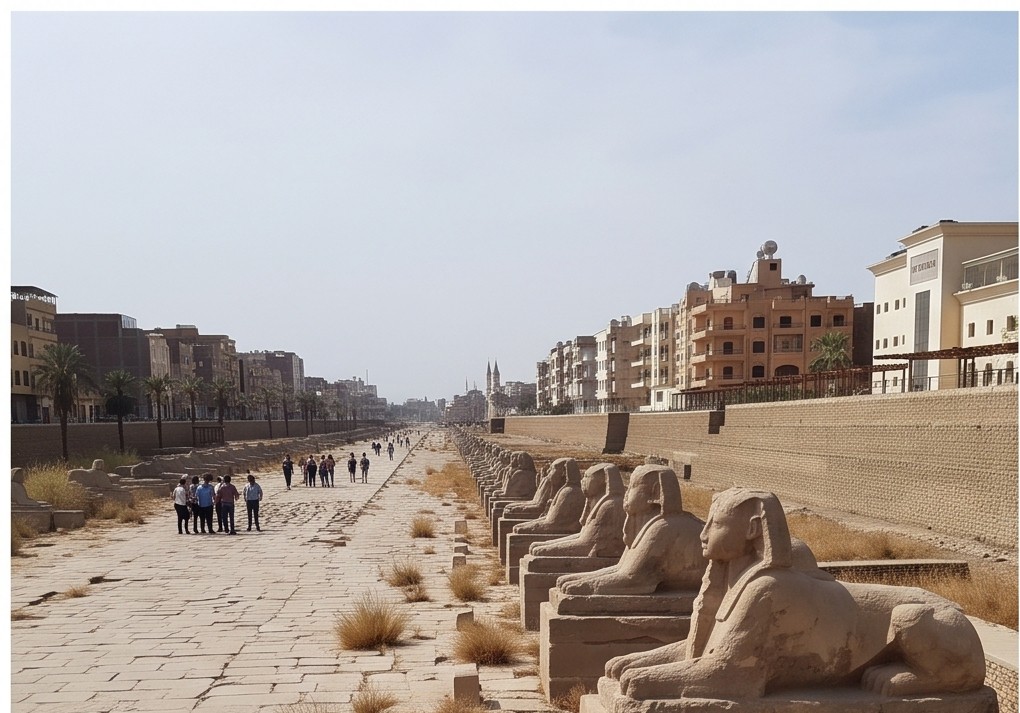
AI-generated image · may differ from the real place Walk onto the stone paving of the Avenue of Sphinxes, the ancient processional walkway extending nearly three kilometers between Karnak and Luxor. To capture its dramatic perspective, position yourself along the walkway during the late afternoon when the low sun casts repeating sphinx silhouettes into golden infinity. This grand dromos lay buried beneath layers of desert sand for centuries until nineteen forty nine, when Egyptian archaeologist Mohammed Zakaria Ghoneim uncovered the first eight statues near Luxor Temple. Notice the rhythm of the carving, where ram heads and lion bodies alternate with human featured sphinxes. It resembles a perfectly sequenced multi-course banquet, where each course repeats a familiar motif while offering subtle variations in carving technique and stone grain. The sun-warmed limestone radiates an earthy, baked warmth underfoot.
Follow the repeating line of stone guardians as they lead your steps directly toward the refined galleries along the Nile corniche.
- 1 min · on site
The Uncluttered Tasting Menu of Antiquity
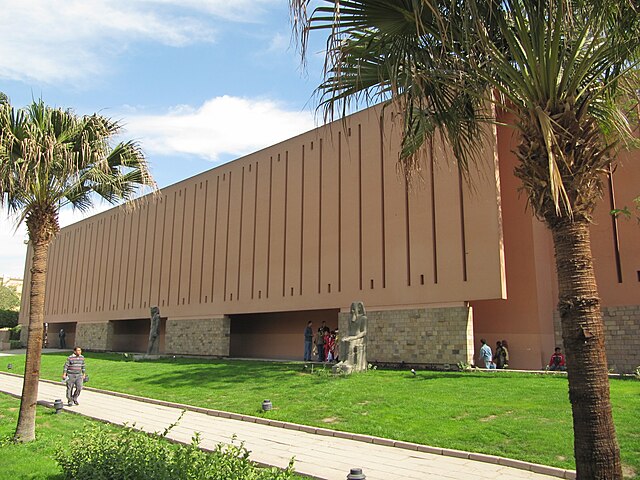
Photo · Wikimedia Commons Enter the cool, subdued atmosphere of the Luxor Museum along the Nile corniche, built by architect Mahmud El Hakim to display masterworks without visual distraction. Position yourself before the exquisite calcite double statue of Sobek and Amenhotep III, where natural light illuminates the buttery smoothness of polished alabaster. Unlike cluttered traditional storehouses, this sanctuary presents artifacts like an exclusive tasting menu, giving every sculpture space to breathe. Notice the extraordinary cache of New Kingdom statues discovered beneath Luxor Temple, their dark diorite surfaces finished with a satin-smooth glaze that feels almost buttery to the admiring eye. The curatorial restraint here mirrors the discipline of a top chef who relies on pure ingredients rather than heavy garnishes. Before leaving, step onto the open corniche terrace outside for sweeping sunset views across the Nile.
After indulging in this refined display of pharaonic art, stroll into the atmospheric backstreets of Luxor to experience the city's living culinary heritage.
- 1 min · on site
Spices and Shaded Courtyards
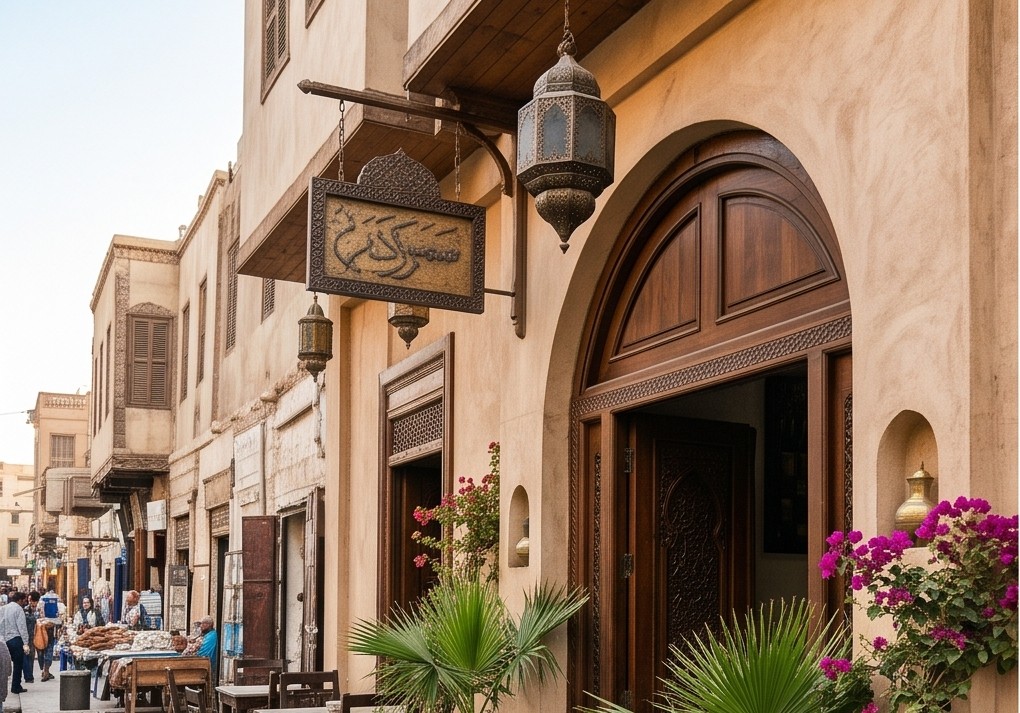
AI-generated image · may differ from the real place Step through the wooden doorway of Sofra Restaurant and Cafe, housed within a beautifully restored traditional Egyptian home. To enjoy the most evocative dining experience, request a table in the open courtyard where shaded lanterns cast warm geometric patterns across tiled walls. The kitchen here approaches regional cuisine with reverence, roasting whole spices until their essential oils perfume the evening air. Order the traditional mezze platter, featuring velvety hummus sprinkled with sumac, smoky baba ghanoush drizzled with green olive oil, and hot tagines simmered slowly in earthenware pots. Each small dish offers a masterclass in balance, contrasting acid, smoke, and earthy cumin with crisp flatbread fresh from the oven. The slow pace of service encourages diners to linger, letting flavors unfold naturally over glasses of sweet hibiscus tea.
From this fragrant courtyard, head down to the riverbank pier to board a wooden boat for a peaceful voyage south.
- 1 min · on site
The Emerald Pantry of the Nile
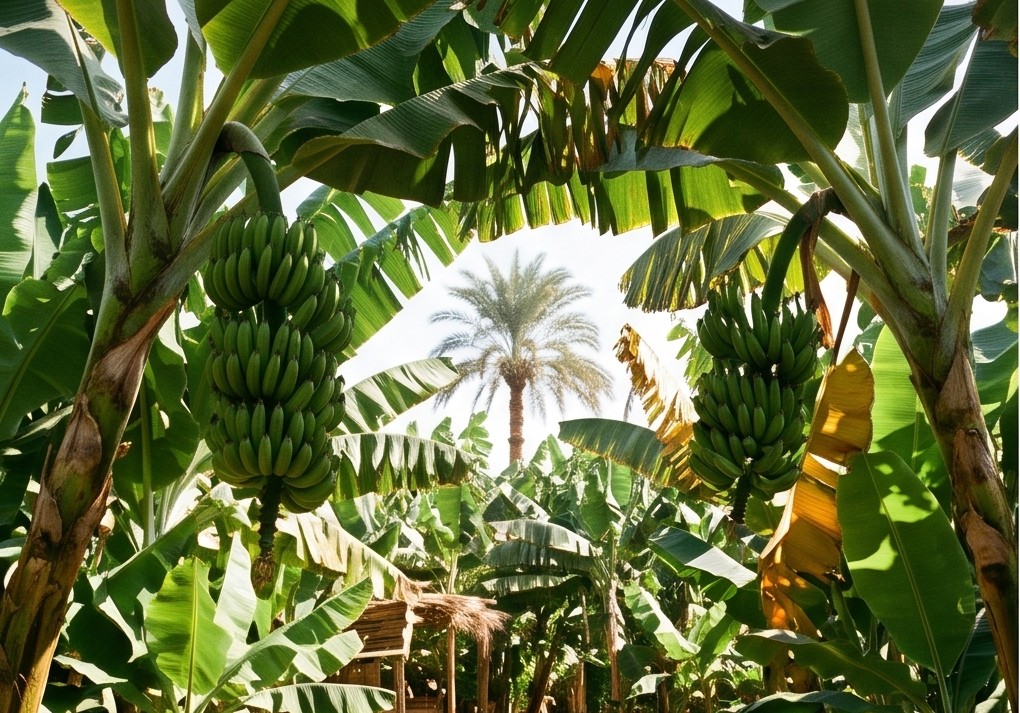
AI-generated image · may differ from the real place Board a traditional wooden felucca for a tranquil river journey toward Banana Island Sara, a lush green plantation island nestled serenely in the bend of the Nile. To maximize the sensory magic of the trip, combine your island visit with a sunset felucca ride, watching palm trees and banana fronds cast emerald reflections across golden water as the sun dips behind Western Thebes. Stepping onto the island soil feels like entering a living tropical pantry, where heavy banana clusters hang amidst cool river breezes and sweet citrus blossoms. Tasting the sweet, creamy flesh of freshly harvested bananas offers a wonderful contrast to the dry desert heat of Upper Egypt. Here on the peaceful riverbank, the culinary and visual journey through Luxor comes full circle, balancing monumental stone architecture with lush agricultural abundance.

Luxor is not merely a destination to be seen; it is a profound sensory masterpiece to be digested slowly. Long after the golden dust of the Nile settles, the memory of its sun-baked sandstone, delicate alabaster, and fragrant spices remains on the palate like a cherished vintage.
Take it further
Open the tour in the appThe tour in the app
Luxor Visual and Culinary Highlights WalkExplore Luxor's most picturesque viewpoints and culinary landmarks, moving from the colossal hypostyle colonnades of Karnak to the Sphinx Avenue, the serene galleries of Luxor Museum, authentic courtyard mezze at Sofra, and a sunset felucca voyage to Banana Island.
+ Add the tour to your planIf you have the app the tour opens right away; otherwise you go to the store.FAQ
- What is the best time of day to photograph the Great Hypostyle Hall at Karnak Temple?
- Arrive early in the morning just after sunrise when long shadows accentuate the depth of the columns and visitor numbers are at their lowest.
- How can visitors best experience the culinary traditions of Luxor?
- Dine in atmospheric restored houses like Sofra for authentic mezze, and take a felucca trip to riverbank plantations to enjoy fresh seasonal fruit along the Nile.
This piece was newly written based on the Wikipedia articles ‘Karnak’, ‘Avenue of Sphinxes’ · CC BY-SA 4.0