Contents
History & cultureBY TELLBY7 sections · numbered as on the map01 Orientation
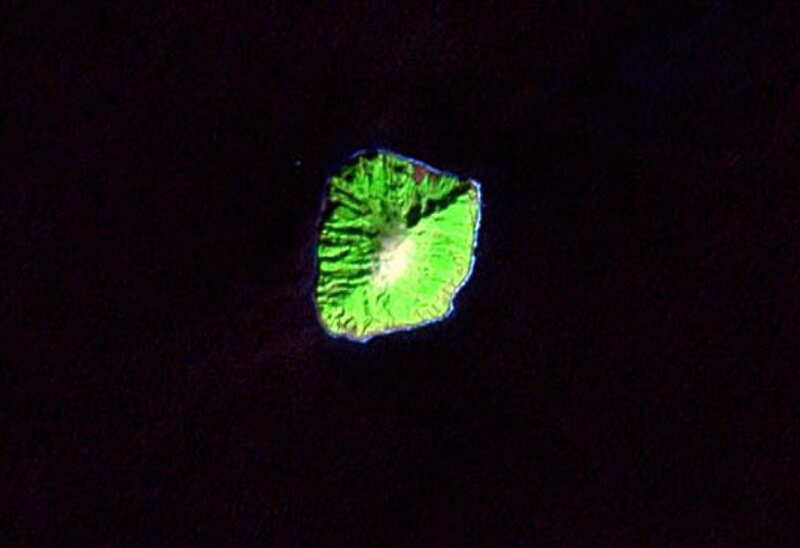
Welcome to South Iwo Jima, a solitary volcanic island standing in the vast expanse of the northwestern Pacific Ocean. Located approximately one thousand kilometers south of the Japanese main islands, this extraordinary site represents the southernmost boundary of the World Natural Heritage property of the Ogasawara Islands. The Ogasawara Archipelago comprises a complex chain of oceanic islands that have never been connected to any continental landmass throughout their entire geological history. Geologically, the Ogasawara Islands provide an irreplaceable natural stage where the long formation process of an oceanic island arc can be observed above sea level. While the older Ogasawara Archipelago boasts a geological history exceeding forty million years and Nishinoshima represents an actively expanding newly formed volcano, the Volcanic Island Group to which South Iwo Jima belongs reflects a distinct developmental stage spanning tens of thousands to hundreds of thousands of years. Thanks to this profound and enduring geographical isolation, life on these islands evolved along entirely independent pathways, giving rise to remarkable adaptive radiation and fine-scale speciation. Recognizing these exceptional ongoing evolutionary processes and the extraordinary level of species endemism, UNESCO inscribed the Ogasawara Islands on the World Heritage List in two thousand eleven. Among the numerous islands constituting this heritage property, South Iwo Jima holds an exceptionally sacred and pristine status. This island has never experienced human settlement or commercial development at any point in history. It remains one of the very few places on Earth where ecosystem processes operate entirely free from human disturbance. The formidable vertical sea cliffs and violent ocean surf surrounding the island have served as an impenetrable natural fortress, barring the introduction of feral goats, invasive rats, flatworms, and aggressive alien plant species that have severely altered other oceanic island ecosystems worldwide. While active restoration programs and continuous invasive species management are required on inhabited islands like Chichijima and Hahajima, South Iwo Jima preserves its primeval state in absolute structural perfection. It stands as an untouched reference point and an invaluable baseline for global evolutionary biology. This audio guide will lead you through the geological marvels, primeval slope forests, unique land snail radiations, and rigorous conservation policies of this extraordinary island sanctuary. Prepare to immerse yourself in the quiet majesty and profound peace of a world where natural forces reign supreme.
02 Coastal Boundary
The coastal boundary of South Iwo Jima represents a remarkably formidable and impenetrable natural fortress that has shielded its primeval ecosystem from all forms of external ecological disturbance for hundreds of thousands of years. Look down towards the dark black volcanic rock cliffs along the left side of your field of view. …
03 Primeval Slope Forest
The primeval slope forest of South Iwo Jima represents an extraordinary, irreplaceable ecological sanctuary where endemic birds and the island's sole indigenous mammal, the Bonin flying fox, have coevolved in complete structural harmony without ever experiencing the threat of introduced mammalian predators. Look up towards the dense forest canopy covering the steep slope rising high above you. …
04 Ridge Line & Land Snails
The steep, rugged ridge line of South Iwo Jima serves as a sacred evolutionary stage where endemic land snails have undergone extraordinary adaptive and non-adaptive radiation, representing a cornerstone of the property's Outstanding Universal Value. Look down at the uneven soil and damp leaf litter layer beneath your feet. A rich, moisture-retaining carpet of organic debris blankets the ground along the narrow mountain ridge, creating an ideal microclimate for terrestrial invertebrates. …
05 Volcanic Scrubland
The volcanic scrubland on the steep slopes of South Iwo Jima symbolizes the absolute global commitment to preserving primeval nature by strictly minimizing human entry, including scientific research activities. Look to the right at the tough, resilient scrub stems along the slope. Growing low against the steep volcanic incline, these hardy shrubs form dense, compact thickets explicitly engineered by nature to withstand fierce Pacific ocean winds and salt mist. …
06 Summit Viewpoint
The summit viewpoint of South Iwo Jima presents an extraordinary, breathtaking panorama where marine, avian, and terrestrial ecosystems converge into a single, highly integrated natural framework. Look far out toward the distant, unbroken horizon ahead of you. The vast expanse of the deep blue Pacific Ocean meets the open sky, framed by the dramatic, sheer volcanic ridges and lush slopes of the island below. …
07 Closing
Our audio guide journey exploring the extraordinary wilderness of South Iwo Jima has now come to its official conclusion. Rising solitary from the depths of the Pacific Ocean, this pristine volcanic sanctuary demonstrates the magnificent structural perfection and complex evolutionary processes that nature achieves when left entirely free from human disturbance and habitat fragmentation. …