 Photo Wikimedia Commons
Contents
History & cultureBY TELLBY7 sections · numbered as on the map01 Orientation
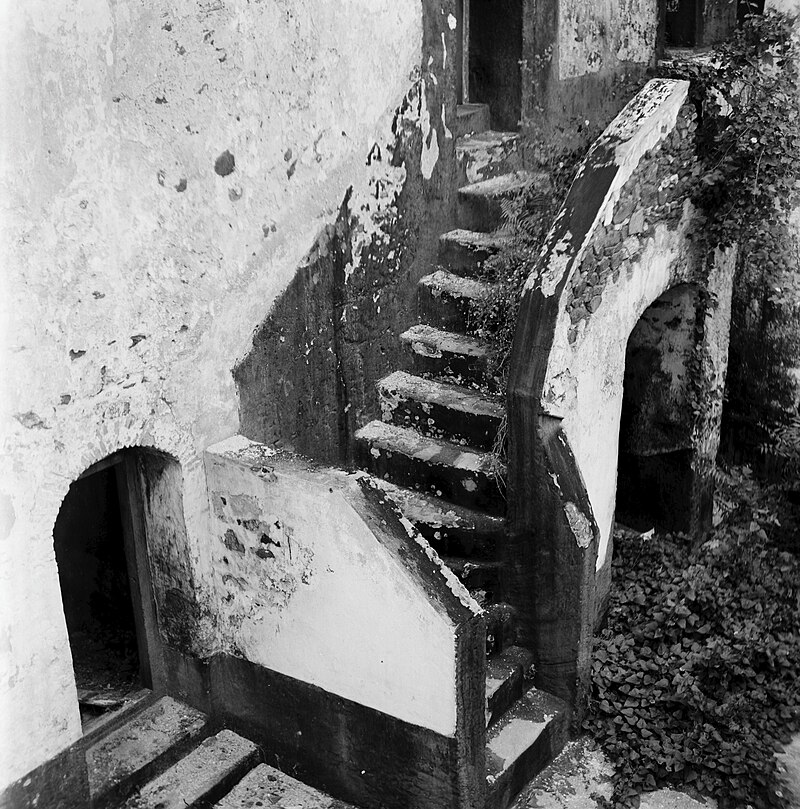
Welcome to the top of the rocky peninsula in Apam, Ghana. You are now standing at Fort Patience, an extraordinary historical site that directly overlooks the vibrant fishing town of Apam and the expansive ocean waters of the Gulf of Guinea. Also known locally by its original Dutch name Fort Lijdzaamheid, this stone fortress stands as a solemn witness to centuries of turbulent maritime trade, colonial rivalry, and indigenous African resistance along the West African coastline. Together with a preserved network of historic fortifications along the shore, this monumental structure is officially recognized as part of the UNESCO World Heritage site titled Forts and Castles, Volta, Greater Accra, Central and Western Regions. It represents a profoundly significant cultural meeting point where European trade ambitions and indigenous West African communities interacted in complex and enduring ways. The unique title of Fort Patience carries a fascinating story that is directly tied to the prolonged struggles of its construction. In 1697, Dutch traders initiated the building process on this elevated promontory to secure their commercial supply lines and establish a defensive stronghold against rival British influences as well as neighboring Agona and Fante groups. However, what was intended to be a routine construction project turned into an extraordinarily drawn out confrontation with the local community. The Dutch initially planned to erect a simple two storey stone lodge without major defensive wall structures. Yet, the local African population strongly opposed this minimalist design, insisting instead on a massive, fully fortified structure that could offer real defensive protection against potential military threats in the region. Because of this sharp disagreement over the structural size and defensive capability of the building, the indigenous population repeatedly stalled construction efforts. For five long years, work was delayed while negotiations and standoffs continued on this rocky hill. It was not until 1702 that the fort was finally completed. Reflected in its given name Lijdzaamheid, which translates to Patience in English, the Dutch acknowledged the immense frustration, perseverance, and prolonged waiting required to finish the fortress. As you begin your guided audio tour today, take a moment to absorb the sweeping vistas of the serene bay and the bustling coastline below. Behind these thick stone walls lies a rich tapestry of resilience, commerce, and shared human memory. Please follow the marked stone pathway toward the central courtyard area, where we will examine the physical site of the original stone lodge.
02 The Original Stone Lodge
Welcome to the site of the original two storey stone lodge, which forms the historic core of Fort Patience. What might surprise you most upon arriving at this central vantage point is that the Dutch traders originally had no intention of building a formidable military castle on this high rocky promontory. In fact, when initial construction was launched in 1697, the Dutch West India Company envisioned nothing more than a modest, small two storey stone lodge. …
03 The Reinforced Demi-bastions
Welcome to the reinforced demi bastions situated on the northwest and southeast corners of Fort Patience. What makes these massive stone structures so historically remarkable is that they stand as physical proof of European surrender to indigenous African demands. The Dutch, who had initially stubbornly refused to build anything more than a small trading house, were ultimately forced to concede. …
04 The Holding Quarters
Welcome to the holding quarters and weapons store inside Fort Patience. Looking out at the beautiful coastal scenery of Apam, it comes as a profound and shocking historical reversal to realize that this hilltop castle served as a tragic commercial hub for human confinement. Behind the striking stone architecture and panoramic ocean views lies a deeply painful chapter of transatlantic history. …
05 View of the Fishing Harbour and Market
Welcome to the harbour overlook, a spectacular viewpoint offering panoramic sights of the fishing harbour and market below. What makes standing at this elevated vantage point so extraordinary is the remarkable historical transformation of this exact location. A place that was once built as a militarized watchtower to enforce colonial trade dominance and monitor maritime traffic has today become the finest overlook from which to observe the peaceful and energetic daily lives of the local Apam…
06 From Police Station to Rest House
Welcome to the main entrance area, which showcases the modern adaptations of Fort Patience. What may surprise you most about this imposing stone structure is that a building constructed for colonial military defense and trade dominance later underwent a complete transformation into a public post office and local police station. …
07 Closing
Thank you very much for joining us on this audio guide tour of Fort Patience in Apam, Ghana. Today, as we walked across this historic stone fortress situated upon the rocky peninsula, we journeyed through more than three centuries of profound coastal history. Starting as a modest two storey stone lodge, Fort Patience was dramatically reshaped by the five year long determination of the local Apam community, who insisted on a fully fortified castle capable of defending their homeland. …