Contents
History & cultureBY TELLBY7 sections · numbered as on the map01 Orientation
Welcome to Sans-Souci Palace, a monumental sanctuary nestled at the base of the northern mountains of Haiti in the historic town of Milot. As you stand before these majestic ruins, you are beholding one of the most powerful symbols of human liberation and African sovereignty ever established in the New World. This architectural masterpiece was constructed between eighteen hundred ten and eighteen hundred thirteen under the command of King Henri Christophe, a prominent hero of the Haitian Revolution who crowned himself King Henri the First of northern Haiti. This site was inscribed on the UNESCO World Heritage list because it represents the triumphant victory and unyielding spirit of African descendants who broke the chains of colonial slavery and constructed their own sovereign nation. Beyond technical registration criteria or bureaucratic numbers, World Heritage status honors this complex as an irreplaceable testament to African architectural genius and human dignity.
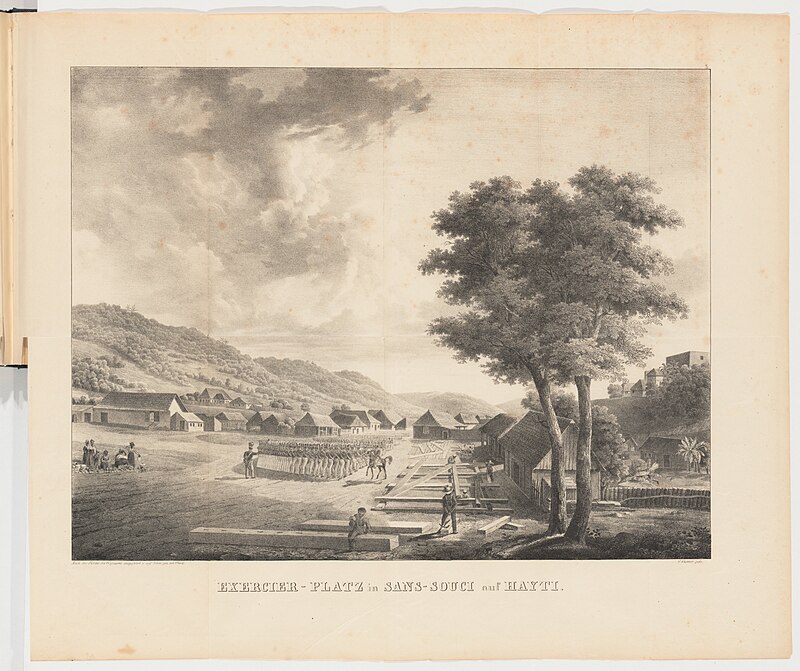
Here in the Caribbean, former slaves who had endured generations of brutal plantation oppression proved to the entire world that they possessed the intellectual brilliance, organizational capability, and artistic refinement to build a kingdom of matchless grandeur. King Henri Christophe—who was born enslaved in Grenada, worked as a scullion and hotel manager, and fought in the American Revolutionary War at the Siege of Savannah—sought to demonstrate to European colonial powers that black people were fully capable of supreme statecraft and architectural design. Constructed on the grounds of a former French sugar plantation that Christophe had managed during the revolution, Sans-Souci served as the royal seat of power and the administrative heart of the kingdom. The sprawling complex housed grand reception halls, state ministries, military barracks, a royal hospital, a mint, a printing press, an art academy, and expansive terrace gardens.
As we begin this audio guide journey together, take a moment to absorb the unique atmosphere of this sanctuary where human ambition, engineering brilliance, and tragic political conflict intersect. Throughout our walk, we will explore the monumental double staircase, the subterranean cooling waterworks, the royal chambers, the chapel where the king met his final moment, and the upper terraces looking toward the distant mountain fortress of Citadelle Laferrière. Please pause at the lower esplanade, feel the cool mountain breeze coming down from the ridges, and step into a history forged by courage and profound human complexity.
02 The Monumental Double Staircase
Formerly enslaved Africans constructed the most magnificent palace in the entire Caribbean right here, driven by a ferocious determination to astonish European imperial powers with their architectural taste and engineering genius. As you stand at the base of this entrance, lift your eyes and gaze upon the sweeping double staircase of deep red brick that curves gracefully upward toward the central pavilion of the palace ruins. …
03 The Ingenious Underground Waterworks
In the scorching tropical heat of northern Haiti, where summer temperatures regularly exceed thirty degrees Celsius, ice-cold mountain spring water was engineered to flow continuously beneath and around the royal chambers to keep the palace delightfully cool. Look toward the lower section of the ruined wall on your left, where a small arched masonry opening and exposed terracotta pipe conduit are visible beneath the crumbling brickwork. …
04 The Royal Chambers and the Fate of Colonel Sans-Souci
The world-famous name of this palace, Sans-Souci, does not merely mean carefree living, but was in fact the exact name of an African-born revolutionary general who was betrayed and assassinated by King Henri Christophe right near this site. Stand near the center of the royal audience chamber and look out through the empty, tall window frames that overlook the sweeping panorama of Milot village below. …
05 The Royal Chapel and the King's Last Moment
King Henri Christophe, who had ruled northern Haiti with absolute authority, brought a dramatic end to his own life inside this royal chapel by firing a silver bullet into his heart as a popular uprising reached his palace gates. Step into the interior of the chapel and look directly upward at the partially destroyed circular dome that opens dramatically toward the open sky above. …
06 The Upper Terraces and the Citadel on the Horizon
This magnificent upper terrace garden, once adorned with exotic flowers, marble statues, and manicured esplanades, was transformed into a permanent field of ruins when a catastrophic earthquake struck northern Haiti on May seventh, eighteen hundred forty-two. Direct your gaze south toward the high mountain peaks in the distance, where the dramatic dark silhouette of Citadelle Laferrière emerges through the shifting mountain clouds. …
07 Closing
As we conclude our audio tour here in the open courtyard of the Place d'Armes, take a moment to look back at the weathered red brick walls, soaring arches, and grand double staircases of Sans-Souci Palace. Standing amidst these silent ruins, we are called to reflect upon the profound complexities of human history. This magnificent palace was born from both extraordinary African ambition and tragic internal sacrifice. …