Contents
History & cultureBY TELLBY7 sections · numbered as on the map01 Orientation
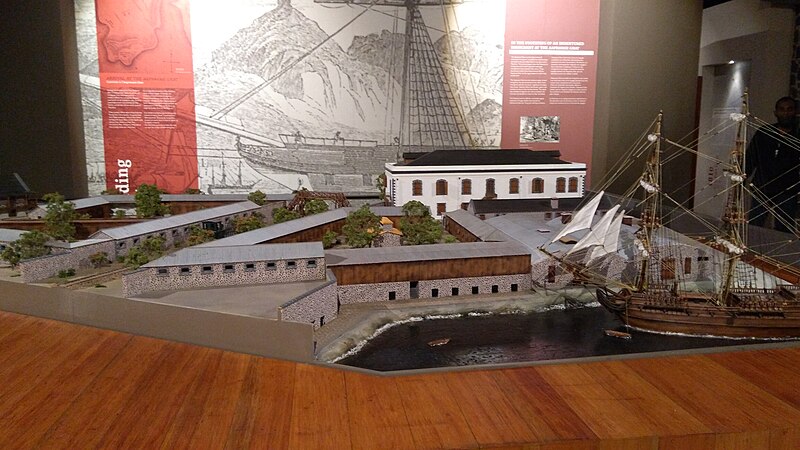
Welcome to Aapravasi Ghat, a deeply moving historical landmark situated along the sheltered shores of Trou Fanfaron bay in Port Louis, the vibrant capital city of Mauritius. This historic building complex stands as an extraordinary global symbol of human endurance, social transformation, and cultural integration in modern history. Following the official abolition of slavery across the British Empire in the early nineteenth century, colonial authorities launched an ambitious global economic initiative known as the Great Experiment. This unprecedented scheme aimed to replace emancipated African plantation workers with contracted indentured labourers recruited primarily from the Indian subcontinent, as well as parts of East Africa, Madagascar, China, and Southeast Asia. Between the mid-nineteenth and early twentieth centuries, nearly half a million indentured labourers passed through this very immigration depot before being allocated to sugar estates and public infrastructure works throughout Mauritius and distant colonial territories. The continuous influx of these contracted workers fundamentally reshaped the national demographic composition, agricultural landscape, and social identity of Mauritius, where a majority of the population today traces their lineage directly back to these courageous early migrants. Recognizing its monumental significance in global social history and the shaping of diaspora cultures, UNESCO inscribed the site as a World Heritage Site in two thousand six. Although unchecked mid-twentieth-century urban development and modern transportation projects led to the partial loss of the original complex, the surviving stone structures have been preserved and protected as a national monument under Mauritian heritage law. As you begin your visit today, we encourage you to move at a measured pace through these quiet stone courtyards. Take time to observe the remaining basalt walls, the historic archway, and the preserved room foundations that together tell a profound story of migration and resilience. Let your imagination envision the thousands of men and women who once stood in these spaces, waiting to enter a completely unknown world. Now, please guide your steps toward the historic quay where our journey begins, right in front of the famous fourteen stone steps where history was made.
02 The Fourteen Stone Steps
It is truly remarkable to consider that nearly half a million people stepped onto this island via these exact stone steps after surviving an arduous multi-week voyage across the Indian Ocean from the ports of India. Look down at the fourteen stone steps directly in front of you. These modest basalt steps formed the physical shoreline interface where ocean vessels delivered weary travellers onto the soil of Mauritius, representing the immediate transition from a perilous maritime passage to an…
03 The Stone-Arched Gateway
Passing directly under this imposing stone archway represented a definitive and irreversible moment of transition, permanently dividing an immigrant's past existence in their homeland from an unknown future as a contract worker within the vast network of the British Empire. Raise your eyes to the curved stone archway standing above the entrance. …
04 Hospital Block and Gatekeeper's Office
The health regulations enforced at this immigration depot were extraordinarily rigorous, to the extent that if a single case of smallpox or another contagious disease was diagnosed on an incoming vessel, every single passenger aboard was immediately sent to isolated quarantine islets offshore. Look to your left at the surviving stone rooms of the hospital complex. …
05 Central Courtyard and Photographic Registration Area
Starting in eighteen sixty-five, every single immigrant processed at this depot was photographed twice right here in this yard, resulting in the creation of one of the earliest and most comprehensive photographic identity archives in modern world history. Stand in the middle of this wide stone yard where thousands of immigrants once sat in orderly rows waiting for administrative processing. …
06 Immigrant Shed Wall and Cooking Utensils Display
Arriving contract labourers spent a surprisingly brief period of only two to three days residing within these depot sheds before completing administrative procedures and being assigned to sugar estates located across the island. Look toward the standing stone wall and the metal cooking vessels displayed beside it. This solitary basalt wall stands as the remaining physical testimony to the large residential immigrant sheds that once occupied this section of the compound. …
07 Closing
As we conclude our tour of Aapravasi Ghat, consider the monumental demographic and cultural legacy of this historic depot. Today, approximately sixty-eight percent of the total Mauritian population traces their ancestral roots directly back to the indentured contract workers who climbed the fourteen stone steps of this very site. …