Contents
History & cultureBY TELLBY7 sections · numbered as on the map01 Orientation
Welcome to the Archaeological Site of Atapuerca, an extraordinary historical landscape that preserves the epic saga of human evolution spanning over one million years. You are currently standing at the entrance of the historic railway cutting located in the Sierra de Atapuerca near the city of Burgos in northern Spain. Recognized worldwide for its supreme scientific importance, this site provides the earliest and most abundant evidence of ancient human presence in Western Europe, revealing how our remote ancestors survived, adapted, and evolved across countless generations.
The remarkable journey of discovery at this location began at the dawn of the twentieth century. Railway workers began carving deep trenches through the limestone rock of the Atapuerca Mountains to build a narrow gauge railway intended for transporting mineral resources. Although the industrial railway project itself proved short lived and was eventually abandoned, the deep cutting carved straight through the karst geology inadvertently sliced open a series of hidden subterranean caves and pristine sediment layers that had remained sealed for hundreds of thousands of years. What started as an industrial infrastructure project ultimately unlocked one of the most magnificent paleoanthropological treasure troves in human history.
UNESCO designated the Archaeological Site of Atapuerca as a World Heritage Site due to its unparalleled record of continuous human settlement and its exceptional preservation of prehistoric ecosystems. Deep within these karstic caverns lie continuous evolutionary strata documenting the arrival and gradual development of ancient human lineages originating from African ancestors. The protected environment inside these natural subterranean caves allowed fragile human fossils, primitive stone tools, and prehistoric animal bones to remain intact through shifting climatic cycles over a million years.
As you walk along this historic trench pathway, you will explore a series of extraordinary excavation sites, including Sima del Elefante, Gran Dolina, Trinchera Galeria, Sima de los Huesos, and Portalon. Every layer of soil and rock visible along these exposed cliffs represents a distinct chapter in the story of human behavior and adaptation. We invite you to step forward into this ancient corridor and discover the fascinating secrets of our earliest ancestors. Let us now begin our walking tour by visiting the oldest excavation site along the path, where the earliest face of Western Europe was uncovered.
02 Sima del Elefante The Oldest Face of Western Europe
A jawbone fossil representing the oldest human face in Western Europe dating back approximately 1.4 million years was uncovered right here within these deep soil strata. Please take a moment to look closely at the high cliff section before you where layers of rock and sediment are stacked high above one another. This sixteen meter thick stratigraphic sequence completely fills the entrance of the cavern known as Sima del Elefante. …
03 Gran Dolina Aurora Stratum and Early Human Cannibalism
Unmistakable butchering marks on eight hundred thousand year old Homo antecessor bones found in this cavern provide the oldest definitive evidence of human cannibalism anywhere in the world. As you stand before the massive eighteen meter wall of sediment at Gran Dolina, please direct your attention toward the lower red soil layer known as the Aurora stratum. …
04 Trinchera Galeria Acheulean Handaxes and Ancient Hunters
This location functioned as a specialized natural hunting trap and butchering site where ancient humans systematically utilized advanced Mode 2 Acheulean handaxe technology. As you stand inside this section, please look upward toward the natural opening in the cave ceiling and observe the cavern floor directly underneath it. Known as Trinchera Galeria, this site possesses a seventeen meter thick sedimentary sequence divided from G I to G VI. …
05 Sima de los Huesos Excalibur and the Mysteries of Burial
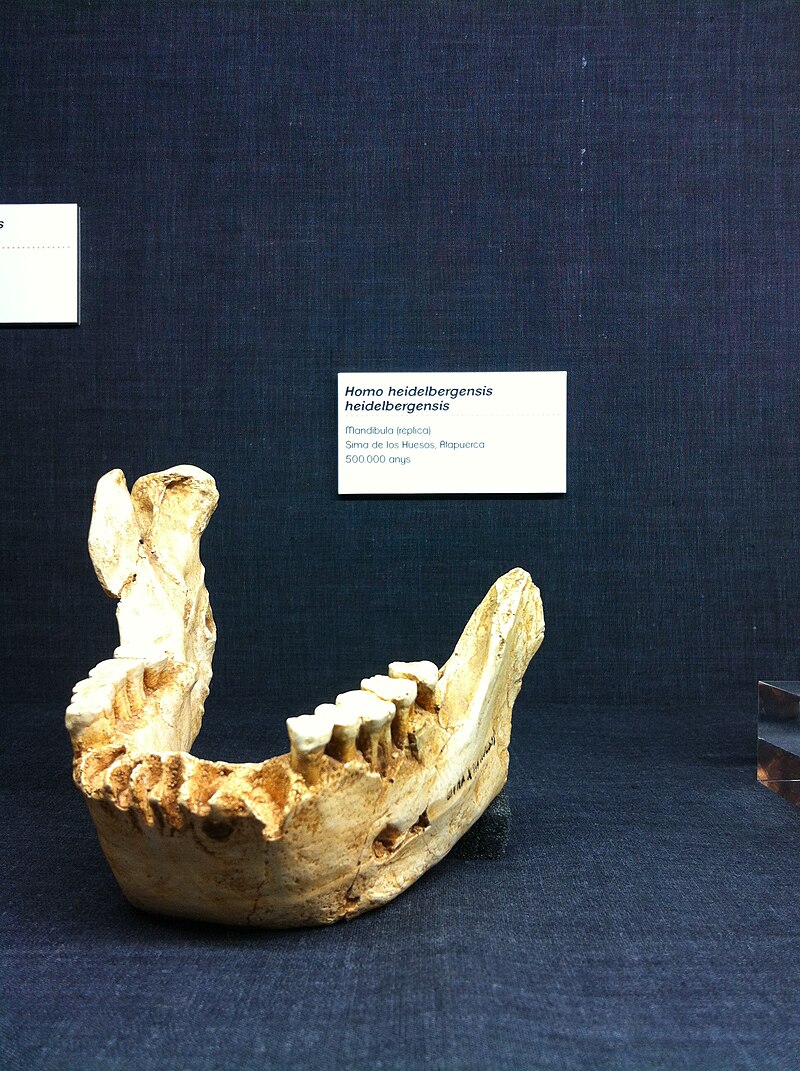
At the bottom of a thirteen meter deep vertical shaft, over five thousand five hundred fossil bones belonging to twenty eight Homo heidelbergensis individuals were discovered alongside a single red stone tool. Please raise your eyes and look toward the dark opening of the deeply buried vertical corridor inside Cueva Mayor. …
06 Portalon de Cueva Mayor Ceramics and Continuous Occupation
Far beyond the Paleolithic era, this spacious cavern entrance served as an enduring home for human communities continuously through the Neolithic and Bronze Age into recent history. As you stand near this impressive archway, please observe the wide cave entrance courtyard where soil strata mix with ancient ceramic fragments. …
07 Closing
As we stand at this elevated viewpoint overlooking the rolling hills and plains of the Sierra de Atapuerca, our extraordinary journey through one million years of human evolution comes to a close. The path we have walked today is far more than a collection of archaeological trenches, it is a living testament to the resilience, adaptability, and enduring spirit of our ancient ancestors. …