Contents
History & cultureBY TELLBY7 sections · numbered as on the map01 Orientation
Ivindo National Park situated directly on the equator in northern Gabon represents one of the most pristine and biologically irreplaceable tropical rainforest environments remaining on earth. Established as a national park in two thousand two and inscribed as a UNESCO World Heritage site in twenty twenty one this magnificent landscape encompasses nearly three hundred thousand hectares of core intact forest and an extensive buffer zone covering over one hundred eighty two thousand hectares. The site serves as a vital sanctuary for a rich concentration of biodiversity that continues its natural evolutionary dynamics without human disturbance. The park encompasses the main interior plateau of Gabon where the Ivindo River flows as the primary tributary to the great Ogooue River basin creating a dynamic hydrographic network of blackwater streams quiet reaches and roaring waterfalls. Environmental protection regulations around the property mandate a strict five hundred metre wide boundary strip along forest concessions while key neighboring areas have achieved Forest Stewardship Council certification to safeguard ecological integrity. As you stand at the northern threshold of this walking route you can immediately sense the profound atmosphere of an ancient wilderness. The surrounding high canopy features massive trees that stretch toward the equatorial sky creating a shaded world saturated with moisture and vibrant natural sounds. The outstanding universal value of this national park rests upon its exceptionally intact ecological processes dark winding river networks and vast old growth forests that harbour numerous endemic species found nowhere else in central Africa. The physical environment is shaped by its location on the equator where warmth and moisture sustain high levels of biological productivity. A network of blackwater rivers crosses the expansive plateau forming dramatic rapids and cascading waterfalls bordered by undisturbed rainforest. The dark tea coloration of the water results from dissolved organic compounds originating from decaying leaves on the forest floor nourishing a highly specialized aquatic ecosystem. Throughout this orientation zone you are invited to appreciate the sheer scale and serenity of an ecosystem covering vast equatorial terrain. This undisturbed space allows ongoing speciation and evolutionary dynamics to unfold across diverse forest formations and river habitats. Please prepare to follow the designated trail as we explore the remarkable biological scientific and geographical features that make this national park a treasure of global conservation.
02 Ipassa Plateau and IRET
Entering the northern gateway of Ivindo National Park near the Ipassa Plateau presents travelers with a landscape that superficially resembles a young secondary forest. Dense thickets of slender trees cover the forest floor, leading many first time visitors to assume that logging or human clearing previously altered this land. However these open canopy gaps and young tree stands are actually the extraordinary result of natural atmospheric disturbances native to this high equatorial plateau. …
03 Kongou Falls
The majestic area surrounding Kongou Falls on the Ivindo River represents one of the most magnificent freshwater natural features in Central Africa where churning river channels meet undisturbed tropical rainforest. Within the fast flowing rapids and submerged rocky substrates beneath these cascades lies a highly specialized aquatic ecosystem of extraordinary international conservation value. …
04 Langoué Baï
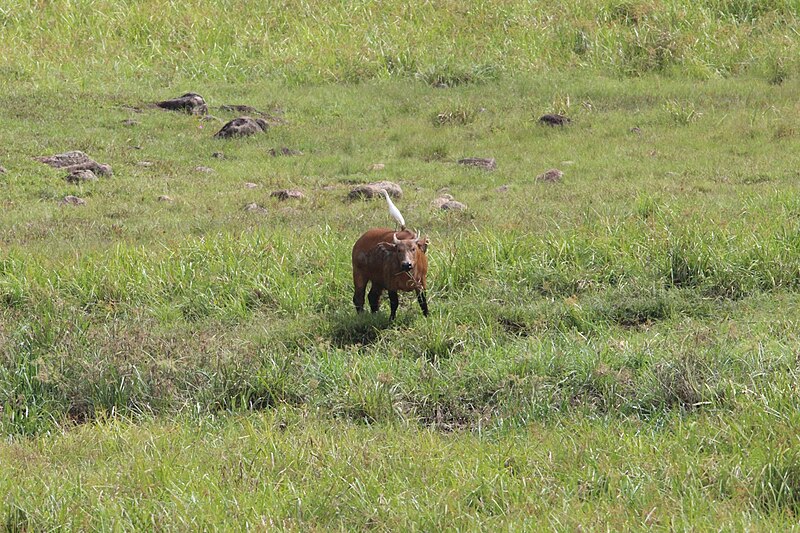
Deep within the southern sector of Ivindo National Park lies Langoue Bai recognized as one of the five most important forest clearings in all of Central Africa. Surrounded by dense tropical rainforest this natural wetland opening functions as an extraordinary gathering place for the region's most iconic flagship mammals. …
05 Caesalpinioideae Ancient Forest
Extending across the southern sector of the national park is an extraordinary forest formation dominated by ancient trees of the Caesalpinioideae family. This habitat represents one of the most remarkable old growth forest stands in Central Africa and across the entire Guinean Congolese phytogeographical zone. …
06 Djidji River and Aquatic Habitat
Reaching the quiet riverbanks of the Djidji River brings visitors to a remarkable blackwater habitat where tranquil waters conceal extraordinary biological processes. Beneath the dark surface of this river system exists a globally unique swarm of electric fish belonging to the genus Paramormyrops within the Mormyridae family. Approximately fifteen species of these electric fish inhabit the open waters and quiet reaches of the Ivindo and Djidji hydrographic network. …
07 Closing
Our guided audio journey through Ivindo National Park has now come to its official conclusion. Throughout this tour we have traversed an exceptional equatorial sanctuary defined by ancient old growth forests picturesque blackwater river networks and extraordinary biological richness. From the orientation starting point to the high terrain of the Ipassa Plateau the thunderous torrents of Kongou Falls the wildlife clearings of Langoue Bai the ancient Caesalpinioideae forest and the quiet black…