Contents
History & cultureBY TELLBY7 sections · numbered as on the map01 Orientation
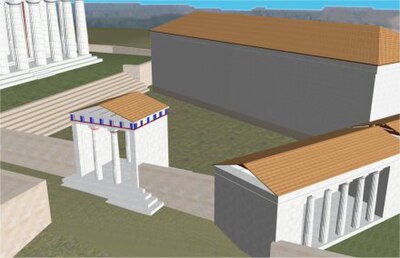
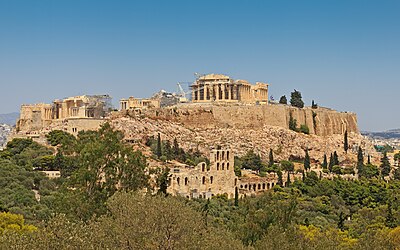
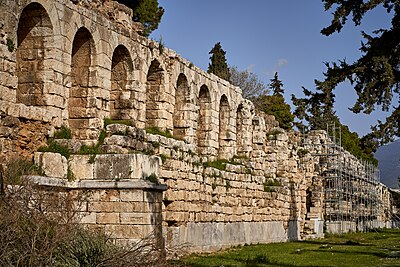
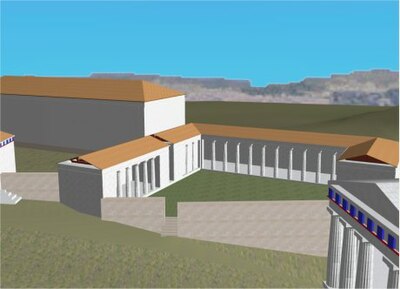
Welcome to the Athenian Acropolis, an extraordinary World Heritage site where human civilization reached its architectural apex in complete harmony with the natural bedrock. As you pass through the grand entrance gate of the Propylaea and step onto the high plateau, take a slow breath and look toward your right at the southwest corner. Here lies the sacred precinct known as the Brauroneion, or the Sanctuary of Artemis Brauronia. Unlike the towering marble temples that dominate the surrounding landscape, this holy sanctuary was an intimate and unique space dedicated to Artemis Brauronia, the divine protector of women during pregnancy and childbirth. Her primary sanctuary was situated at Brauron, an ancient coastal region on the eastern side of Attica. However, during the sixth century BC, during the reign of the Athenian ruler Peisistratos, this dedicated precinct was established right here on the Acropolis plateau to bring her divine protection directly into the heart of the city. The sanctuary occupied a very distinct trapezoidal shape nestled between the grand entrance portal of the Propylaea and the neighboring armory building known as the Chalkotheke. Rather than featuring a traditional row of tall marble columns surrounding a central enclosed hall, the holy precinct was designed with open covered porticoes, or stoas, resting directly against the ancient southern fortification wall. Standing in this peaceful corner, you can feel the warmth and devotion of thousands of ancient women who walked these grounds to offer heartfelt prayers for safe delivery and the health of their newborn children. Now, walk slowly toward the northeastern corner of this area, where seven steps carved directly into the living bedrock mark the original entrance into this sacred precinct.
02 Seven Rock-Cut Steps
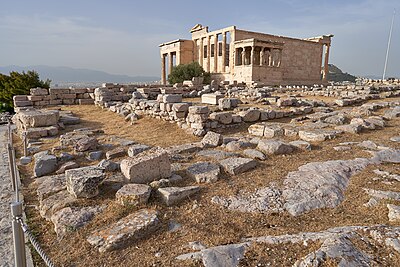
In a sacred space where you would naturally expect grand standing columns, there was never a formal temple building erected here. Lower your gaze directly onto the ground beneath your feet. You will see seven horizontal steps cut straight into the hard natural bedrock. These steps formed the main ancient entrance into the sanctuary, located near its northeast corner. …
03 The Western Wing and the Sacred Xoanon
In this sacred western wing, women who had successfully navigated the perils of pregnancy and childbirth dedicated their personal garments to wrap around the holy idol of the goddess. Look closely at the ground stones on the right side of the western corner. You are looking at the foundation line of the western wing of the stoa, measuring about 9.3 metres in length and facing eastward toward the central court. …
04 The Eastern Stoa and Praxiteles' Statue
A magnificent second cult statue of marble, crafted by the most celebrated master sculptor of classical antiquity, once stood in this eastern wing beside the older wooden idol. Look east and trace the long, shallow trench foundations carved into the bedrock floor. This eastern wing was designed as a matching side projection measuring 9.3 metres, accompanied by a short west-facing stoa running north. …
05 The Inscribed Base of the Bronze Trojan Horse
In the open courtyard of this peaceful sanctuary, there stood a colossal bronze horse representing the legendary Trojan Horse, built larger than any living steed. Look down at the central courtyard floor near your feet. You can clearly identify a large rectangular cutting where the massive stone pedestal of this famous statue was embedded into the living rock. …
06 Southern Acropolis Wall and Border with Chalkotheke
The main stoa of this sanctuary required no back wall of its own, as architects utilized the massive southern Acropolis fortification wall itself as the rear support. Look up toward the soaring southern wall face and gaze eastward where the boundary borders the ruins of the Chalkotheke armory. The main stoa structure ran parallel to this wall for roughly 38 metres, with a depth of 6.8 metres facing northward into the open courtyard. …
07 Closing
As you stand here overlooking the trapezoidal courtyard of the Brauroneion, take a quiet moment to reflect on the deep layers of human devotion left upon this ancient rock. Though the wooden stoas, the draped xoanon, Praxiteles' marble masterpiece, and the colossal bronze Trojan horse are no longer standing, their memory remains etched forever into the living stone beneath your feet. …