Contents
History & cultureBY TELLBY7 sections · numbered as on the map01 Orientation
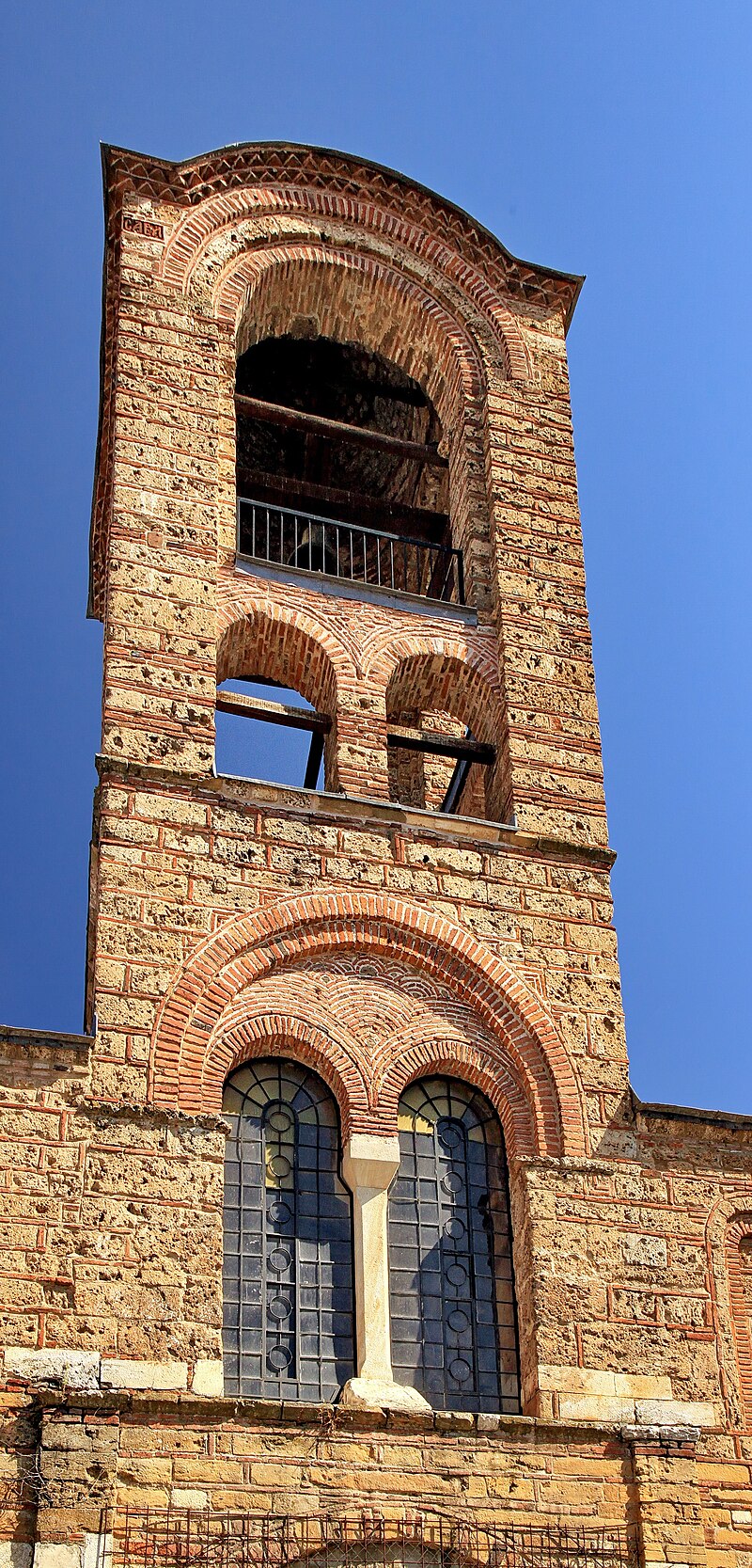
Welcome to the Our Lady of Ljevis Cathedral, located in the historic heart of Prizren, Kosovo. The courtyard where you are standing today holds the deep breath of centuries of civilizational transformation and spiritual heritage. This landmark is inscribed as a UNESCO World Heritage Site as part of the Medieval Monuments in Kosovo, recognized for its exceptional architectural innovation and the supreme artistic achievement of its Late Byzantine frescoes. Situated at a crucial historical crossroads of the Balkans, this sacred sanctuary serves as a triumph of medieval Orthodox art while standing as an enduring witness to regional history. Ancient stone fragments embedded within the outer masonry, including a Roman sacrificial altar and a slab with a laurel wreath, reveal that this site served as a place of gathering since antiquity. In the eleventh century, a three-nave Byzantine basilica was established on this foundation. Between 1306 and 1307, King Stefan Milutin commissioned the renowned master builder Nicholas to undertake a magnificent expansion. Master Nicholas added two outer naves, raised five soaring domes, and constructed a dramatic Byzantine bell tower, transforming the sanctuary into a masterpiece of Late Byzantine design. The site underwent another major shift in the fifteenth century following the Ottoman expansion across the region. In 1455, after Sultan Mehmed the Conqueror annexed Prizren, the cathedral was converted into the city's primary Friday Mosque, officially designated as Fatih Cami and locally called Cuma Cami. During this period, a tall minaret was erected, and the interior was adapted for Islamic worship, a role the sanctuary fulfilled for over four centuries. Shifting political realities in the twentieth century led to the removal of the minaret in 1923, and following World War II, the building underwent restoration to serve as a public museum and protected monument. Although the cathedral suffered severe interior damage during the 2004 regional unrest, its 2006 inscription on the UNESCO List of World Heritage in Danger catalyzed vital international conservation programs to stabilize the complex. As you take in the sanctuary's magnificent presence from this courtyard, reflect on its extraordinary journey from ancient Rome through Byzantine and Ottoman eras to the present day.
02 Master Builder Nicholas and the Ancient Spolia
Stepping into the exonarthex, the outer entrance hall of the cathedral, you are immediately confronted with an astonishing architectural revelation. Defying the prevailing medieval tradition where master builders almost always remained anonymous, the chief architect, Master Nicholas, boldly carved his own name directly into the stone wall of the exonarthex. …
03 Brushes of the Masters: Byzantine Frescoes and Councils
As you step deeper into the main nave, you are surrounded by a monumental scheme of wall paintings that contain a truly surprising theological revelation. Beyond traditional biblical narratives, the interior program features prominent and highly detailed depictions of the Great Orthodox Church Councils. The inclusion of these ecumenical synods was a calculated theological and geopolitical declaration. …
04 Poetry on Plaster: Hafez's Inscription
Standing before this frescoed wall, you are witnessing one of the most astonishing cross-cultural encounters in global heritage history. Directly incised over the painted plaster layer of the Christian frescoes is a delicate poetic inscription written in the Persian language using Arabic script. The extraordinary presence of classical Persian poetry etched onto the holy imagery of a Byzantine Orthodox church presents a rare and sublime moment of cultural convergence, where artistic appreciation…
05 Fatih Cami and the Friday Mosque Legacy
As we move toward the exterior angle of the building near the base of the former tower, we encounter a pivotal historical turning point from the fifteenth century. In the year 1455, Sultan Mehmed the Conqueror—famously known as Fatih Mehmet—personally entered Prizren following the Ottoman annexation of the region. …
06 General Piccolomini's Rest and European History
Stepping out into the tranquil churchyard surrounding the sanctuary, you encounter a truly surprising historical episode linking this Balkan site directly to broader European history. During the height of the Great Turkish War in the late seventeenth century, an imperial Austrian general tragically succumbed to the bubonic plague while meeting with a prominent Catholic archbishop in Prizren and was laid to rest right here in this churchyard graveyard. …
07 Closing
Before leaving this sacred sanctuary, pause for a final moment of reflection upon the remarkable legacy of endurance you have experienced today. Our Lady of Ljevis stands as an incomparable monument to human faith, artistic brilliance, and historic resilience. From its roots on ancient Roman foundations and its birth as an eleventh-century Byzantine basilica, to its glorious reconstruction under King Stefan Milutin and its four centuries as Prizren's central Friday Mosque, this complex has…