Contents
History & cultureBY TELLBY7 sections · numbered as on the map01 Orientation
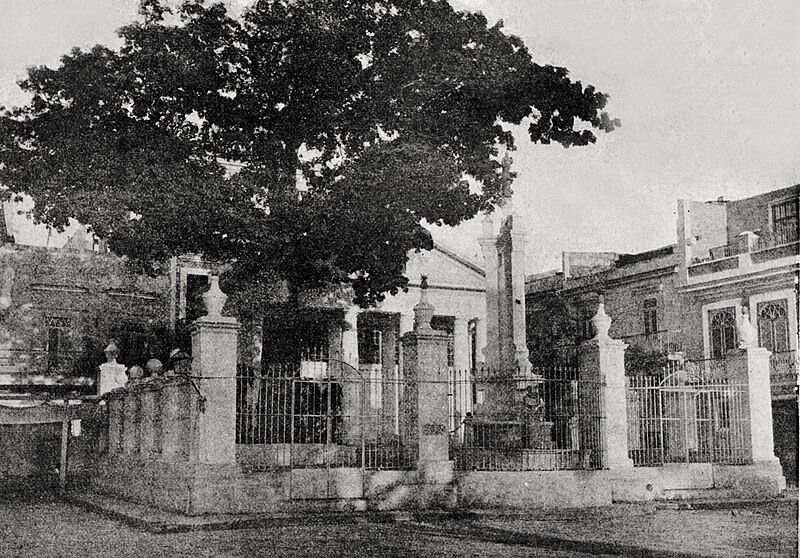
Welcome to the eastern side of Plaza de Armas, a location where the tranquil beauty and deep historical memory of Old Havana naturally converge. Standing directly before you is El Templete, a magnificent monument designed in the form of a classical Greek Doric temple that marks the sacred birthplace of the Cuban capital. This exceptional structure serves as a vital cornerstone of the World Heritage site inscribed by UNESCO in nineteen eighty-two under the official title Old Havana and its Fortifications. It occupies the precise historical site where Spanish settlers established the original village of San Cristóbal de La Habana back in fifteen nineteen. As you stand on this ground today, you are touching the very place where this vibrant Caribbean city first came into existence over five centuries ago. The creation of this elegant shrine was proposed in eighteen twenty-seven by Governor Francisco Dionisio Vives, who served as the Captain General of Cuba. Governor Vives envisioned a permanent architectural tribute that would forever commemorate the foundational events celebrated on this sacred spot, specifically the city's very first Catholic Mass and the inaugural meeting of its first town council. Under his leadership, construction proceeded with utmost dedication, leading to the formal inauguration of El Templete on March nineteen, eighteen twenty-eight, amid joyous public celebrations and formal military ceremonies. For centuries, this sacred site has been cherished by the residents of Havana as the spiritual heart and historical origin of their city, standing today as a protected national monument of profound cultural value. Take a moment to view the entire exterior of El Templete from your vantage point on the eastern edge of Plaza de Armas. Notice the exquisite balance of its design, its harmonious proportions, and the solemn dignity of its front portico, which evokes the spirit of ancient Greek architecture amidst the tropical setting of colonial Havana. Furthermore, the lush iron-fenced garden surrounding the temple and the historic trees rooted in its soil reflect the peaceful continuity of time across generations. This site is far more than just a stone monument; it is a living sanctuary that embodies the roots, heritage, and collective memory of the Cuban nation. As we begin our audio tour together, we will examine its unique architectural design, step into its historic garden, and discover the artistic treasures preserved within its quiet interior.
02 The Neoclassical Front Portico and Doric Columns
The most astonishing fact about this remarkable structure is that El Templete was the very first neoclassical building ever constructed in Havana, serving as the single civic work that exerted the greatest and most lasting influence on the entire architectural history of Cuba. At a time when traditional Spanish colonial styles dominated the urban landscape, this monument boldly introduced the refined elegance, noble restraint, and strict geometric proportions of classical antiquity, permanently…
03 The Sacred Ceiba Tree and Local Traditions
The most fascinating tradition associated with this sacred spot is that every year on the night of November fifteen, the eve of Havana's official founding day on November sixteen, hundreds of local citizens gather in a solemn annual pilgrimage around this majestic ceiba tree. According to a beloved local custom passed down through generations of Habaneros, people walk around the broad trunk of the ceiba tree three full times, toss a small coin among its exposed roots, and silently formulate a…
04 The Cajigal Column and Historic Sculptures
The most remarkable historical fact about this stone monument is that it was erected in seventeen fifty-four to mark the exact spot where Havana's original founding ceiba tree had stood before it died, serving as a monument to honor the patron saint of Spanish navigators. When the ancient living tree naturally withered away in the mid-eighteenth century, colonial authorities acted decisively to erect a permanent stone monument so that the exact geographic birthplace of Havana would never be…
05 The Memorial and Ashes of Jean-Baptiste Vermay
The most extraordinary and deeply moving fact about entering this interior space is that the brilliant French-born painter who decorated the inner walls of El Templete with magnificent historical canvases is resting here forever, interred inside the very sanctuary he helped bring to life. To be entombed permanently within the quiet shrine whose inner walls reflect your greatest artistic masterpieces is a rare and deeply poetic tribute matched by few historical monuments anywhere in the world. …
06 The Three Monumental Oil Paintings by Vermay
The most extraordinary fact about these interior artworks is that the inner walls of the shrine feature three monumental historical oil paintings, including a giant centerpiece spanning over six meters in width and two meters in height that testifies directly to the birth and heritage of Havana. In the entire history of Cuban colonial art, these monumental canvases represent an unprecedented masterwork in both narrative scale and historical accuracy. …
07 Closing
Dear visitors, this brings us to the formal conclusion of our audio guide tour at El Templete, the historic birthplace of Havana. Together, we have explored the imposing Doric columns of the front portico, the sacred green ceiba tree, the historic Cajigal Column, and the monumental oil paintings by Jean-Baptiste Vermay. Through these remarkable heritage treasures, we have traveled back in time to fifteen nineteen, touching the very origins of this iconic Caribbean capital. …