Contents
History & cultureBY TELLBY7 sections · numbered as on the map01 Orientation
Welcome to the entrance of the Xieng Khouang Plateau, one of the most mysterious and captivating archaeological landscapes in Southeast Asia. Spread across the vast upland valleys, rolling hills, and mountain ridges of central Laos, this extraordinary megalithic property is officially recognized as a UNESCO World Heritage site of outstanding universal value. Standing in the quiet stillness that has endured for millennia, these monumental stone jars offer profound testimony to the sophisticated craftsmanship, social organization, and spiritual traditions of an ancient Iron Age civilization. Across this elevated plateau, more than two thousand tubular carved stone vessels lie scattered in clusters along lower mountain slopes, spurs, and grassy fields. These imposing megaliths are not merely isolated stone monuments, but the enduring cultural remnants of an advanced prehistoric society that flourished here between five hundred BCE and five hundred CE. The geographic setting of the Xieng Khouang Plateau played a critical strategic role in the ancient world. Situated at the northern terminus of the Annamite Range, the plateau served as a vital regional crossroads connecting two major eco-cultural systems of prehistoric Southeast Asia: the Mun Mekong river system to the west and south, and the Red River and Gulf of Tonkin system to the east. The strategic distribution of these jar sites closely mirrors ancient overland trade routes that facilitated the movement of luxury goods, metalworking technology, and cultural ideas across the mainland. Ancient traders, travelers, and local agricultural communities traversed these upland passes for centuries, turning the plateau into a thriving hub of commercial and cultural exchange. As you gaze across the undulating grasslands and distant mountains today, listen closely to the quiet winds sweeping over the plateau. One can almost feel the spirit of the ancient stonemasons who carved these massive rocks from bedrock outcrops and transported them to these elevated vantage points. Though the civilization that created them eventually vanished centuries ago, their monumental achievements continue to dominate the natural landscape. UNESCO recognized the site to ensure that this irreplaceable record of human creativity and cultural interchange is preserved for all future generations. Today, you are stepping into a living historical corridor where the distant prehistoric past remains vividly present. Please follow the designated path as we begin our walk into the central field of Site 1 to examine these remarkable megalithic treasures up close.
02 Main Jar Group at Site 1: Massive Sandstone Megaliths
As you step into the central field of Site 1, the sheer scale and monumental presence of these ancient stone vessels immediately command your attention. Begin by considering an astonishing engineering fact that continues to intrigue modern archaeologists: these massive sandstone jars, some weighing up to fourteen tons, were not quarried from the immediate surroundings. …
03 The Carved Frogman Jar: Unit 2293
As we continue along the walking path, we arrive at one of the most intriguing and unique monuments in the entire archaeological landscape. Consider this extraordinary fact: out of more than two thousand stone jars cataloged across the region, Unit 2293 at Site 1 is the only known jar that features a human relief carved directly onto its exterior surface. …
04 The Natural Limestone Cave and Crematorium
Following the trail along the ridge, we arrive at the entrance of a natural limestone cave embedded in the rock formation. Begin with a remarkable archaeological revelation that alters our understanding of this landscape: this natural cave served as an ancient crematorium for the Iron Age community, complete with two man-made holes carefully carved through the limestone ceiling to act as natural smoke chimneys during mortuary fires. …
05 Stone Discs and Secondary Burial Markers
As we emerge from the cave and walk across the open field, you will notice numerous flat stone discs lying on the ground between the standing jars. Consider a surprising fact that reshaped archaeological theories: these flat stone slabs were long mistaken by early observers for jar lids, but were actually flat surface markers placed above underground burial pits. …
06 The Demining Path and UXO Safe Markers
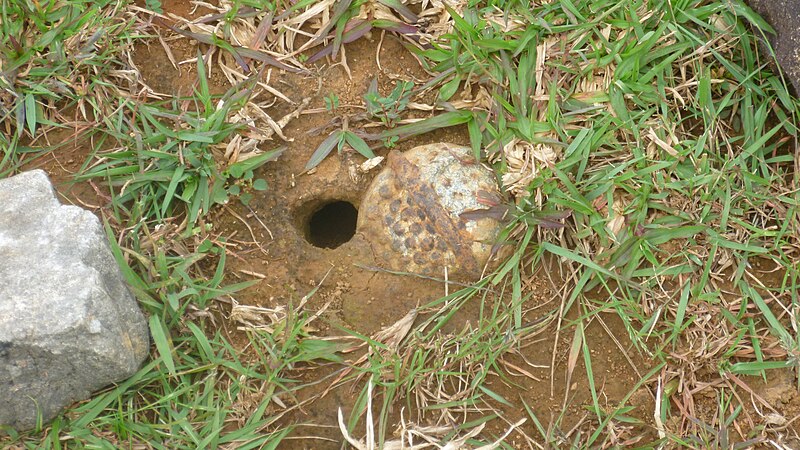
As we walk along the clearly demarcated pathway, take note of the small concrete posts aligned along the edges of the trail. Consider a sobering historical fact that deeply impacted this landscape: during the Second Indochina War between nineteen sixty four and nineteen seventy three, the Plain of Jars suffered heavy aerial bombardment, leaving millions of unexploded ordnance items hidden beneath the soil. …
07 Closing
Standing here at the elevated viewpoint overlooking the vast expanse of the Xieng Khouang Plateau, we gaze across a landscape where history, mystery, and nature intertw in profound harmony. The thousands of megalithic stone jars scattered across these rolling hills stand as an enduring testament to the creative genius, technical skill, and spiritual depth of an ancient Iron Age civilization. …