 Photo Wikimedia Commons
Contents
History & cultureBY TELLBY1 sections · numbered as on the map01 Deutsche Oper Berlin: High Drama and Modernist Echoes
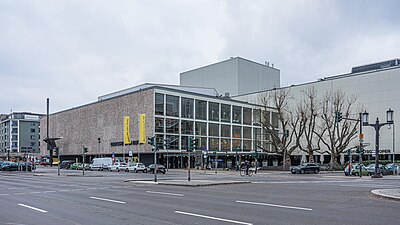
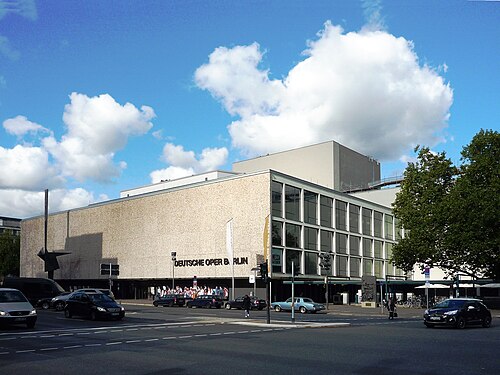
You think running twenty minutes across Berlin for a hundred thousand marks is dramatic? Try singing Wagner for four straight hours in front of two thousand critical music snobs in Charlottenburg. That is real tension. Standing right here on Bismarckstrasse, you cannot miss the Deutsche Oper Berlin. It looks less like a fairytale castle and more like an unyielding fortress of brutalist modernism. The original opera house from 1912 was completely destroyed during World War II. When architect Fritz Bornemann rebuilt it in 1961, he deliberately rejected fancy royal gilding and plush chandeliers. Instead, he raised a stark concrete facade so every single seat gets a crystal-clear view and flawless acoustics. With nearly nineteen hundred seats, it stands as one of Germany's massive cultural powerhouses. I respect Bornemann's philosophy. When your time is ticking away and life is hanging by a thread, you do not need gilded ornaments—you need raw structure, flawless precision, and absolute clarity. Opera singers hit high notes under scorching spotlights while I sprint past traffic lights in red boots. Both of us are fighting against time, caught in grand theatrical tragedy.