Contents
History & cultureBY TELLBY7 sections · numbered as on the map01 Orientation
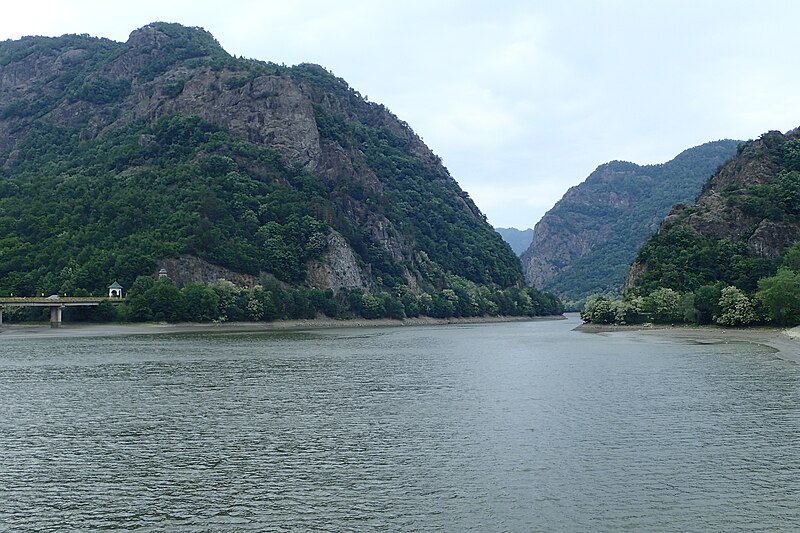
Welcome to Cozia Sanctuary, an extraordinary monastic compound nestled in a breathtaking natural landscape where the pristine, forested slopes of the Carpathian Mountains meet the sweeping gorge of the Olt River. More than a simple place of contemplation, this sanctuary stands as the spiritual anchor, dynastic mausoleum, and artistic pinnacle of the medieval Principality of Wallachia. The dense forest terrain enveloping the monastery forms an integral part of the UNESCO World Heritage listed Ancient and Primeval Beech Forests of the Carpathians, safeguarding an untouched natural ecosystem alongside six centuries of profound cultural heritage. Rising dramatically above the river, the geological formations of the Cozia Massif—anchored by the Ciuha Mare peak at an elevation of sixteen hundred and sixty-eight meters and composed of ocular Cozia gneiss, limestone, and conglomerates—create a magnificent backdrop that harmonizes seamlessly with the built environment. In the late fourteenth century, Prince Mircea the Elder, who ruled Wallachia for over thirty years and brought unprecedented territorial expansion and political stability to his realm, established this fortified monastic sanctuary along the vital Olt River trade route. Consecrated on May eighteenth, thirteen eighty-eight, the central Katholikon dedicated to the Holy Trinity became the definitive architectural prototype for dynastic Wallachian royal mausoleums. Furthermore, by fourteen fifteen, the monastery housed a renowned monastic school that grew into a major intellectual center for manuscript illumination, theology, and ecclesiastical literature across the Orthodox world. As you begin your audio journey today, your walking route will lead you from the formidable outer fortifications through a rich chronological evolution of Eastern European religious art. You will explore the main church, shaped by Serbian Morava Valley architectural influences and the theological design of the Athonite monk Nikodemos, pass the carved stone fountain commissioned in fifteen seventeen by Prince Neagoe Basarab, admire the late seventeenth-century Brancovenesc open porch and monastic quarters, and stand before the dramatic Dormition Chapel perched high above the river currents. With views extending across the water to the hillside chapel of Bolnita, listen closely to the whispering mountain winds and the gentle cadence of the Olt River as you step into a timeless realm where faith, history, and nature remain in perpetual harmony.
02 The Fortified Entrance and Outer Wall
For over six centuries, the formidable outer walls and watchtowers of Cozia Monastery have stood as an unyielding shield, defending medieval Wallachian statehood and Eastern Orthodox spirituality against waves of invading empires. Look up at the thick stone masonry above the arched entrance. These soaring vertical walls and heavy stone archways reveal at once that this monastic sanctuary was engineered to function as a defensive fortress in times of regional conflict. …
03 Façade and Porch of the Holy Trinity Katholikon
Standing triumphantly at the very center of the monastic courtyard, the Holy Trinity Katholikon served as the definitive architectural prototype for dynastic royal mausoleum churches across the Principality of Wallachia. Consecrated on May eighteenth, thirteen eighty-eight, this monumental structure established an enduring benchmark that influenced regional church design for generations. Notice the alternating courses of white stone and red brick wrapping around the church facade. …
04 Narthex Interior and Founder's Tomb
Stepping across the sacred threshold into the cool interior of the narthex, you are surrounded by extraordinarily preserved medieval frescoes created in thirteen ninety, which have remarkably survived over six centuries of regional warfare, foreign occupations, and devastating fires. The survival of these original fourteenth-century murals represents one of the most astonishing artistic miracles of the Balkan and Eastern Orthodox worlds. …
05 Central Courtyard and Prince Neagoe Basarab Fountain
The wide central courtyard reveals how successive Wallachian princes continued to fund, expand, and restore Cozia Monastery even during turbulent centuries when the principality paid heavy tribute as an Ottoman tributary state. Despite severe geopolitical pressures and external demands, Wallachian rulers viewed Cozia as an inviolable sanctuary of national identity, pourings funds into its upkeep to demonstrate their royal legitimacy and Orthodox faith. …
06 Dormition Chapel and Olt Terrace
Reaching the eastern fortified perimeter, you encounter Cozia's riverfront chapels perched directly above the rushing waters of the Olt River like watchful spiritual sentinels. Approach the edge of the eastern fortified wall and look down at the Olt River. Listen to the dramatic sound of the current surging past the rocky gorge while admiring the steep, densely forested slopes of the Cozia Massif rising magnificently on the opposite bank. …
07 Closing
Your journey through Cozia Monastery offers a profound encounter with a sacred sanctuary where over six centuries of medieval history converge seamlessly with the pristine wilderness of the Carpathian Mountains. The robust stone ramparts established by Prince Mircea the Elder in the late fourteenth century, the magnificent frescoes inside the Holy Trinity Katholikon, the finely sculpted stone fountain of Prince Neagoe Basarab, and the enduring flow of the Olt River continue to resonate with the…