Contents
History & cultureBY TELLBY8 sections · numbered as on the map01 Orientation
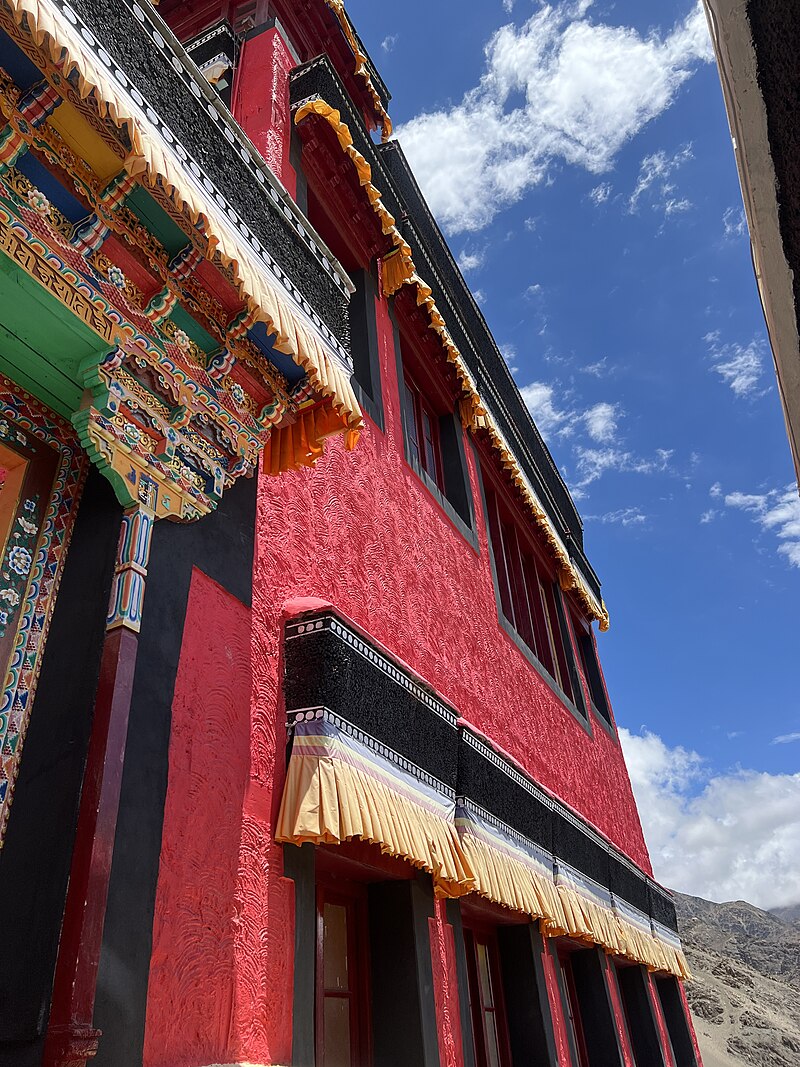
Perched dramatically atop a hill three thousand six hundred meters above sea level in the Indus Valley, Thikse Monastery is the largest and most magnificent monastic complex in central Ladakh. Located approximately nineteen kilometers east of Leh along the highway, this grand twelve story complex reveals an imposing stepped architectural outline visible from kilometers away. The structure is meticulously arranged in hierarchical order, with the humble whitewashed residential quarters for monks clustering densely around the base of the hill, while the most sacred red and ochre prayer halls, along with the pho brang, the official residence of the chief lama, crown the uppermost peak. This striking color scheme and terraced design closely resemble the famous Potala Palace in Lhasa, Tibet, earning Thikse Monastery the celebrated title of Mini Potala. The spiritual lineage of this holy site traces back to the early fifteenth century when Je Tsongkhapa, the founder of the Gelugpa school of Tibetan Buddhism, dispatched six of his key disciples to remote regions to spread the teachings of the Yellow Hat tradition. Tsongkhapa presented his disciple Jangsem Sherab Zangpo with a precious statue of Amitayus containing bone powder and a drop of Tsongkhapa's own blood, directing him to seek the aid of the King of Ladakh. Gratefully accepting the sacred gift, the Ladakhi monarch instructed his ministers to assist in establishing a Gelugpa monastery, leading to the founding of the Yellow Temple, Lhakhang Serpo, at Stagmo in the year fourteen thirty three. Decades later, Sherab Zangpo's disciple, Palden Zangpo, sought to expand the monastic footprint to a larger location. Legend recounts that as Palden Zangpo was performing sacred rituals, two crows suddenly swooped down, seized the ceremonial plate carrying torma offering cakes, and flew across the valley. When the disciples pursued the birds, they discovered the torma cakes placed atop a rocky outcrop in flawless and undisturbed condition. Interpreting this event as a divine omen fulfilling Tsongkhapa's prophecy that his doctrine would flourish on the right bank of the Indus River, Palden Zangpo founded the present monastery on that exact spot, giving it the name Thikse, which signifies in perfect order. The monastery also shares deep ties with Ladakhi royalty. Around seventeen seventy, the Lama of Hanle Monastery decreed that royal princes of Ladakh, such as Prince Jigsmet Namgyal, should serve as lamas at Thikse and Spituk. In modern times, structural restoration by the Archaeological Survey of India generated significant controversy when traditional mud and stone courtyards were paved with granite and modernized kitchens were constructed, sparking debate over preserving traditional Himalayan architecture versus functional utility. At the foot of the hill stands a modern complex built in twenty ten to host the photang, the annual assembly of senior lamas. As you begin your ascent past the whitewashed chortens and stone mani walls lining the pathway, prepare to immerse yourself in five centuries of living Buddhist history and architectural splendor.
02 Section 1
Ascending the stepped path lined with whitewashed chortens and sacred stone mani walls after passing through the chagri perimeter wall, you arrive at the expansive central courtyard, the true heart of Thikse Monastery. This grand open plaza serves as the primary gathering space for major religious ceremonies, official assemblies, and community events that bring together the resident monks and the local populace. …
03 Section 2
Climbing the flight of steps from the central courtyard brings you to the imposing entrance of the main Assembly Hall, known as the Dukhang, easily recognized by its vibrant ochre and orange exterior facade. Passing beneath beautifully carved wooden loggias, visitors are immediately confronted by an intricate mural painted on the entrance wall depicting the Tibetan calendar and the Bhavacakra, or the Wheel of Life. …
04 Section 3
Situated immediately adjacent to the main Assembly Hall stands the Gonkhang, or the Guardian Deity Shrine, widely recognized as one of the oldest original structures within the entire Thikse Monastery complex. Soaring three storeys high, this structure immediately commands attention with its striking dark red exterior wall, creating a sharp visual contrast against the surrounding white and ochre buildings of the complex. …
05 Section 4
Among the many spiritual treasures of Thikse Monastery, the most renowned and awe-inspiring highlight for visitors is the Chamba Lhakhang, or the Maitreya Temple. This magnificent three story rectangular temple was commissioned to commemorate the historic visit of the Fourteenth Dalai Lama to Thikse Monastery in nineteen seventy. …
06 Section 5
Continuing your journey into the upper reaches of the monastery complex, you encounter the serene Tara Lhakhang, a temple dedicated to the goddess Tara, who embodies divine compassion and swift salvation in Tibetan Buddhism. Inside this peaceful shrine, wooden shelves protected behind glass cases display twenty one distinct images of the goddess Tara. …
07 Section 6
Reaching the highest rooftop terrace of Thikse Monastery, visitors are welcomed by a charming cafe with an open-air terrace that offers an unforgettable three hundred sixty degree panoramic view over the Indus Valley. Sitting on the open terrace sipping a warm cup of traditional Ladakhi butter tea or coffee, one can gaze out at the majestic snow-capped peaks of the Stok mountain range, the green band of the Indus floodplain, and the surrounding hilltop gompas. …
08 Closing
As your visit to Thikse Monastery comes to a close, it is time to slowly make your way down the winding stone steps toward the base of the hill. Reflecting on the journey that began with a pre-dawn departure from Leh at five thirty AM in the crisp mountain air, one realizes the truly unique nature of this sacred site. …