Contents
History & cultureBY TELLBY8 sections · numbered as on the map01 Orientation
Welcome to the audio guide for the Bhaja Caves, perched high amidst the scenic Sahyadri hills of Maharashtra, India. This extraordinary site represents one of the oldest rock cut Buddhist monastic complexes in the western Deccan region, with its origins tracing all the way back to the second century Before Common Era. Situated along a historically vital trade route that once connected the busy ports of the Arabian Sea to the fertile inland tablelands of the Deccan Plateau, these twenty two basalt rock cut monuments are sculpted into a steep cliff four hundred feet above the quiet village of Bhaja. Officially recognized and protected as a Monument of National Importance by the Archaeological Survey of India under notification number two thousand four hundred seven A, Bhaja stands as a monumental testament to early Hinayana Buddhist devotion and ancient engineering brilliance.
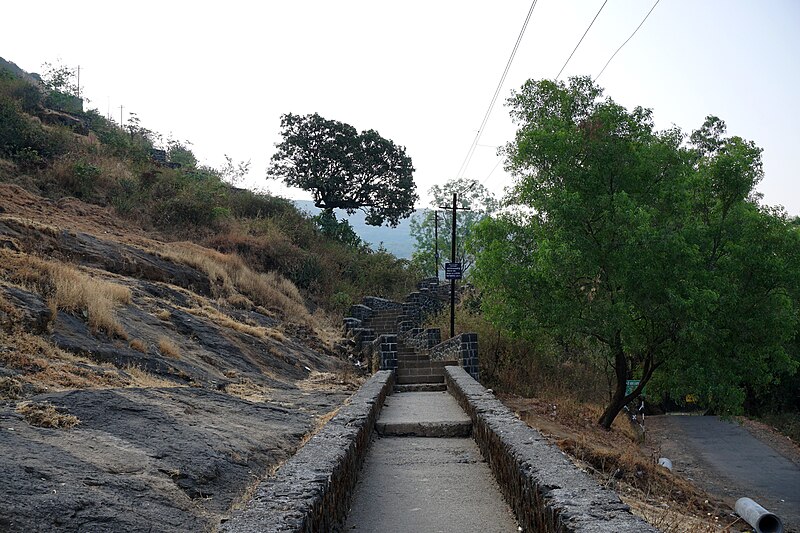
As you stand at the base approach, you will see a winding pathway of approximately two hundred stone steps leading up toward the cave entrances. While this uphill climb features uneven steps that require a steady pace and occasional rest breaks, it rewards visitors with breathtaking natural scenery. If you visit during the monsoon or winter months, the surrounding hills transform into a lush green haven, often wrapped in swirling mist and adorned with cascading waterfalls that spill down the dark basalt cliffs. As you make your ascent, take a moment to stop and feel the cool mountain breeze, reflecting on the generations of monks, pilgrims, and weary merchants who climbed these very slopes over two thousand years ago in search of spiritual refuge and quiet contemplation.
Before we begin exploring the individual caves, we kindly ask you to observe a few essential guidelines to help preserve this irreplaceable heritage site for future generations. Bhaja Caves is a sacred historical treasure, and every sculpture, inscription, and carved wall deserves our utmost care and respect. Please do not touch, lean on, or climb upon any of the ancient rock reliefs or decorative carvings. Writing, scratching, or defacing the cave surfaces in any manner is strictly illegal and causes permanent damage to the delicate basalt rock. To maintain the tranquil, contemplative atmosphere that has defined this sanctuary for millennia, please keep your voice low, avoid playing loud music, and dispose of all trash responsibly. When you are ready, please take a deep breath, watch your step on the ancient stone stairs, and join us on an unforgettable journey into the heart of ancient Indian rock cut architecture.
02 Cave VI: Vihara of Bodhi
As you step past the entrance path and approach the initial cluster of excavations, please position yourself directly in front of Cave Six. This fascinating space served as an early vihara, or residential monastery, designed specifically to house the resident monks who devoted their lives to meditation, spiritual study, and communal living. As you look inside this rock cut dwelling, you will immediately notice its clean and symmetrical layout. …
03 Caves IX and XIV: Monastic Dwelling Cells
Moving forward along the cliff pathway, we now approach Caves Nine and Fourteen, two extraordinary examples of early monastic living quarters that showcase the daily domestic routines of ancient resident monks. Let us first examine Cave Nine, a well designed vihara featuring an open front verandah supported by sturdy rock pillars. …
04 Cave XII: The Grand Chaityagrha
We now arrive at the undisputed architectural crown of Bhaja Caves, Cave Twelve, renowned as the Great Chaityagrha or main congregational prayer hall. Constructed in the second century Before Common Era, this magnificent sanctuary is widely celebrated by historians as one of the very earliest surviving rock cut chaitya halls in all of India. …
05 Cave XVII: Inscriptions and Sacred Water Cisterns
Leaving the grandeur of the Great Chaityagrha behind, we proceed along the stone pathway to Cave Seventeen and its adjacent rock cut water cistern system. Cave Seventeen is a small and peaceful vihara monastery measuring eighteen point five feet in length and twelve point five feet in depth, containing five compact residential cells. Inside one of these small chambers, you can still see a stone bench carved directly into the living rock wall. …
06 Cave XIX: Surya, Indra, and Ancient Tabla Carvings
Our tour now brings us to Cave Nineteen, one of the most artistically decorated and historically vital monasteries in the entire Bhaja complex. Cave Nineteen features a prominent front verandah lined with detailed rock sculptures. Flanking both sides of the main doorway are formidable guardian figures sculpted in the signature style of the Satavahana dynasty. …
07 The 14 Memorial Stupas
As we continue along the outer rock terrace beyond the main cave group, we arrive at one of the most unusual and deeply reverent features of Bhaja, the Group of Fourteen Memorial Stupas. Positioned within an irregular rock excavation, this sacred gallery contains a total of fourteen stone stupas, with five located sheltered inside an open cave recess and nine lined up outdoors against the dramatic mountain backdrop. …
08 Closing
For our final stop, please walk to the serene waterfall area located near the very last cave of the complex. During the rainy season, monsoon streams cascade gracefully down the sheer basalt rock walls, collecting into a small natural pool at the base of the cliff. The gentle sound of splashing water and the refreshing mountain breeze have offered solace and cooling relief to weary travelers and devout monks for over two thousand years, creating a setting of extraordinary natural peace and…