 Photo Wikimedia Commons
Contents
History & cultureBY TELLBY7 sections · numbered as on the map01 Orientation
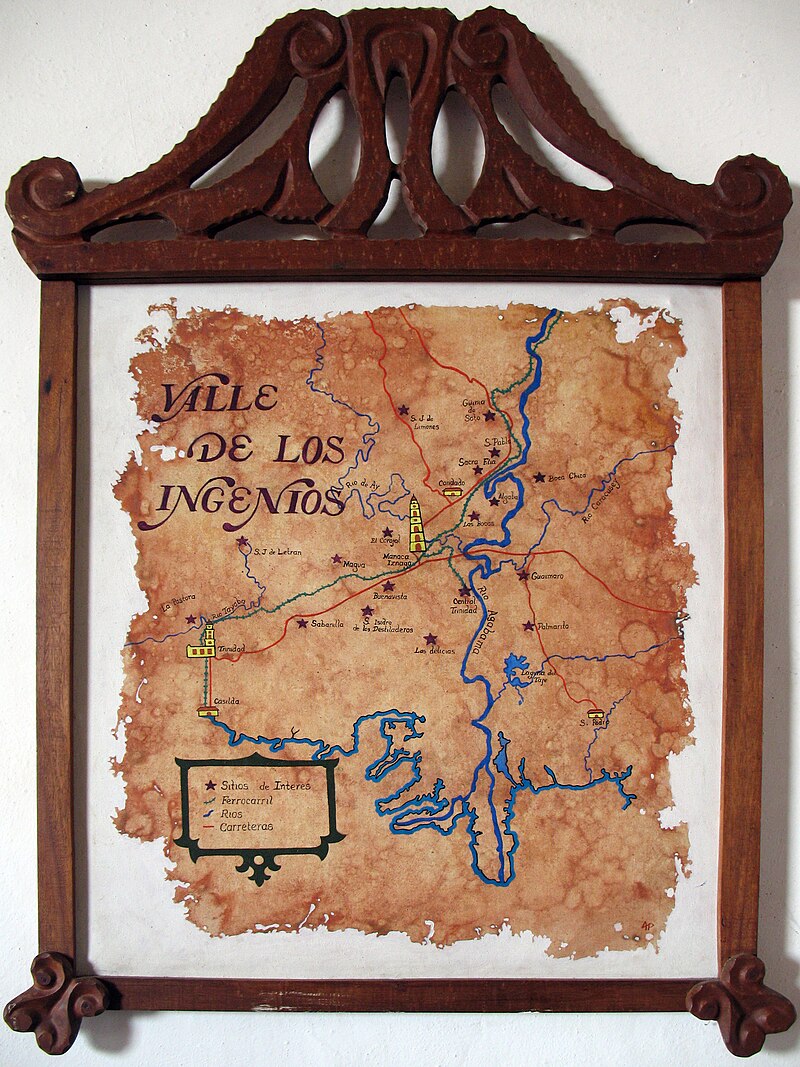
Welcome to the Valley of the Sugar Mills where the brilliant natural beauty of Cuba coexists with a deeply layered history. These gentle rolling hills and sweeping green fields hold a story far richer than a mere scenic landscape. Long before Spanish conquistador Diego Velazquez arrived on these shores this fertile soil was home to the indigenous Siboney and Arawakan peoples who lived in harmony with the tropical environment. During the nineteenth century under Spanish colonial rule this peaceful basin underwent a dramatic transformation becoming the absolute epicenter of global sugar production. UNESCO designated this entire agricultural valley as a World Heritage Site alongside the historic city of Trinidad recognizing its exceptional cultural value as a living monument where industrial heritage colonial architecture and human memory merge. This valley is not defined by dry administrative records or static museum display cases but functions as an active historical landscape where nature and human struggle remain inextricably bound together. At the height of the nineteenth century sugar boom dozens of industrial sugar mills grand manor houses animal driven pressing mechanisms known as trapiches and crowded worker compounds covered these lands powering a massive proportion of the global sugar supply. The sweat resilience and grief of tens of thousands of individuals intersected here leaving behind a complex legacy of monumental economic fortune and intense human suffering. Today we will journey along a curated route through the most significant historic spots scattered across this iconic sugar valley. Our tour begins at the tower of San Isidro de los Destiladeros where a single ringing bell once regulated every second of daily existence across hundreds of acres. From there we will examine the surrounding brick and stone foundations of the slave quarters where laborers brought from West Africa maintained their cultural dignity amidst severe hardship. We will then visit the soaring height of the Manaca Iznaga Tower which once asserted total authority over the surrounding fields before moving down to the sugarcane press site where fresh juice called guarapo is extracted. Finally we will explore Casa Hacienda Guaimaro featuring neoclassical architecture and fine interior wall murals financed by the sugar trade. As you look across these open fields listen to the quiet breeze passing through the grass and begin your walking tour into the historic heart of the Valley of the Sugar Mills.
02 San Isidro de los Destiladeros Tower
Welcome to the historic bell tower of San Isidro de los Destiladeros. Stand for a moment and look up at this imposing masonry structure rising against the tropical sky. It is deeply humbling to realize how the heavy chiming of a single bell from this tower once governed every second of life and labor across hundreds of acres of surrounding sugarcane fields. …
03 Ruins of San Isidro Slave Quarters & Hacienda
Welcome to the ruins of the San Isidro slave quarters and main hacienda estate. Take a moment to look across the exposed stone foundations and crumbling masonry walls spread before you. It is astonishing to reflect upon the massive scale of forced labor required to propel Cuba into the position of the leading sugar exporter in the world during the nineteenth century. …
04 Manaca Iznaga Tower
Welcome to the breathtaking Manaca Iznaga Tower. Stand back for a moment and cast your eyes upward toward the soaring summit of this landmark. The extraordinary height and ambitious engineering of this tower built to watch over vast sugarcane fields continuously astonish visitors from around the world. Soaring forty five meters above the valley floor this structure served as the defining visual symbol of the sugar boom in nineteenth century Cuba. …
05 Manaca Iznaga Sugarcane Trapiche & Juice Stand
Welcome to the Manaca Iznaga trapiche sugarcane press and guarapo tasting area. Please take a look at the heavy metal gears of the old press mechanism and the nearby refreshment stall. Historical records from eighteen forty six document that this valley contained ten advanced sugar mills powered by the newly invented steam engine operating alongside thirty two smaller mills driven by draft animals and manual labor. …
06 Casa Hacienda Guáimaro
Welcome to Casa Hacienda Guaimaro. Take a moment to admire the elegant exterior sweeping verandas and neoclassical proportions of this grand manor house. It is truly remarkable to consider how fortunes generated by global sugar exports funded lavish neoclassical architecture and imported European luxuries deep inside this rural valley during the nineteenth century. …
07 Closing
Thank you very much for joining this audio guide journey through Valle de los Ingenios. The vast sugar valley we explored together today once operated as the primary economic engine driving the global sugar trade in the nineteenth century while bearing witness to the tears forced labor and resilience of countless African workers. …