 Photo Wikimedia Commons
Contents
History & cultureBY TELLBY7 sections · numbered as on the map01 Orientation
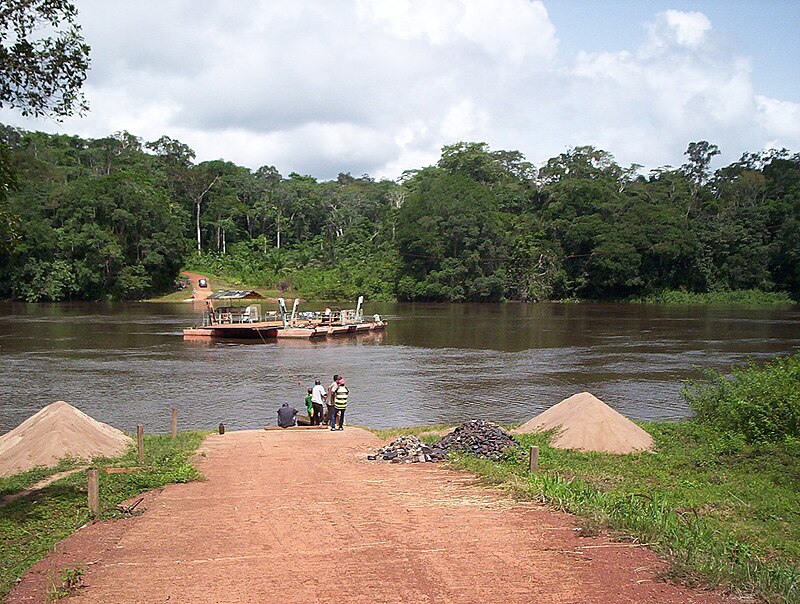
Welcome to the Dja Faunal Reserve, an extraordinary UNESCO World Heritage Site located in the dense heart of southeastern Cameroon. Rather than overwhelming you with formal classification criteria or technical administrative jargon, we begin our journey with a fundamental truth: this sanctuary represents one of the largest, most ecologically complete, and least disturbed primary rainforests remaining on the African continent. Stepping into this ancient environment means entering a living realm where the raw power of nature endures in its untamed state, and where the intricate balance between pristine wildlife and traditional indigenous culture has persisted for centuries. Spanning an immense area of 526,000 hectares, or over 1.3 million acres, the reserve forms a vital ecological anchor for the vast Congo Basin. Situated upon an undulating Precambrian plateau at an elevation ranging between 600 and 700 meters above sea level, the forest thrives under a warm humid equatorial climate characterized by an average annual rainfall of 1,600 millimeters and a consistent mean temperature of 23 degrees Celsius. Revered globally as the Earth's second lung due to its extraordinary capacity for carbon sequestration, this dense tropical ecosystem plays an indispensable role in regulating global climate patterns. Formally established as a protected reserve in 1950, designated as a UNESCO Biosphere Reserve in 1981, and inscribed as a World Heritage Site in 1987, Dja stands out for its exceptional structural integrity, with approximately 90 percent of its core area remaining completely untouched by human industrial disturbance. The natural guardian of this sanctuary is the loop of the Dja River, which almost entirely encircles the reserve except along its southeastern boundary, forming a formidable hydrological barrier against external encroachment. Furthermore, Dja serves as a core component of the TRIDOM transboundary conservation zone, linking seamlessly with the Odzala-Kokoua National Park in the Republic of Congo and the Minkébé National Park in Gabon to safeguard a continuous, landscape-scale corridor for Central African wildlife. Within and surrounding this vast green expanse reside approximately 129,000 human inhabitants spread across 300 local communities. Among them are the Baka Pygmies, the forest's original hunter-gatherer inhabitants whose semi-nomadic lifestyle, spiritual cosmology, and rich traditional ecological knowledge are deeply intertwined with the landscape. For the Baka and neighboring Bantu farming communities, the forest is not a commercial commodity, but a sacred provider of physical sustenance, traditional medicine, and cultural identity. As you begin your exploration today, prepare to experience a realm where giant trees, abundant wildlife, and human heritage harmonize. Breathe in the cool, oxygenated air, listen to the canopy rustling above, and allow us to guide you through this profound story of survival and sanctuary.
02 Section 1
The most astonishing and remarkable fact about this sanctuary is that an incredible 90 percent of its vast territory remains entirely pristine and undisturbed by industrial human activity. Originally established on June 26, 1950, under Decree 319 issued by the French High Commissioner for Cameroon, this reserve has successfully resisted decades of external resource exploitation. …
03 Section 2
The most extraordinary fact about this primary forest trail is that it shelters more than 15 distinct primate species—including critically endangered western lowland gorillas, central chimpanzees, mandrills, drills, and white-collared mangabeys—alongside over 1,500 species of vibrant tropical plants. Such an extraordinary concentration and diversity of primates coexisting within a single forest ecosystem is virtually unmatched anywhere else on Earth, serving as a powerful testament to the…
04 Section 3
The most astonishing truth revealed in this sacred clearing is that for the indigenous Baka Pygmies, the rainforest is not merely a physical geographic area or a reservoir of raw natural resources, but an all-encompassing universe bestowed directly by their supreme creator god, Komba. According to Baka cosmology, the forest existed before all things, created by Komba as an earthly paradise where humans could dwell in perfect harmony with nature. …
05 Section 4
The most extraordinary revelation at this livelihood workshop plot is that by providing local residents with viable economic alternatives to hunting, the illegal poaching rate within the Dja Faunal Reserve dropped by more than half—with overall poaching estimates reducing by up to 60 percent. Rather than relying solely on punitive enforcement and restrictions, this holistic approach demonstrates that partnering with local communities to build sustainable micro-enterprises creates a genuine…
06 Section 5
The most astonishing technological advancement highlighted at this ranger outpost base is that a network of strategically placed acoustic sensors and automated camera traps works around the clock to generate real-time threat maps across this vast rainforest. Covering an immense territory of 526,000 hectares with limited personnel presents a formidable challenge, but by establishing four priority ranger bases and leveraging Spatial Monitoring analysis through the AWF Conservation Geography team,…
07 Closing
As we stand at this majestic lookout overlooking the wide expanse of the Dja River, watching its dark, tea-colored waters flow gently toward the horizon, our journey through this UNESCO World Heritage sanctuary comes to a close. The Dja Faunal Reserve is far more than an isolated refuge for rare wildlife; it is a vital ecological lung for our entire planet and a living symbol of how humanity and nature can achieve meaningful coexistence. …