 Photo Wikimedia Commons
Contents
History & cultureBY TELLBY7 sections · numbered as on the map01 Orientation
Welcome to Probota Monastery, a supreme masterwork of Eastern European medieval architecture situated serenely upon a high plateau overlooking the picturesque Siret river valley. Inscribed in 1993 as a distinguished component of the UNESCO World Heritage Site of the Painted Churches of Moldavia, this sacred sanctuary is celebrated globally for its extraordinary artistic synthesis, structural innovation, and profound historical resonance. The central Church of Saint Nicholas stands as an exceptional monument to sixteenth-century Moldavian genius, seamlessly blending traditional Byzantine architectural forms with Western Gothic window traceries and brilliant exterior wall paintings that have endured through centuries of turmoil and environmental exposure.
The foundation of this noble monastic complex was established in 1530 by Prince Petru Rareș, who selected this commanding elevated plateau to erect a grand spiritual stronghold for his realm. Over the subsequent centuries, the sanctuary endured severe tribulations, including devastating fires, pillaging by foreign armies, and prolonged periods of institutional decay and structural neglect. However, an ambitious international conservation campaign executed between 1996 and 2001 restored its medieval grandeur to full splendor. Conducted under the global auspices of UNESCO with major funding from the Japan Trust Fund in direct collaboration with the Romanian Ministry of Culture and regional ecclesiastical authorities, an elite multidisciplinary team of conservators meticulously stabilized over two thousand five hundred square meters of fragile frescoes, installed an advanced under-floor heating system, and reinforced the ancient stone foundations.
As you stand within this central courtyard today, take a moment to observe how the entire sanctuary is organized within a fortified rectangular compound bounded by massive stone defense walls. At the absolute center of the enclosure rises the Church of Saint Nicholas, showcasing its slender octagonal tower and harmonious triconch layout. To the north-west corner stands the combined treasury vestry building and its integrated bell tower, while the southern perimeter exposes the excavated stone foundations of the historic princely residence, communal refectory, and monastic kitchen. This thoughtful spatial arrangement clearly separated the sacred liturgical realm from the administrative and domestic activities of the royal court.
During our tour today, we will explore the massive entrance gate tower, inspect the historic bell tower museum, discover the surviving exterior wall frescoes, enter the solemn royal burial chamber, and admire the glorious interior wall paintings of the central nave. Let us begin our journey through this magnificent World Heritage sanctuary by stepping closer to the formidable fortified outer walls that shield this sacred realm.
02 Fortified Outer Walls & Entrance Tower
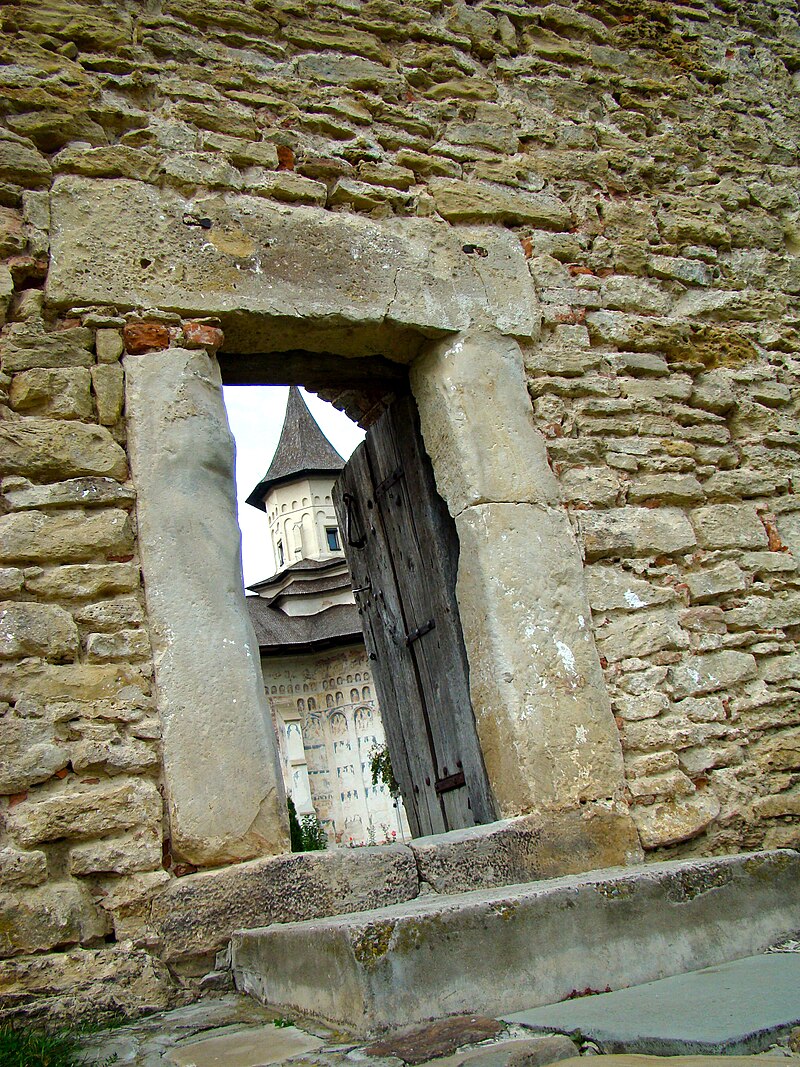
It is a truly astonishing historical revelation that this serene monastic retreat was intentionally transformed into a formidable medieval fortress encircled by massive stone wall fortifications. While Eastern Orthodox monasteries were traditionally designed with open, welcoming borders to accommodate humble pilgrims and spiritual seekers, Probota Monastery features an intimidating military wall perimeter specifically engineered to endure intense siege warfare. …
03 Clisiarnița & Bell Tower Museum
A captivating architectural revelation surrounds the monumental structure standing here in the north-western corner of the inner courtyard. For generations, historical chroniclers and casual visitors mistakenly believed this massive stone building served as the official royal palace or princely residence of Moldavian rulers. …
04 Exterior Wall Frescoes & South Porch Inscription
A monumental chapter in European art history was forged right here in 1532, when the Church of Saint Nicholas at Probota became one of the very first pioneer monuments in Moldavia to have its entire exterior façade covered in luminous multi-colored frescoes. Initiated under the visionary patronage of Prince Petru Rareș, this revolutionary artistic movement transformed church exteriors into massive open-air illuminated manuscripts, presenting complex theological narratives to illiterate peasants…
05 The Royal Burial Chamber / Necropolis
Stepping into this solemn burial chamber, known historically as the gropnița, brings you into a space that shattered centuries of royal Moldavian dynastic tradition. For generations, the ruling family had chosen Putna Monastery as their exclusive ancestral resting place. However, Prince Petru Rareș, guided by his spiritual advisor Abbot Grigorie Roșca, made the momentous political and personal decision to break with tradition and establish Probota as the new official royal necropolis. …
06 Naos, High Dome & Votive Portrait
A dramatic and shocking historical detail lies frozen in paint upon the south-western wall of the central nave, where the portrait of a Moldavian prince was deliberately defaced and blackened during medieval times. In Orthodox iconography, royal donor portraits were treated with the utmost sanctity, depicting the ruling family in eternal communion with God. …
07 Closing
As you stand on the peaceful lawn in the southern part of the courtyard, look across the open grounds at the excavated stone foundations and restored cellar vaults resting beneath the shadow of the church. These uncovered masonry walls mark the historical remains of the original sixteenth-century Prince's House, known as Casa Domnească, alongside the ancient monastic kitchen, bakery, and communal refectory. …