Contents
History & cultureBY TELLBY7 sections · numbered as on the map01 Orientation
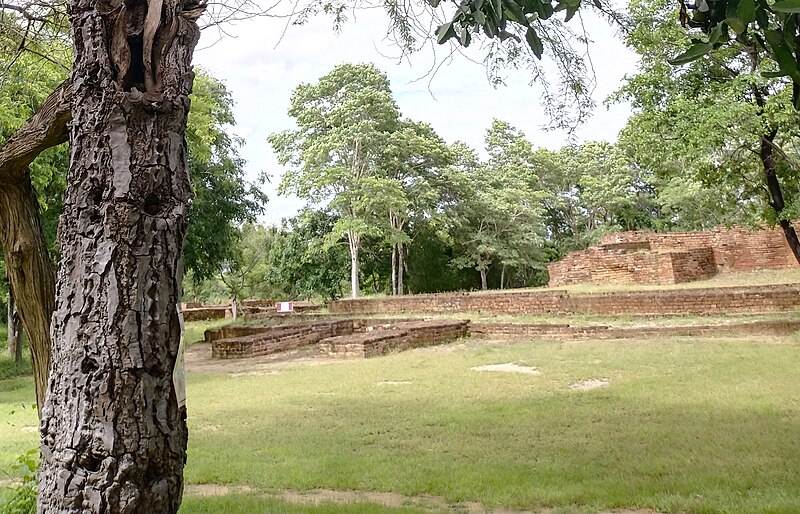
Welcome to Beikthano Ancient City, a magnificent cradle of history nestled in the heart of Myanmar dry zone. Standing near the village of Kokkokhwa to the west of Taungdwingyi in the Ayeyarwady River basin, you are witnessing the very place where the Pyu civilization first took root and flourished for over a millennium. This sacred ground is inscribed as a World Heritage site because it represents the historical location where Buddhism was first established in Southeast Asia nearly two thousand years ago, giving birth to the regions earliest and largest urban civilization. The Pyu people, belonging to the Tibeto-Burman language group, migrated down from the northeastern mountain regions into the fertile Ayeyarwady valley and built an extraordinary urban settlement that set a transformative template for mainland Southeast Asia. In this seasonally dry landscape characterized by scarce rainfall, they demonstrated remarkable mastery over natural resources by designing intricate water management systems, including canals, reservoirs, and defensive moats that supported organized intensive agriculture and sustained a thriving population. As you look around, the vast landscape still retains the ancient footprint of massive brick walls, monumental stupas, and advanced hydrological features that continue to influence local livelihoods today. Beikthano was far more than a localized agrarian hub. Positioned strategically along overland and maritime trade networks connecting South India, North India, Yunnan, Funan, and coastal Mon regions, it became a vibrant center of commerce and cultural exchange. Through these far-reaching interactions, the Pyu thoughtfully integrated Indic traditions and Buddhist teachings with their indigenous customs, crafting a distinct style of religious architecture, urban planning, and artistic expression. Within the fortified brick walls lies an extended urban format featuring a central palace citadel, expansive monastic complexes, unique burial halls, and ritual monuments. Although centuries of time have weathered these structures into low brick mounds, the spirit and architectural genius of the Pyu remain vividly present. Today, as pilgrims and travelers walk these peaceful grounds, the ancient city continues to inspire deep veneration. Let us step forward together into this timeless sanctuary and explore the profound heritage left by the Pyu civilization.
02 Eastern Palace Gate and Guardian Statues
The twenty-foot-wide entrance of this gate and its funnel-shaped walls curving gently inward were scientifically engineered two thousand years ago to allow chariots and heavy carts to navigate the turn without slowing down. Please look down at the red brick entrance at your feet and look up at the stone foundations flanking both sides of the gateway. You are now standing at the remains of the eastern palace gate, which served as the primary entrance to the inner royal citadel of Beikthano. …
03 Monastic Brick Complex
This is one of the oldest large-scale brick buildings in Southeast Asia, preserving dramatic archaeological evidence of an ancient fire that turned its wooden beams into charcoal before collapsing. Please look down at the semicircular threshold stone at the building entrance and trace with your eyes the path leading through the series of small residential rooms. …
04 Circular Ritual Structure and Stupa Base
The central circular base and its four projecting rectangular platforms represent an exceptionally creative architectural form that became a prototype for later Buddhist stupa design across Southeast Asia. Please direct your attention to the two concentric circular brick walls that completely enclose the structure. You are currently viewing a highly distinctive circular ritual base that reveals the creative synthesis of indigenous Pyu culture and imported Buddhist traditions. …
05 Double-Walled Sanctuary
The inner vaulted corridor structure that defined the iconic masterwork temples of Bagan was already fully perfected here in Beikthano fifteen hundred years ago. Please turn your head along the corridor walls that wrap around the central inner chamber. You are now standing at a remarkably preserved double-walled temple sanctuary that represents a monumental breakthrough in ancient Southeast Asian engineering. …
06 Communal Burial Urn Hall
Inside this massive hall, eight giant wooden pillars once supported a soaring roof over numerous clay burial urns systematically arranged on the floor. Please look down at the floor inside the hall to locate the eight large circular postholes where those massive wooden pillars once stood. You are now standing at an extraordinary communal burial urn hall that offers profound insights into the mortuary practices and spiritual worldview of the Pyu people. …
07 Closing
We have walked together through the silent red brick ruins and sacred spaces of Beikthano, tracing the footsteps of the ancient Pyu civilization. As our journey comes to an end, please turn your eyes toward the peaceful western horizon before you. In the distance, the serene waters of Inye Lake and Gyogya Lake glisten under the sky. These expansive water bodies formed the ancient western moat and natural reservoir system of Beikthano two thousand years ago. …