Contents
History & cultureBY TELLBY8 sections · numbered as on the map01 Orientation
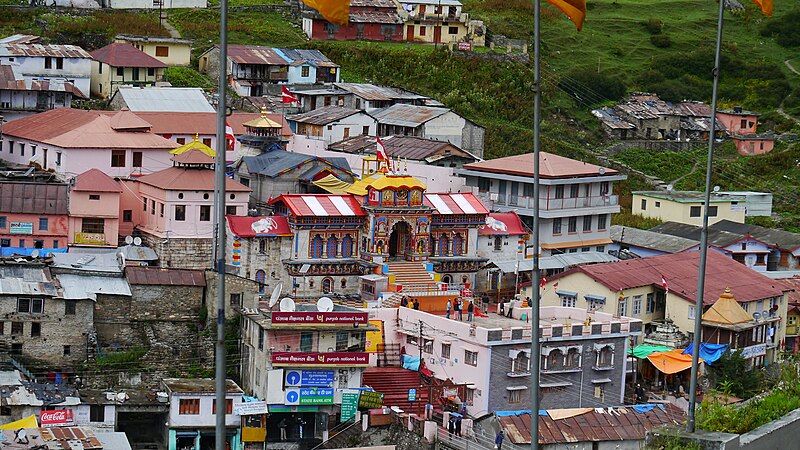
Welcome to the sacred precincts of the Badrinath Temple, nestled at a dramatic altitude of three thousand one hundred and thirty-three meters above sea level in the Garhwal Himalayas of Chamoli district in Uttarakhand, India. Situated along the rushing banks of the Alaknanda River, this ancient sanctuary stands flanked by Nar Parbat directly in front and Narayana Parbat positioned majestically behind the towering Neelkanth Peak. The breathtaking natural geography creates an incredible atmosphere of spiritual refuge, establishing Badrinath as one of the most venerated pilgrimage destinations in the entire Indian subcontinent. In Vaishnavite tradition, Badrinath holds a supreme position as one of the one hundred and eight Divya Desams, the most sacred abodes dedicated to the supreme deity Vishnu. It occupies a unique role in Hindu pilgrimage geography, serving as a primary site within both the grand all-India Char Dham circuit along with Puri, Rameswaram, and Dwarka, as well as the regional Chota Char Dham circuit of the Himalayas alongside Yamunotri, Gangotri, and Kedarnath. Furthermore, Badrinath serves as the principal shrine within the Pancha Badri group of five sacred Vishnu temples, which includes Yogadhyan Badri at Pandukeshwar, Bhavishya Badri and Vridh Badri near Jyotirmath, and Adi Badri near Karnaprayag. The profound spiritual sanctity of Badrinath is celebrated across numerous ancient texts, including the Bhagavata Purana, Skanda Purana, Padma Purana, Vishnu Purana, and the epic Mahabharata. The early medieval Tamil canon known as the Naalayira Divya Prabandham contains twenty-four devotion-filled hymns composed by Perialvar and Thirumangai Alvar between the sixth and ninth centuries, glorifying Badrinath under the Tamil name Tiruvatariyaacciraamam. According to sacred tradition, this holy site was historically known as Badrika Ashrama. Ancient legends recount that Lord Vishnu retreated to this isolated Himalayan valley to perform intense penance and prolonged meditation for the welfare of all living beings throughout the universe. Absorbed in deep meditative trance, Vishnu remained entirely unaware of the harsh, freezing mountain conditions around him. Observing his austerity, his divine consort Lakshmi transformed herself into a Badri tree, also known as the jujube or Indian date tree, spreading her branches above him to shelter his body from the biting wind and cold. Upon emerging from his deep meditation, Vishnu was profoundly moved by Lakshmi's selfless devotion and care. He declared that henceforth the sacred hermitage would be known as Badrika Ashrama, honoring her protective form. As you take your first steps toward this immortal shrine, surrounded by towering snow-dusted peaks and the rhythmic roar of the Alaknanda River, allow yourself to absorb the timeless devotion and ancient history that have drawn millions of seekers to this Himalayan sanctuary across the ages.
02 Spot 1 - Tapt Kund Hot Springs
As you stand just below the main entrance steps of Badrinath Temple, you will observe the steaming thermal sulphur springs known as Tapt Kund, situated right along the rocky banks of the Alaknanda River. This natural hot spring is not merely a geographical wonder, but a central component of the ritual journey undertaken by every pilgrim who travels to this mountain shrine. …
03 Spot 2 - Main Entrance Gateway and Façade
Ascending the stone steps leading up from the thermal bath area, you find yourself standing before the magnificent entrance gateway and striking façade of the Badrinath Temple. Known as the Singhdwara or lion gate, this arched portal features a brightly painted stone façade adorned with arched windows that present a vivid, colorful contrast against the muted, rugged slate of the surrounding Himalayan mountains. …
04 Spot 3 - Mandapa Assembly and Worship Halls
Stepping inside the temple, you enter the outer and inner pillared worship halls known as the Sabha Mandapa and Darshan Mandapa. Architecturally, the entire Badrinath Temple complex is structured into three distinct inner sections: the Garbhagriha or sanctum sanctorum, the Darshan Mandapa where worshippers gather for viewing the deity, and the Sabha Mandapa where collective assembly and ceremonial rituals take place. …
05 Spot 4 - Garbhagriha (Sanctum Sanctorum)
Now, direct your quiet attention into the heart of the temple complex: the Garbhagriha, or sanctum sanctorum. Resting beneath an ornate gold canopy emblazoned with a sculpted Badri tree motif stands the presiding image of Lord Badrinarayana. Carved from a single block of black granite known as Shaligram stone, this sacred image measures just one foot, or thirty centimeters, in height. …
06 Spot 5 - Subsidiary Shrines and Priesthood Traditions
Stepping out into the surrounding courtyard of the Badrinath Temple, visitors will discover fifteen additional shrines and sacred images scattered throughout the premise. Like the primary icon in the main sanctum, all fifteen of these subsidiary deities are exquisitely sculpted from durable black stone. …
07 Spot 6 - Excursion to Mana Village and Bheem Pul
Following the winding mountain road just three kilometers beyond the Badrinath Temple brings you to Mana Village, celebrated as the last Indian village before the border with Tibet. Perched at a high altitude of ten thousand eight hundred and ninety-two feet, or three thousand two hundred meters, in the Chamoli district, Mana rests directly beneath the sheer rock walls and snow-capped peaks of the Zanskar mountain range. …
08 Closing
As we bring our audio tour of the sacred Badrinath Temple to a close, let us reflect upon the seasonal rhythms and enduring spiritual solace that define this Himalayan sanctuary. Due to severe winter conditions and heavy snowfall across the Garhwal Himalayas, the temple remains open to pilgrims for only six months each year, welcoming seekers from late spring until late autumn. …