 Photo Wikimedia Commons
Contents
History & cultureBY TELLBY7 sections · numbered as on the map01 Orientation
Welcome to the Haesonri region of Kaesong. You are standing before the Mausoleum of King Wanggon, the eternal resting place of the visionary founder of the Koryo Dynasty who achieved the first true unification of the Korean Peninsula. The historic name Koryo served as the direct origin for the name Korea by which the nation is recognized around the globe today, endowing this royal sanctuary with exceptional historical weight. When UNESCO inscribed the Historic Monuments and Sites in Kaesong on the World Heritage List, it recognized the outstanding universal value of the Tomb of King Wanggon, which showcases the unique culture, architectural sophistication, and artistic stone carving traditions of the era. Beyond serving as an individual burial site, this tomb operated as an integral anchor within Kaesong's broader geopolitical landscape, echoing the massive defensive network of the outer fort wall that stretched for twenty-three kilometers around the capital. This mausoleum established the definitive architectural model for all subsequent royal tombs of the Koryo Dynasty. It brilliantly synthesized the monumental stone-chambered burial traditions of Koguryo with the refined stone terrace arrangements of Shilla. Your visiting route will guide you through the sacred boundary along the stone pathway toward the Jeongjagak shrine building. From there, you will ascend the terraced elevations that structure the burial grounds. On the lower terrace, you will encounter the statues of civil and military officials standing in perpetual guard. On the upper terrace, you will observe the stone lantern and the guardian stone columns framing the approaches to the sovereign. Finally, at the uppermost level, you will reach the majestic earthen burial mound surrounded at its base by twelve screen slabs embossed with zodiac figures. Step forward now into the peaceful realm of this royal sanctuary and experience the enduring legacy of King Wanggon.
02 The Sacred Entrance: Hongsalmun Gate and the Stone Pathway
Did you know that the site of the Mausoleum of King Wanggon in Haesonri was meticulously chosen over a thousand years ago as an auspicious sanctuary for the Koryo royal house. Cast your eyes toward the entrance ahead where the red wooden posts of the Hongsalmun gate stand with arrow-shaped spikes pointing toward the sky, framing the neatly paved stone pathway extending beneath it. …
03 Jeongjagak Shrine: The Pavilion for Royal Ancestral Rituals
Did you know that the Jeongjagak shrine derives its name from its floor plan that resembles the Chinese character Jeong, standing as a masterwork that exemplifies the dignified simplicity and architectural restraint of Koryo royal tombs. Direct your gaze toward the heavy timber roofline of the pavilion and the sturdy stone platform base providing its solid foundation. …
04 Lower Terrace: Statues of Civil and Military Officials
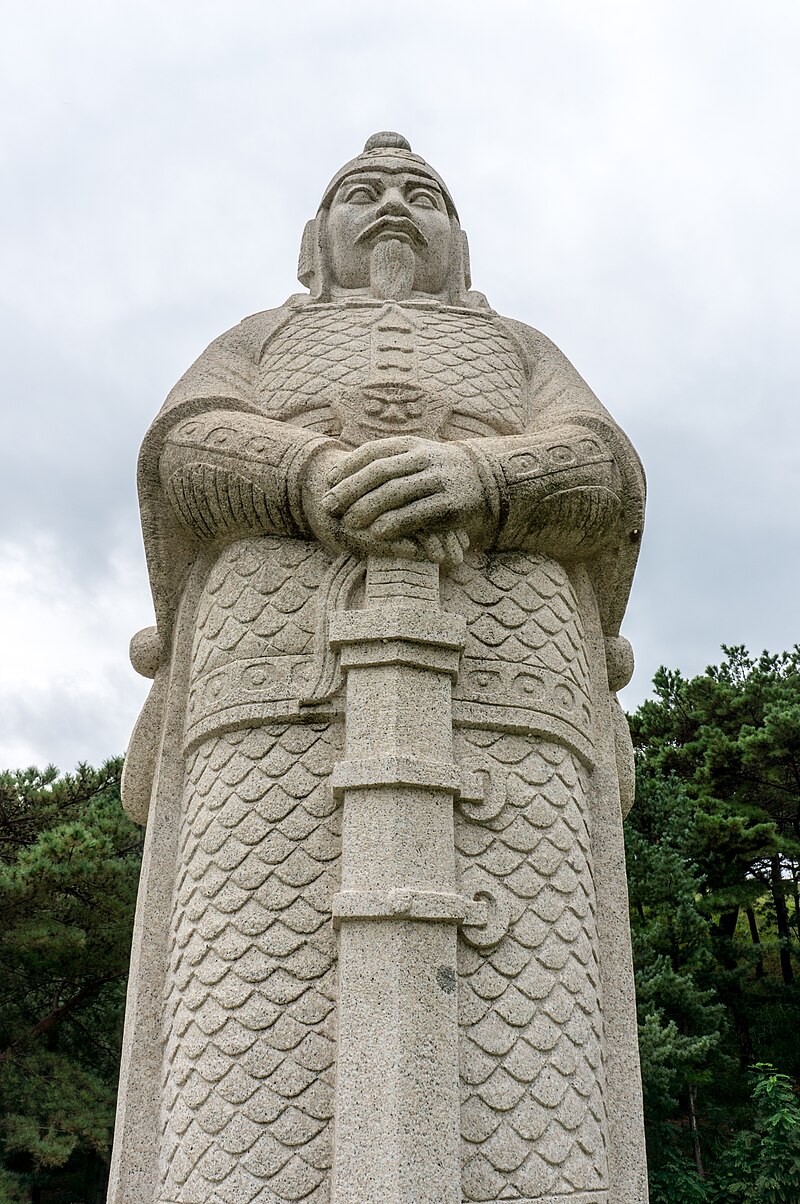
Did you know that the grand terraced elevation of the Tomb of King Wanggon represents a unique Koryo innovation synthesizing the monumental stone burial structures of Koguryo with the refined tomb decorations of Shilla. As you reach the lower terrace, observe the commanding gaze and steadfast posture of the stone statues of civil and military officials standing on opposite sides of the pathway facing each other. …
05 Upper Terrace: Stone Lantern and Guardian Columns
Let us begin with the astonishing fact that the stone lantern positioned at the center of the upper terrace is far more than a lighting fixture; it serves as a sacred Buddhist symbol illuminating the eternal path for the spirit of the deceased king. Direct your gaze toward the window opening carved into the center of the stone lantern and the two tall stone columns, known as Mangjuseok, rising gracefully on either side. …
06 The Main Tomb Mound and Zodiac Screen Slabs
Did you know that deep beneath this massive earthen mound lies a stone burial chamber built in the ancient Koguryo style containing thousand-year-old wall murals preserved intact. Look at the twelve screen slabs, known as zodiac screen stone slabs, wrapped tightly around the base of the circular mound like a protective folding screen. …
07 Closing
Our audio tour of the Mausoleum of King Wanggon has now come to its conclusion. The sweeping view overlooking the mausoleum from this hill allows us to appreciate the grand vision and inclusive leadership of King Wanggon, who unified the Korean Peninsula over a thousand years ago to open a dynamic new era. …