Contents
History & cultureBY TELLBY8 sections · numbered as on the map01 Orientation
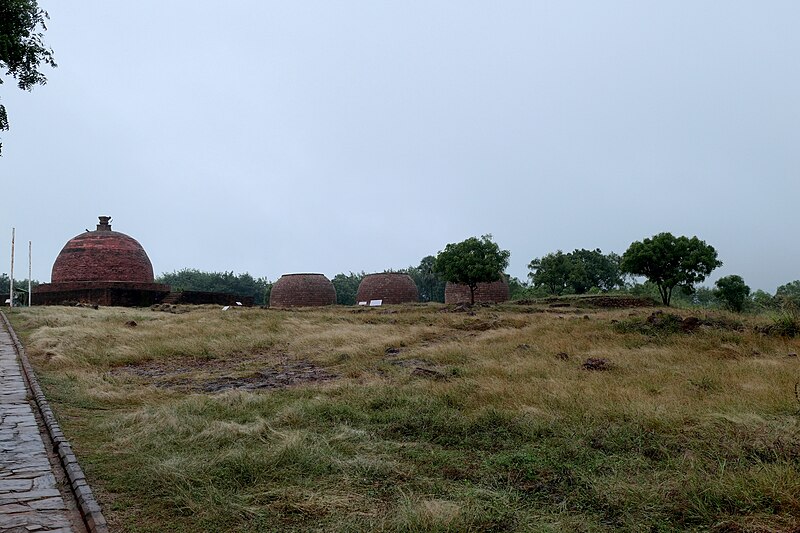
Welcome to the Thotlakonda Buddhist Complex, an extraordinary ancient sanctuary situated on a peaceful coastal hill in Andhra Pradesh, India. As you stand here on this elevated hillock, rising approximately 128 meters above sea level, you are breathing in the gentle, refreshing breezes sweeping in from the vast ocean. Right before your eyes lies the magnificent and endless expanse of the Bay of Bengal. This remarkable site, located about 15 kilometers from Visakhapatnam along the scenic coastal road toward Bheemunipatnam, offers a truly rare harmony of two-thousand-year-old monastic heritage and panoramic ocean scenery. For centuries, this sacred hilltop lay forgotten and shrouded by time, until its modern rediscovery in the mid-twentieth century. The Indian Navy first brought the site to light during an aerial survey conducted to select a suitable location for a naval base. Recognizing its profound historical and archaeological significance, the Andhra Pradesh State Archaeology Department initiated comprehensive excavations between 1988 and 1993. These painstaking excavations gradually unearthed a flourishing monastic center that thrived during antiquity. The history of Thotlakonda reveals that it was well within the cultural and spiritual sphere of influence of ancient Kalinga. It served as a pivotal hub for the transoceanic diffusion of Indic culture and Buddhist teachings, facilitating their spread across the sea to Sri Lanka and various regions of Southeast Asia. Furthermore, the geographical location of Thotlakonda holds a fascinating geographical connection. The monastery sits in extraordinarily close proximity to the longitudinal line of 83.3 degrees Meridian East. Prominent ancient Buddhist pilgrimage destinations across India, including Sarnath, Kushinagar, and Lumbini, all lie very close along this exact same meridian line. Historical analysis indicates that pilgrims and travelers arriving by sea to visit the sacred sites of India sought the most direct route northward. Ancient ships anchored safely along this sheltered coastline, where the deeply curved shore provided a calm haven. Mariners and monks disembarked here at Thotlakonda to rest, regain their physical strength, and prepare for their spiritual journey north along the 83.3 degree East meridian line. The salubrious coastal climate provided an ideal environment for contemplative monastic life while offering tired seafarers a comforting sanctuary after arduous sea voyages. As you prepare to explore this ancient hilltop complex, allow yourself to move at an unhurried, peaceful pace. Follow the designated footpaths that wind past weathered stone foundations, ancient stupas, and monastic dwellings. Let the tranquil surroundings and the rhythmic sound of the distant ocean waves transport your mind back two millennia into a world of quiet contemplation, maritime adventure, and spiritual devotion.
02 Spot 1: The Rock-Cut Cisterns and Water Management
You are now standing near one of the most distinctive and historically fascinating features of this entire hilltop complex, the rock-cut cisterns carved directly into the natural bedrock. These remarkable structures are not only an engineering marvel of antiquity but also the very source of the site's modern name. In the local Telugu language, the name Thotlakonda translates directly to Hill of Cisterns or Hill of Troughs. …
03 Spot 2: The Restored Maha Stupa and Nautical Beacon
Standing proudly at the very center of the Thotlakonda complex is the magnificent Maha Stupa, or Great Stupa, the most dominant and spiritually significant architectural monument on this hill. In Buddhist tradition, a stupa is not merely an impressive stone edifice; it is a sacred relic shrine embodying the living essence of the Buddha and functioning as the primary focal point for devotion, prayer, and ritual circumambulation. …
04 Spot 3: The Vihara Residential Quarters and Global Trade
As you walk through this central section of the complex, you are entering the Viharas, the ancient monastic residential quarters where monks lived, studied, and meditated on a daily basis. The layout of these well-preserved foundations reveals a classic quadrangle design, featuring rows of small individual cell-like rooms arranged around a spacious central open courtyard. …
05 Spot 4: Chaitya Grihas and Aniconic Buddhist Art
Welcome to Spot 4, where you can observe the atmospheric remnants of the Chaitya Grihas, or ancient prayer halls. Looking closely at the stone foundations set into the ground around you, you will notice two distinct architectural plans: circular prayer halls and elongated apsidal prayer halls. The apsidal halls feature a rounded vaulted end reminiscent of the curved back of an elephant, known in traditional Indian architecture as gajaprsthakara. …
06 Spot 5: The Refectory, Kitchen, and Monastic Community
Here at Spot 5, you are standing among the structural foundations of the refectory and kitchen complex, the vital logistical heart that sustained daily physical life on this hill. To maintain a thriving religious and academic community of over one hundred permanent bhikkhus, along with a constant influx of traveling pilgrims and maritime visitors, required efficient spatial organization and substantial storage infrastructure. …
07 Spot 6: The Coastal Viewpoint and Oceanic Horizon
As you walk toward the cliff edge of the hill at Spot 6, the landscape opens up dramatically to reveal a breathtaking panoramic view over the vast Bay of Bengal. From this elevated vantage point, 128 meters above sea level, you can gaze out across the endless blue horizon where the sky meets the ocean waves. The coastal setting of Thotlakonda is truly extraordinary and virtually unique. …
08 Closing
As our audio guide tour comes to a thoughtful close, take a final quiet moment to stand among these silent red brick ruins and look out once more at the sweeping ocean. From the second century BCE to the third century CE, Thotlakonda flourished as a luminous regional center of faith, academic learning, and global maritime exchange. …