Contents
History & cultureBY TELLBY7 sections · numbered as on the map01 Orientation
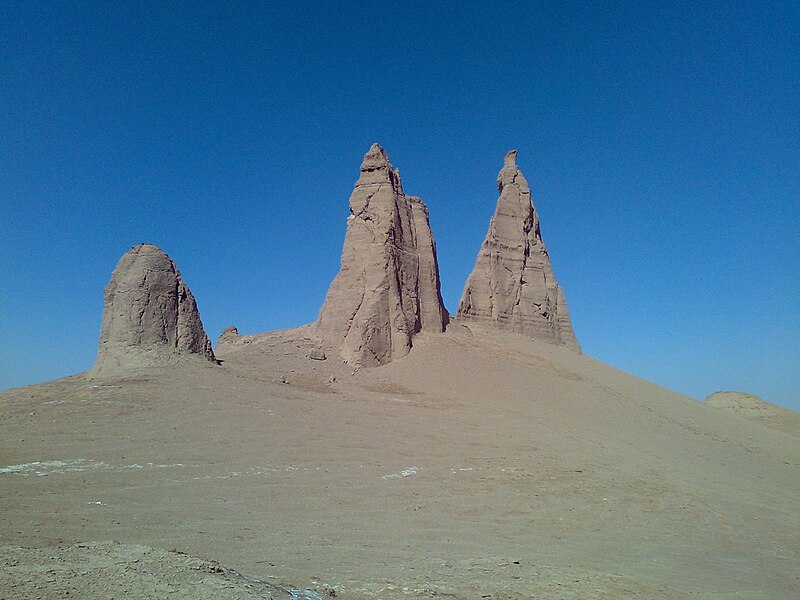
Welcome to the Shahdad Exhibition Center, located on the eastern margin of the world-famous UNESCO World Heritage site of Dasht-e Lut. Today, we invite you to explore one of the most astonishing archaeological masterpieces of antiquity: the Flag of Shahdad, also known as the Darafsh of Shahdad, recognized as the oldest metal flag in human history. Although the Dasht-e Lut is renowned today as one of the hottest and most hyper-arid deserts on Earth, five thousand years ago during the Bronze Age, this region was a remarkably fertile plain nourished by flowing rivers and a vast freshwater body known as Lut Lake, which spanned approximately sixteen thousand two hundred twenty-six square kilometers. This extraordinary environment was sustained by Quaternary glacial formations, including glacial terraces, moraines, and high-altitude cirques that captured moisture and fed the basin. Within this thriving ecological oasis, the ancient Khabis civilization flourished, developing an advanced urban culture and exceptional metallurgical traditions deeply connected to the surrounding natural environment. Our guided walking route will take you through a narrative journey starting with the magnificent metal pole measuring one hundred twenty-eight centimeters in length, designed with an advanced rotating hinge system and topped by a majestic divine raptor emblem. We will then examine the central rectangular bronze plaque measuring twenty-two centimeters in height and fifteen centimeters in width, featuring chiseled motifs including an intimate royal banquet with five human figures, an astronomical confrontation between two stalking lions and a humped zebu bull on the lower section, braided border patterns representing sacred serpents or flowing water, and a lush garden setting anchored by the date palm tree of life. Beyond admiring an ancient artwork, this exhibition offers a profound opportunity to understand how early human societies observed seasonal shifts, mapped regional biodiversity, and responded to climatic transformations. Over millenia, environmental shifts caused lakes to salinize and dry up, leading to the decline of this desert oasis, yet this copper-alloy flag with its delicate green oxidation patina remains as an enduring biocultural record of human ingenuity and ecological history. As you begin your tour, step forward slowly, listen to the narrative, and immerse yourself in the ancient mysteries and enduring legacy of the Bronze Age Shahdad civilization.
02 Spot 1: The Golden Eagle Crest and Axle
Welcome to our first official tour stop, where we stand before a magnificent masterpiece of ancient engineering and profound spiritual symbolism. Our exploration begins with an astonishing technical revelation: crafted five thousand years ago during the Bronze Age around the third millennium BCE, this bronze standard was brilliantly engineered to rotate a full three hundred sixty degrees atop a long metal shaft. …
03 Spot 2: The Central Banquet Scene
Welcome to our second exhibition spot, where we delve into the sophisticated social hierarchy and elaborate court rituals of a Bronze Age desert civilization. The center of the bronze plate reveals a captivating dramatic scene: five human figures participating in an intricate court banquet set within a lush, cultivated garden environment. Now, direct your eyes precisely to the center of the rectangular bronze plaque measuring twenty-two centimeters in height and fifteen centimeters in width. …
04 Spot 3: The Lions and Humped Cattle
Welcome to our third tour stop, where we encounter an astonishing synthesis of ancient astronomy, seasonal mythology, and regional zoology. Approximately one-third of the lower section of the Shahdad bronze plate is dedicated to a dramatic scene featuring two lions stalking a humped bull. While this might initially appear to be a simple depiction of wilderness predation, art historians and archaeozoologists recognize it as a profound cosmological emblem representing the vernal equinox and the…
05 Spot 4: The Intertwined Serpents Border
Welcome to our fourth tour stop, where we focus on the intricate braided borders framing the top and bottom edges of the Shahdad bronze plate. Often described by archaeologists as a hair-weaving or rope pattern, this framing motif carries deep symbolic resonance in desert iconography, representing either the life-giving currents of flowing water or two sacred serpents intimately intertwined. Now, trace your eyes slowly along the top and bottom edges of the bronze plaque. …
06 Spot 5: The Date Palm and Ancient Oasis
Welcome to our fifth tour stop, where we explore the lush botanical iconography that testifies to a vastly different ancient landscape. Today, the Dasht-e Lut is celebrated as one of the hottest and most hyper-arid deserts on the planet; however, geological and archaeobotanical evidence reveals that five thousand years ago, the Shahdad basin was a fertile, temperate plain nourished by freshwater lakes and flowing rivers fed by Quaternary glacial terraces and cirques. …
07 Closing
Welcome to the final reflection of our audio tour. The Flag of Shahdad stands as an extraordinary biocultural archive that bridges the distant past with our present world. Through its chiseled motifs—the soaring divine eagle, the cosmic duel between solar lions and the zebu bull, the intertwined serpent and water borders, and the sacred date palm paradise—this five-thousand-year-old bronze banner illustrates how deeply the ancient Khabis civilization understood, celebrated, and revered the…