Contents
History & cultureBY TELLBY7 sections · numbered as on the map01 Orientation
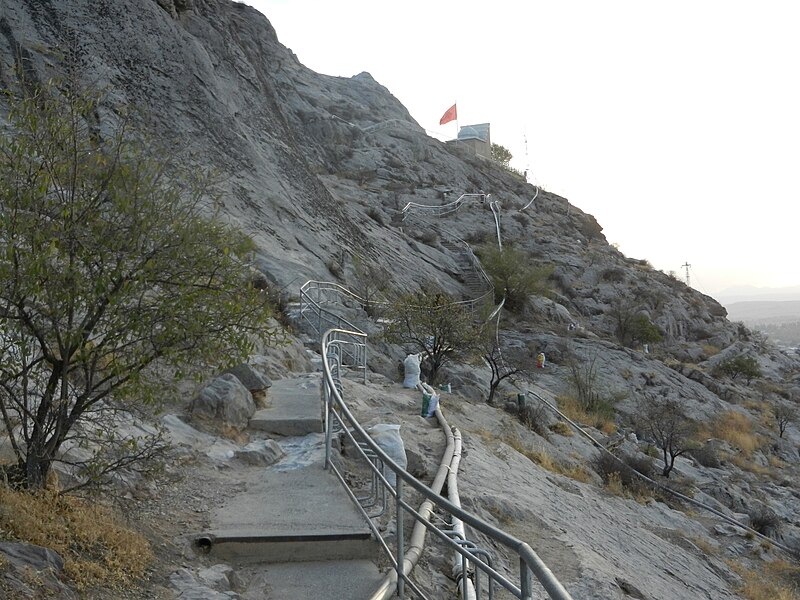
Welcome to Sulaiman-Too, a sacred mountain that stands as a singular and timeless beacon in the heart of Central Asia. For more than three thousand years, this majestic natural monument has drawn travelers, pilgrims, and searchers of spiritual wisdom from all corners of the world. Rising dramatically above the surrounding Fergana Valley in the vibrant city of Osh, the mountain features a relative height of 191 meters and an absolute elevation of 1,175 meters, stretching 1,663 meters from east to west. It is celebrated as a UNESCO World Heritage site because it preserves an unbroken tradition of mountain worship and cultural convergence that spans multiple millennia. Long before modern political boundaries were drawn, this mountain served as a vital strategic crossroads for ancient trade and migration routes connecting East and West along the Great Silk Road. Ancient Chinese chronicles from the first millennium referred to this locality as Guishan-chane, meaning the city at the highly respected mountain, while fifteenth-century Farsi manuscripts recorded its poetic name as Bara-Kukh, which translates to the beautifully standing isolated mountain. Local traditions also treasured folk names such as Khanaf, Kara-Tash, and Mecca-Ajaam, meaning the Mecca for non-Arabs, highlighting its immense sacred stature across diverse cultures. What makes Sulaiman-Too truly exceptional is how nature and human devotion have woven together into an evolving cultural landscape. The mountain possesses five distinct peaks, named Buura-Tag, Shor-Too, Rusha-Too, Eer-Too, and Keklikuchar, each carved with natural limestone caverns and grottos that ancient societies viewed as sacred portals between the earthly realm and the divine cosmos. Over the ages, Bronze Age agricultural communities, early Indo-Iranian worshipper groups, shamanic practitioners, and Islamic pilgrims all left their indelible spiritual marks upon these slopes. Rather than erasing previous beliefs, each successive tradition built upon earlier sacred foundations, creating a harmonious spiritual symbiosis where ancient rituals for fertility, healing, and ancestor reverence are still practiced today alongside formal religious customs. As you walk along these ancient paths, you are following in the footsteps of countless generations who have climbed these very slopes with hope, reverence, and awe. Take a moment to absorb the vast sky, the dramatic stone contours, and the historic atmosphere that surrounds you. Please walk slowly along the designated paths, respect the sacred nature of these sites, and allow yourself to connect deeply with the timeless heritage of this extraordinary mountain.
02 Asaf-ibn-Burkhiya Mausoleum
According to ancient local traditions and centuries-old lore, this sacred burial monument located at the southeastern foot of the mountain was established in accordance with the final wishes of Asaf ibn Burkhiya, the legendary grand vizier and wise counselor to King Solomon himself. As you stand before the southeastern slopes of Sulaiman-Too, direct your gaze toward the elegant red brick structure featuring a prominent central portal and dome, standing gracefully against the dramatic backdrop…
03 Ravat-Abdullakhan Mosque
Ascending a short distance along the hill path from the mausoleum brings you to the grand Ravat-Abdullakhan Mosque, an architectural masterpiece resting at the southeastern foot of Sulaiman-Too. This magnificent sixteenth-century structure was commissioned by Abdullakhan the Second, the prominent ruler of the Shaybanid dynasty who successfully unified vast territories across Central Asia during his reign. …
04 Takht-i-Sulaiman and Babur's House
Reaching the summit of the first peak, known historically as Buura-Tag, brings you to one of the most famous observation points in all of Central Asia. Local tradition holds that at just sixteen years of age, Zahiruddin Muhammad Babur, the brilliant poet, scholar, and future founder of the Mughal Empire, sat upon this high rocky ledge to contemplate the sweeping panorama of the Fergana Valley and construct a small shelter for meditation and prayer. …
05 Rusha-Unkur Cave and Museum
Descending along the ridge path to the southern slope of the third peak, known as Rusha-Too, brings you to Rusha-Unkur, also celebrated as the Eagle Cave. As the largest natural cavern on Sulaiman-Too, this site holds deep historical importance; mid-twentieth-century archaeological excavations inside uncovered flint tools dating back to the Mesoneolithic era, proving that human ancestors utilized this mountain shelter thousands of years ago. …
06 Bronze Age Settlement and Petroglyphs
Descending onto the southern slope brings you to the ancient Osh settlement site, a remarkable center of the Bronze Age Chust culture dating back three thousand years, from the fifteenth to the seventh century BC. Take a moment to look at the exposed, sloping rock faces, which reach an incline of forty degrees, and observe the stepped ground surfaces where dynamic petroglyphs and ancient terraced habitations are preserved. …
07 Closing
As you descend the winding paths of Sulaiman-Too toward the bustling city below, our journey through this extraordinary cultural landscape comes to a peaceful close. Standing upon this ancient mountain, you have walked through thousands of years of human history, where nature, faith, and memory blend into a single harmonious whole. …