 Photo Wikimedia Commons
Contents
History & cultureBY TELLBY7 sections · numbered as on the map01 Orientation
Welcome to Shapur Cave, an extraordinary mountain sanctuary nestled high within the rugged limestone cliffs of the Zagros Mountains in southern Iran. You are standing in a sacred realm where ancient Persian royal majesty and raw natural wonder merge into an irreplaceable historical landscape. This magnificent site forms an essential part of the Sasanian Archaeological Landscape of the Fars Region, which was recognized for its profound cultural value and officially designated as a UNESCO World Heritage site in two thousand eighteen. Here, away from academic jargon, we can appreciate how this cavern represents one of the most breathtaking achievements of ancient Persian artistic ambition and imperial devotion. Located approximately four kilometers from the historic Sasanian capital of Bishapur, high up in the temperate Chogan Valley at an elevation of nearly eight hundred meters above sea level, this cavern was selected seventeen centuries ago as a monumental symbol of triumph and divine authority. Why did King Shapur the First choose this precise, elevated wilderness to erect his eternal likeness? As you explore this vast space, you will discover how the raw geological formations of the earth were painstakingly transformed by master stonecutters into an awesome royal sanctuary. The cave itself is structured into two main sectors. Sector A encompasses the monumental cavern entrance along with five grand man-made terraces that step rhythmically upward into the darkness. Sector B extends far into the mountain as a massive inner hall housing ancient rock reservoirs and mystical ceremonial chambers. Our journey today will guide you safely along a carefully arranged pathway. We will begin at the dramatic cavern entrance overlooking the lush valley below, climb the carved stone terraces, stand face to face with the colossal statue of King Shapur the First carved directly from a living stalagmite, inspect the military inscriptions carved upon the rugged cave walls, and finally venture toward the quiet inner reservoirs where sacred water rituals once unfolded. Please watch your footing on the mountain stairs and stone steps, move at a comfortable pace, and let the solemn grandeur of this ancient Persian kingdom envelop your senses as we step forward together into the shadows of history.
02 Cave Entrance: A Massive Natural Gateway Overlooking the Valley
The massive cave entrance, spanning thirty meters in width and fifteen meters in height high atop the precipitous mountain cliff, was chosen by the ancient king as a natural fortress to proclaim his supreme victory to the entire known world. Take a moment to pause right here at the threshold and look back over your shoulder at the breathtaking valley unfolding beneath your feet. …
03 Man-made Terraces: Stepped Platforms Leading to the King
This dark cave interior is amazingly composed of five massive man-made terraces chiseled directly out of the mountain bedrock by ancient and modern hands. Direct your eyes downward to the solid stone steps beneath your feet and look up at the wide stepped platforms ascending gracefully into the shadowed depths. …
04 The Colossal Statue of Shapur I: A Unique Masterpiece Carved from a Stalagmite
Standing nearly six point seven meters tall with a shoulder width exceeding two meters, this breathtaking statue was not carved elsewhere and transported here, but was sculpted directly in situ from a single giant stalagmite that grew naturally inside this cavern over thousands of years. It represents the only surviving free-standing monumental statue from ancient Iran. …
05 The Cave Inscription Wall: Records of Restoration Breaking a Thousand Years of Silence
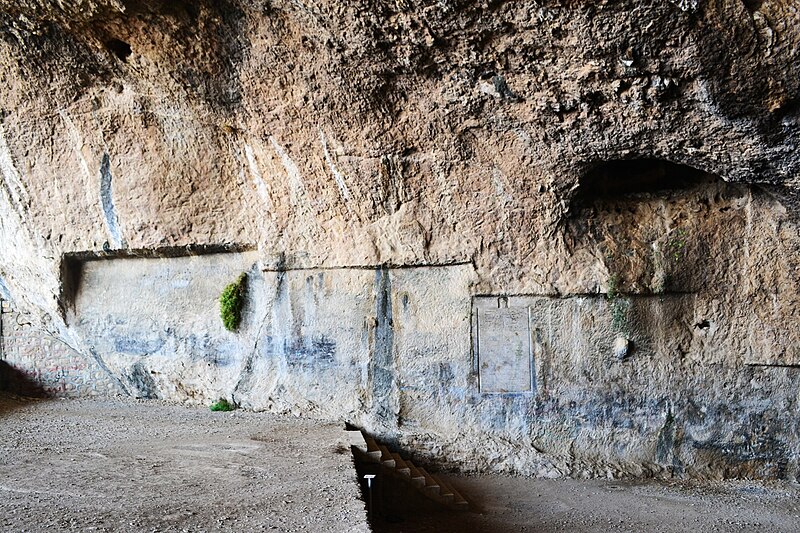
Fallen and lying shattered upon the damp cave floor for over fourteen centuries after a catastrophic earthquake, this gigantic royal statue was triumphantly raised and restored by a dedicated military engineering force. Cast your eyes upon the smoothed vertical faces of the cavern wall where neat lines of carved script and royal emblems are preserved in the stone. Here, two distinct military inscriptions record two vastly different eras of Persian history. …
06 Deep Cave Hall: Reservoirs Breathing Sacred Water and Royal Rituals
Deep within the silent shadow of Sector B lies an intricate network of natural halls housing three carved stone reservoirs built to collect pure water dripping from the high ceiling. Look down at the cave floor where three rectangular basins, each measuring roughly three to four meters across and one meter deep, have been hollowed out of the living rock. In the arid climate of southern Iran, water was venerated as a sacred, life-giving element of divine creation. …
07 Closing
As we walk back toward the bright arch of the cave entrance and look out once more over the sweeping, majestic landscape of the Zagros Mountains, our audio guide journey comes to a gentle and reflective close. We hope this immersive exploration through Shapur Cave has brought you face to face with the awe-inspiring reality and artistic mastery of ancient Persia. …