Contents
History & cultureBY TELLBY7 sections · numbered as on the map01 Orientation
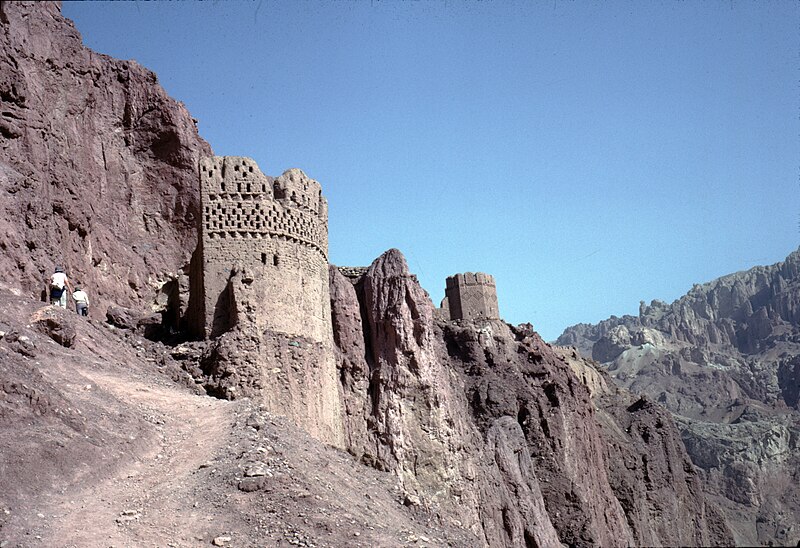
Welcome to Shahr-e Zuhak, the formidable ancient citadel that has stood guard over the eastern gateway of the Bamiyan Valley for more than a millennium. Situated precisely at the strategic confluence where the Bamiyan River meets the Kalu River near Shashpul, this remarkable site occupies a decisive geography along the historic Silk Road, serving as both a vibrant commercial crossroads and an impenetrable military bastion. Recognizing its extraordinary universal value and its testimony to centuries of cultural interchange between Indian, Hellenistic, Roman, Sasanian, and Islamic traditions, UNESCO inscribed Shahr-e Zuhak on the World Heritage List in two thousand three as an integral component of the Cultural Landscape and Archaeological Remains of the Bamiyan Valley. As you stand near the entry area and gaze upward, the most striking visual feature is the dramatic deep crimson coloration of the surrounding sandstone cliffs and earthen ramparts, which earned this citadel its famous local moniker, the Red City. In Hazara folklore and the epic Persian traditions of the Shahnameh, this stronghold is bound to the mythical King Zuhak, a tyrant said to have possessed two ravenous snakes growing from his shoulders that fed upon human brains, adding an atmosphere of ancient legend to the physical ruins. Originally established during the Hephthalite period around the sixth century and subsequently expanded into a massive defensive complex under the Ghorid dynasty, the fortress was ingeniously constructed using local iron-rich red clay and sun-dried mud bricks set directly atop precipitous rock formations. Before we commence our ascent along the historical path, we must issue a crucial safety advisory regarding your physical surroundings. Due to modern military conflicts that engulfed the central highlands of Afghanistan during the late twentieth century, portions of the terrain surrounding the citadel remain hazardous with unexploded ordnance and landmines. While the main walking trail has been meticulously demined and paved for public access, it is absolutely essential that you remain strictly within the marked boundary of the path at all times. Do not step off the established trail, do not climb onto crumbling mud-brick walls, and do not venture into uncleared rock slopes or side ravines. By observing these vital safety protocols, you ensure your personal well-being while assisting international efforts to preserve this fragile World Heritage site. Now, let us begin our journey up the ancient approach to discover the defense strategies and timeless stories of Shahr-e Zuhak.
02 Spot 1 - Lower Trail & Rock Tunnel Gate
Welcome to the first major defensive threshold along the fortress's lower approach, the Rock Tunnel Gate. Consider this astonishing historical fact: this narrow, shadowed passage was manually carved directly through the solid mass of a cliff face by ancient stonemasons working with simple iron chisels and heavy hammers. Rather than exploiting a preexisting natural fissure, military engineers deliberately hand-excavated this subterranean rock corridor to form an absolute single-file choke point. …
03 Spot 2 - Mud-Brick Defense Towers & Walls
You are now standing before the impressive terraced Mud-Brick Defense Towers and Walls ascending the steep southern slope of the fortress. Consider this astonishing reality: these monumental defensive ramparts and circular bastions were constructed entirely out of unbaked, sun-dried mud bricks bound together with chopped straw, yet they have endured centuries of extreme high-altitude mountain weather and devastating military sieges. …
04 Spot 3 - Triangular Plateau Domed Citadel Rooms A-D
We have now reached the Triangular Plateau, an elevated shelf situated fifty to seventy meters above the valley floor spanning approximately one hectare, housing the citadel's central domed rooms designated A through D. Consider this striking modern fact: because these ancient brick domes were structurally fragile and perched precariously on steep cliff edges where human access was extremely dangerous, heritage scientists recently utilized state-of-the-art autonomous Skydio Xten and S2 drones…
05 Spot 4 - Dark Interior Domed Chamber Room E & Passageways
You have now entered Room E and its connecting defensive passageways, representing the most shadowed and subterranean section of the citadel complex. Consider this remarkable digital survey reality: Room E is almost entirely isolated from natural sunlight, receiving minimal ambient illumination through only two tiny apertures in the ceiling dome and southern wall. …
06 Spot 5 - Civil War Anti-Aircraft Gun Relic
You have reached the dramatic high lookout point along the upper ridge, marked by the striking modern military relic of a Civil War Anti-Aircraft Gun. Consider this extraordinary historical continuity: this ancient fortress, first established in the sixth century under the Hephthalites, remained an active, highly strategic combat outpost well into the late twentieth century. …
07 Closing
Standing here at the summit lookout of Shahr-e Zuhak, surrounded by the breathtaking panorama of the Bamiyan Valley, we bring our interactive audio journey to a close. From its sixth-century origins under the Hephthalite kingdom through its medieval golden age as a Ghorid stronghold along the Silk Road, this fortress has endured as a monumental symbol of resilience, architectural ingenuity, and history. …