 Photo Wikimedia Commons
Contents
History & cultureBY TELLBY7 sections · numbered as on the map01 Orientation
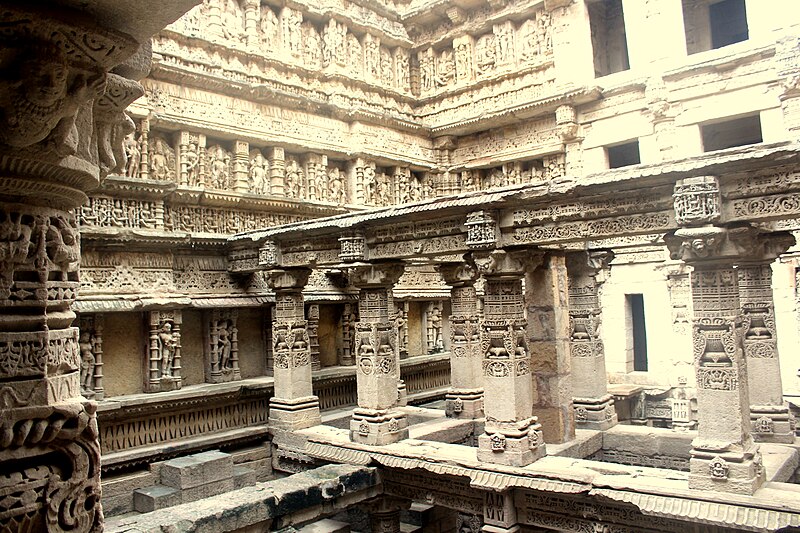
Welcome to Rani ki Vav, an extraordinary underground shrine and magnificent subterranean stepwell located on the historic banks of the Saraswati River in Patan, Gujarat. Meaning the Queen Stepwell in the local language, this extraordinary structural marvel represents a masterwork of human creative genius carved deep into the cool, sheltering earth. Stepwells are a uniquely Indian form of subterranean water management and resource architecture that evolved over thousands of years on the subcontinent, transforming from simple sandy pits into elaborate multi-storied architectural wonders. Rani ki Vav marks the absolute artistic and technological pinnacle of this long evolutionary tradition, constructed in the celebrated Maru-Gurjara style at the very height of master craftsmanships. What makes this landmark truly exceptional is its profound subterranean concept as an inverted temple. While traditional Hindu temples soar skyward with majestic elevated spires, Rani ki Vav descends horizontally and vertically into the earth, elevating functional groundwater storage into a sacred sanctuary dedicated to the eternal sanctity of water. The site earned its prestigious designation as a UNESCO World Heritage site simply because it represents the ultimate apex of stepwell construction, where everyday utility seamlessly merges with divine aesthetic expression. As you stand here on the ground level plateau, prepare to descend through seven distinct stepped levels framing four magnificent pillared pavilions. The complete monument stretches over sixty-five meters in length and descends nearly thirty meters beneath the surface, orienting along an east to west axis toward a vast circular well shaft. Along every wall, beam, bracket, and pillar, you will encounter over five hundred principal sculptures and more than one thousand minor reliefs, depicting gods, goddesses, celestial dancers, and everyday medieval life in stunning artistic detail. The architectural layout forms a complex three-dimensional framework that filters bright desert sunlight and creates a cool, humid microclimate as you walk deeper into the earth. As you begin your walk down into this subterranean temple, allow yourself to step away from the warm sunshine above and enter a sacred underground world preserved for centuries beneath river silt, ready to reveal the devotion, art, and engineering mastery of medieval India.
02 The Step Entrance & Upper Pavilion Corridor
The most astonishing fact that greets you here at the very start of your exploration is that this colossal seven-story subterranean monument was not constructed to celebrate a grand military victory or to showcase royal vanity, but was created as an enduring expression of a queen's devoted love and grief for her departed husband. …
03 The Sculptural Galleries of Apsaras & Daily Life
As you step down into the second and third gallery levels, the surprising fact that immediately captures your imagination is that this subterranean structure holds over five hundred principal sculptures and well over one thousand minor reliefs, seamlessly blurring the boundaries between the divine cosmos and everyday human experience. …
04 The Subterranean Tank & Divine Pantheon
As you descend into the deep fourth level of the stepwell, a truly startling fact becomes physically apparent: the internal air temperature drops significantly, creating a cool, humid subterranean microclimate that naturally protected precious water reserves from evaporation. The ingenious architectural layout divides the large space through an intersecting network of horizontal roofs and vertical columns known as a three-dimensional tartan pattern framework. …
05 The Circular Well Shaft & The Lost River
As you arrive at the westernmost terminus of the stepwell where the circular well shaft opens before you, the most startling historical fact to comprehend is that this entire multi-story architectural marvel was completely buried under river silt and mud for over six hundred years, totally lost to human memory and sight. …
06 The Restoration & Recovered Masterpieces
The most astonishing fact you discover at this restoration wall area is that when pioneering British archaeologists first surveyed this site in the late nineteenth century, almost nothing of this magnificent subterranean temple was visible except for a massive filled-in pit measuring eighty-seven meters across and a few broken stone pillars protruding from the soil. …
07 Closing
We have now returned to the sunny ground level plateau where our subterranean journey first began. Standing here once more at the top viewpoint, take a quiet moment to reflect on the extraordinary spatial transition you have experienced, moving from the bright open surface down into the cool, carved depths of an inverted subterranean temple. …