Contents
History & cultureBY TELLBY7 sections · numbered as on the map01 Orientation
Welcome to Arslantepe Mound, an ancient seat of power and administrative authority situated in the fertile Orduzu district near modern Malatya. Standing before you is a grand human-made mound that rises thirty meters above the surrounding agricultural plain, covering a expansive area of nearly five hectares. This extraordinary site rests strategically in the valley of the Tohma River, a major tributary of the upper Euphrates originating in the rugged Taurus Mountains. The natural abundance of water and fertile soils, situated safely outside the violent flood zone of the main river channel, allowed continuous human habitation to flourish on this exact spot for thousands of years.
In two thousand twenty-one, UNESCO inscribed Arslantepe Mound onto the World Heritage List. It achieved this prestigious international distinction because it provides the world's most compelling archaeological evidence of how early human societies transformed from egalitarian village communities into a centralized, hierarchical state system long before written records emerged in Anatolia. Layer upon layer of meticulously preserved mudbrick architecture within this mound document an unbroken human timeline stretching from six thousand BC through the Chalcolithic, Bronze, and Iron Ages, continuing into the Roman era and a late Byzantine village.
As you begin this walking tour through our open-air museum, you are stepping directly into the footsteps of ancient monarchs, high priests, and pioneering administrators. The elevated wooden footbridges constructed across the site allow you to explore these fragile mudbrick palaces and sacred temples safely without disturbing the underlying archaeological strata. Before we begin moving along the path, take a quiet moment to absorb the surrounding mountain landscape and reflect upon the ancient trade caravans that once traversed this valley, linking the vast Mesopotamian plains to the mineral-rich highlands of Anatolia.
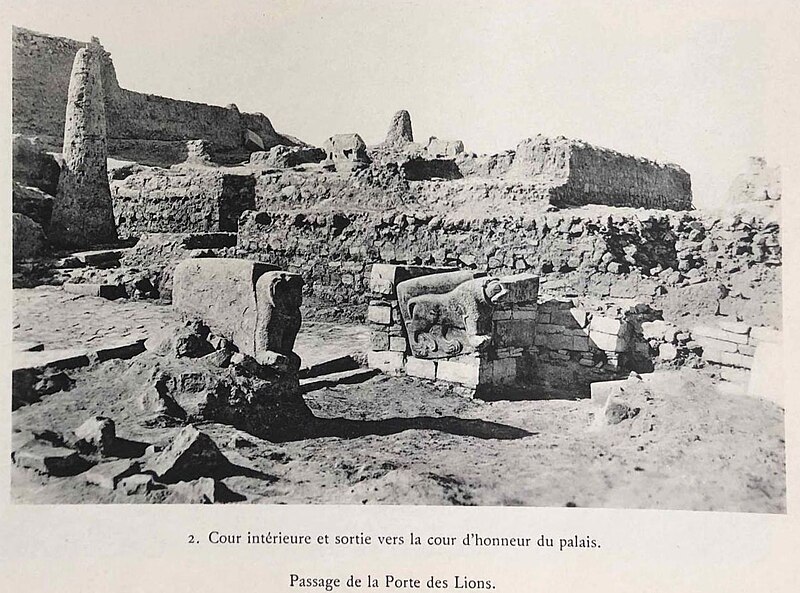
02 The Lion Gate: Sentry of the Neo-Hittite Rulers
Thousands of years ago, colossal twin stone lions stood at this monumental threshold to project absolute royal power and strike awe into visiting foreign envoys. Please direct your eyes to the entrance area straight ahead, where detailed stone replicas of these ancient lion statues and engraved relief orthostats stand guard along both sides of the path. …
03 The World's Earliest Swords in the Mudbrick Palace
Inside this very structural chamber, archaeologists made a discovery that transformed our understanding of ancient warfare, unearthing the earliest metal swords ever forged in human history. Look down at the massive, amazingly preserved mudbrick walls extending beneath the high modern protective roof canopy. You are standing within Palace VIA, a monumental administrative center built during the Late Uruk period around thirty-three hundred BC. …
04 Clay Seals and the Dawn of Palace Bureaucracy
Long before coins or written accounting ledgers were invented, over two thousand uniquely stamped clay sealings served as the foundational tools of Anatolia's very first bureaucratic economy. Direct your eyes across the terraced stone foundations to your right, where the structural remains of Temple A and Temple B stand adjacent to central administrative storage halls. …
05 The Royal Tomb: Elite Power and Ancient Metal Trade
Around three thousand BC, an elite chieftain was laid to rest inside a stone chamber surrounded by magnificent metal treasures, with four sacrificed young humans placed atop his heavy stone tomb lid. Look down toward the prominent stone cist burial structure of occupation level VIB1. Notice how this elaborate stone-lined tomb was constructed in a dominant position, strikingly separated from the surrounding light wooden dwellings of the general population. …
06 King Tarhunza and the Defiance of Melid
When the great Hittite Empire collapsed around twelve hundred BC, the resilient city of Melid defied the regional chaos to become the thriving capital of the independent Luwian Neo-Hittite Kingdom of Kammanu. Please look toward the dark basalt orthostat slabs arranged along the reconstructed wall section before you. These impressive stone reliefs once decorated the lower exterior facade of the Iron Age royal palace. …
07 Closing
As you stand here on the elevated summit platform of Arslantepe Mound, take a quiet moment to gaze out across the sweeping Malatya plain and the distant Tohma River valley. Beneath your feet lie over six thousand years of continuous human memory, innovation, and political evolution. You have walked through the direct birthplace of state administration, witnessed the world's earliest known metal swords, and traced the resilient spirit of Anatolian civilization from a humble Chalcolithic…