 Photo Wikimedia Commons
Contents
History & cultureBY TELLBY8 sections · numbered as on the map01 Orientation
Welcome to the audio guide introducing the tranquil water networks of the Kerala Backwaters. After concluding a long forty hour train journey and enjoying a restful night in Ernakulam, our road trip towards Alleppey finally begins. No more waiting at crowded train stations, platforms, or inside train compartments. From the moment we pack our bags and step into the vehicle, our true exploration of God's Own Country unfolds. On this first morning of the trip, everyone woke up instantly with excitement at the very first ring of the alarm. Since we were moving to a new destination that day, everything had to be packed carefully back into our suitcases before leaving the hotel.
Choosing to book hotels where both breakfast and dinner were included proved to be one of the smartest decisions made during the planning stage of this trip. When traveling every single day, the last thing you want is to wake up early and immediately begin searching for an open restaurant. Similarly, after spending an entire day exploring new places, walking for hours, and traveling long distances, having a warm dinner waiting at the hotel saves immense time and physical effort. In the hotel dining area, other travelers were enjoying their morning meals while discussing plans for the misty hills of Munnar or the wildlife sanctuaries of Thekkady, while we quietly prepared for our journey to Alleppey.
After finishing breakfast and walking outside, our driver bhaiya was already waiting for us with a warm smile. Over the course of the journey, he becomes much more than just a driver. He serves as a wonderful guide, introducing us to Kerala's roads, scenic shortcuts, local food recommendations, and countless fascinating facts known only to native residents. Once the luggage is loaded into the cab and the engine starts, the excitement returns. As the car moves forward, lush greenery surrounds us, featuring endless coconut trees, narrow canals running beside the road, and colorful houses reflecting in the calm waters like postcard views.
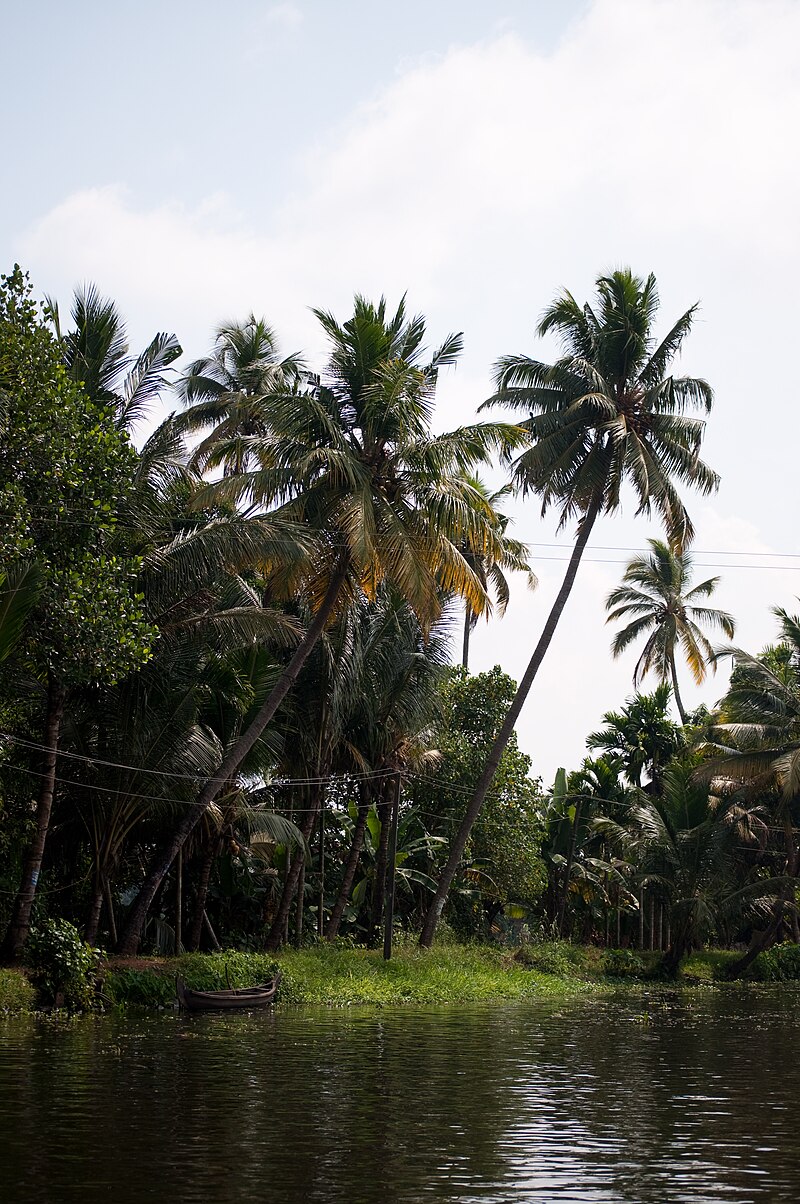
Whenever someone thinks of Alleppey, a clear image immediately comes to mind. It is a traditional wooden houseboat floating peacefully through calm waters, lined with tall coconut trees on both sides, with small villages passing slowly and fishermen rowing their boats. The reflection of clouds dancing on the water and the tranquil pace of life represent the timeless charm of Kerala better than anywhere else. Before we step aboard a houseboat, let us dive into the fascinating history and ecosystem that make these famous backwaters so uniquely captivating.
02 Alappuzha Port and the History of Venice of the East
As you arrive in this coastal city, many travelers find themselves confused by seeing two different names on signs and travel guides. Whether it is Alleppey or Alappuzha, the answer is that both names refer to the exact same remarkable destination. Alappuzha is the official Malayalam name used natively across the region, whereas Alleppey is the older anglicised name that gained widespread international popularity during British colonial rule. …
03 Vembanad Lake and the Backwater Ecosystem
Before arriving in Kerala, many visitors picture the backwaters as simply one continuous inland lake. However, the true geographical structure of the backwaters is an extraordinarily complex interconnected network of lagoons, natural lakes, flowing rivers, artificial canals, estuaries, and coastal inlets running parallel to the Arabian Sea coastline. …
04 Kuttanad Kayal Nilams and History of Sub-Sea Reclamation
Navigating deeper through the tranquil channels brings us to Kuttanad, a remarkable wetland region celebrated nationwide as the rice bowl of Kerala. Often compared to the famous polders of the Netherlands and dubbed the Holland of Kerala, Kuttanad represents the lowest geographical altitude in India. Here, vast agricultural fields thrive well below mean sea level, ranging from zero point two to two point six meters, with certain extreme areas plunging more than nine meters beneath the surface. …
05 Large-Scale Kayal Reclamation Blocks and Mathi Kayal Division
Following the foundational first phase, backwater reclamation expanded during a second phase from eighteen eighty eight to nineteen zero three. Led by prominent landlords such as Chalayil Eravi Kesava Panicker, this period saw the reclamation of major polders including Rajaramapuram Kayal, which was the largest single reclaimed polder at five hundred thirty eight point two one hectares, along with Mangalam Manikyamangalam, Sreemoolamangalam, Kannitta, Cherukali, and Mathi Kayal. …
06 Karumadikuttan Temple and Backwater Heritage
As we continue our exploration aboard a kayak or boat along the quiet backwater channels of Alleppey, we arrive at the tranquil grounds of the Karumadikuttan Temple located directly along the water's edge. This historic site is one of the most culturally significant and peaceful landmarks encountered along the backwater route, offering visitors a profound sense of serenity and historical depth. Housed inside this modest shrine is a remarkably detailed black granite stone statue of the Buddha. …
07 Waterfront Village Life, Toddy Tapping, and Coir Industry
Cruising slowly along the backwater canals offers an intimate glimpse into the vibrant daily routines of the waterfront village communities. As early morning light breaks across the water, the boardwalks and small jetties come alive with the joyful laughter of school children. Watching young students dressed in neat school uniforms skipping along boardwalks or boarding wooden ferry boats to reach their classrooms is one of the most heartwarming morning scenes unique to the backwaters. …
08 Closing
Our audio guide journey across the serene Kerala Backwaters aboard houseboats and kayaks now comes to a heartwarming conclusion. The gentle ripples upon the water surface reflecting golden sunset hues and dancing cloud formations have offered us a truly peaceful sanctuary within nature. The slow passing of palm fringed village shores and quiet canals has provided a rare, unhurried pace of life that contrasts beautifully with the rush of modern cities. …