 Photo Wikimedia Commons
Contents
History & cultureBY TELLBY7 sections · numbered as on the map01 Orientation
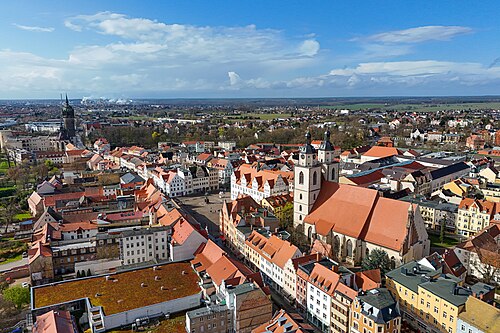
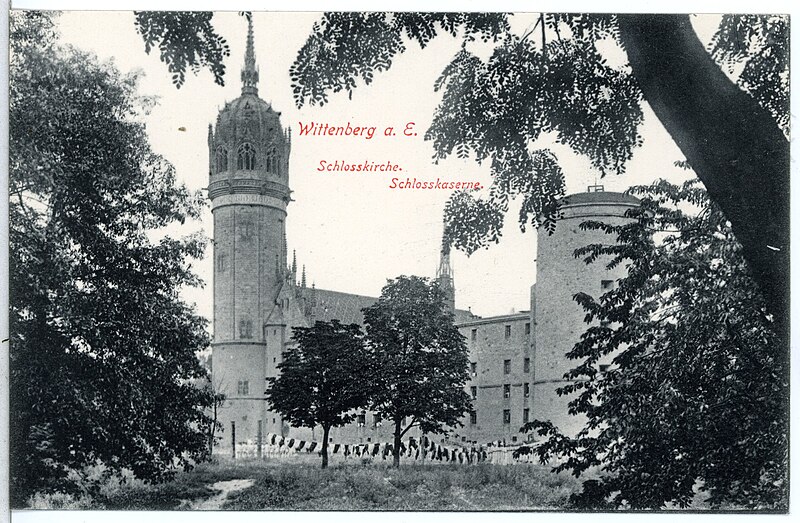
Welcome to the Castle Church of Wittenberg, a sacred monument of world historical significance that transformed the spiritual and cultural landscape of Europe. Located at the western edge of the historic old town of Wittenberg, this noble structure forms the northern wing of the electoral castle complex opening toward the east. As you stand before this impressive edifice, take a moment to absorb its commanding presence and reflect upon the centuries of intellectual and religious transformation contained within these historic walls.
The Castle Church, known officially as All Saints Church, was inscribed on the UNESCO World Heritage List under cultural criteria four and six because it preserves the indispensable legacy of Martin Luther and Philip Melanchthon, representing a decisive turning point in human thought. Furthermore, as a cornerstone of the European Heritage Label network known as Sites of the Reformation, this sanctuary stands as a shared European locus memoriae. Unlike sites valued solely for aesthetic conservation, this hall represents a living symbol of freedom of conscience, educational advancement, and social renewal that reshaped governance across the entire continent.
The foundational origins of this holy site extend back to around 1340, when Duke Rudolf I of Saxe-Wittenberg from the Ascanian dynasty established a chapel dedicated to All Saints within his newly built fortress. Duke Rudolf I placed his foundation under the immediate legal jurisdiction of the Holy See in Rome, a privileged status that was later reaffirmed when Pope Boniface IX designated it as the principal church of Wittenberg. Between 1490 and 1511, Elector Frederick III of Saxony, famously known as Frederick the Wise, undertook a comprehensive reconstruction of the castle complex. He commissioned the renowned master builder Conrad Pflueger to design a magnificent late Gothic church. Completed in 1511, the structure served as an electoral place of worship and the academic chapel for the newly founded University of Wittenberg, known as the Leucorea. Within these walls, doctoral degrees were conferred, inaugural academic addresses were delivered by prominent scholars, and distinguished professors were laid to rest.
Our guided tour today will follow a counterclockwise path through six key thematic locations. We begin here at the entrance before the commemorative Theses Doors, step inside to admire the grand nave with its intricate net vaulting, pause at the historic pulpit and the floor tomb of Martin Luther, examine the high choir with its noble monuments, step outside beneath the soaring eighty-eight-meter steeple, and conclude with a reflective overview of Wittenberg's broader heritage. Please step forward with reverence as we begin our journey through this extraordinary sanctuary.
02 The Theses Doors of the Reformation
You are now standing directly before the main portal of the Castle Church, the very site where one of the most consequential declarations in human history was proclaimed. While many visitors assume that these majestic doors are the exact wooden entrance that stood here five centuries ago, historical reality presents a dramatic turning point. The original entrance where Martin Luther posted his famous document was made entirely of solid oak. …
03 The Nave and the Majestic Net Vaulting
Welcome to the central nave of the Castle Church. As you step into this expansive hall, you are instantly embraced by an atmosphere of solemn beauty and sacred architecture. Yet beneath this tranquil elegance lies a history marked by ruin and resurrection. The interior you see today was reduced to a blackened shell during the bombardment of the Seven Years War and suffered further destruction during the War of Liberation when Wittenberg was besieged. …
04 The Pulpit and the Resting Place of Martin Luther
You have now arrived before the ornate pulpit in the center of the nave. While this elevated structure served as a central focal point for biblical preaching, it also marks one of the most solemn historical locations in the entire church. Beneath the stone floor directly under this pulpit rest the actual mortal remains of Doctor Martin Luther. …
05 The Choir, High Altar, and Noble Monuments
You have now reached the sanctuary at the eastern end of the church, where the high altar and the electoral tombs are situated. As you stand in this sacred space, you encounter another remarkable historic reality. Elector Frederick III, known as Frederick the Wise, who served as Martin Luther's steadfast political protector, rests in this very same chancel alongside Philip Melanchthon, Luther's closest intellectual partner. …
06 The Steeple and the Monumental Hymn Inscription
You are now standing outside the church, gazing up at the majestic steeple of the Castle Church that dominates the skyline of Wittenberg. Rising eighty-eight meters into the air, this magnificent tower is the most recognizable architectural landmark in the city. However, behind its present Neo-Gothic elegance lies a surprising historical transformation. …
07 Closing
Thank you very much for joining our audio guide tour of the Castle Church in Wittenberg. Today, you have journeyed through the cradle of the Protestant Reformation, exploring the heavy bronze doors where world-altering ideas were proclaimed in 1517, the soaring nave filled with monuments to courageous scholars, the quiet resting places of Martin Luther and Philip Melanchthon, and the monumental steeple encircled by Luther's immortal hymn. …