 Photo Wikimedia Commons
Contents
History & cultureBY TELLBY7 sections · numbered as on the map01 Orientation
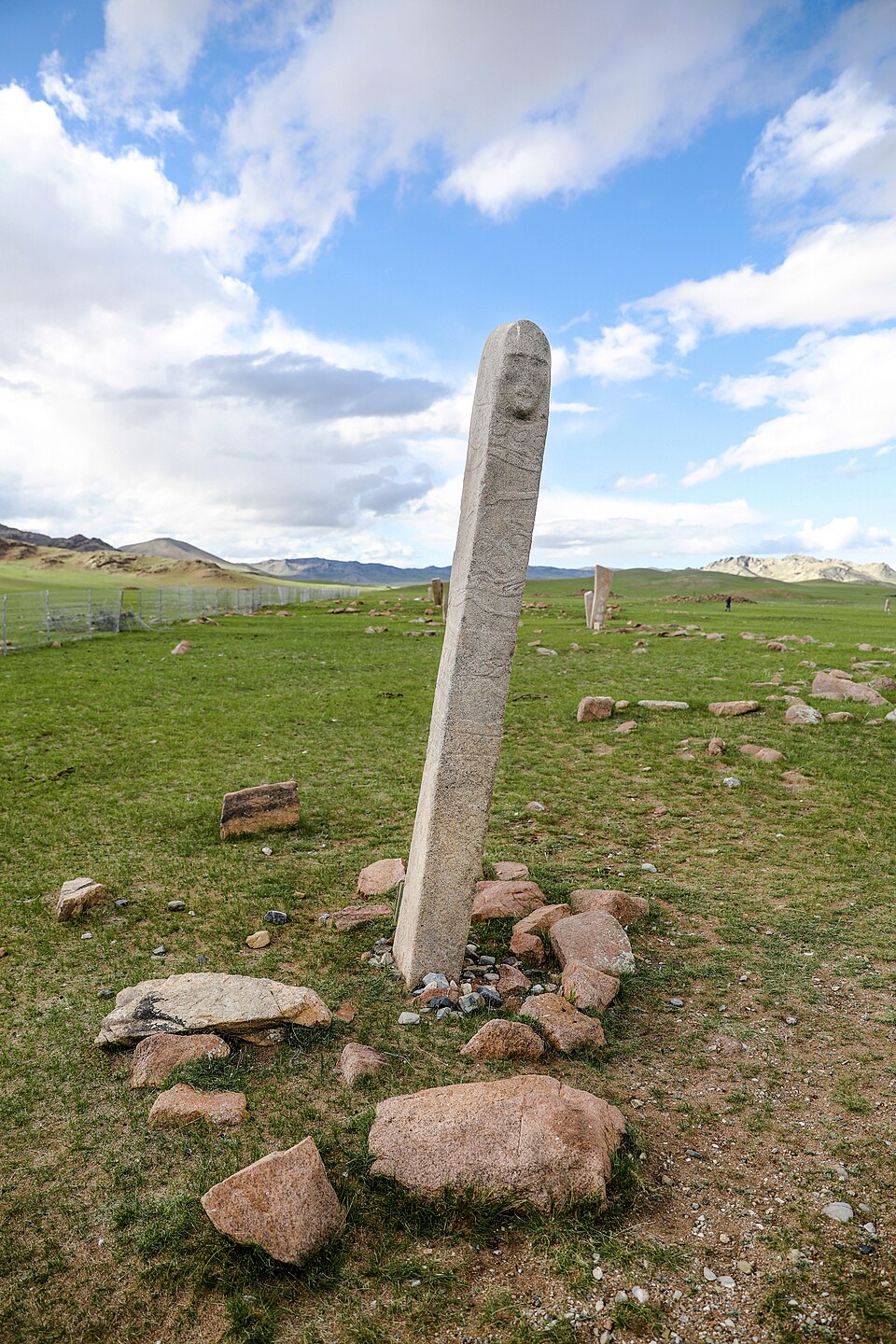
Standing upon the vast sweeping steppes along the Tamir River basin at the foot of the Khangai Ridge in central Mongolia visitors are greeted by a breathtaking landscape dotted with majestic standing stone pillars erected by Bronze Age nomads three thousand years ago. Dating from approximately 1200 to 600 BCE these deer stone monuments represent the pinnacle of megalithic monumental art ceremonial practices and mortuary traditions created by the nomadic pastoral societies that once flourished across the Eurasian steppe belt. Recognizing their extraordinary cultural significance and outstanding universal value UNESCO inscribed these monuments and their associated Bronze Age sites onto the World Heritage List in 2023. Soaring up to four meters in height these monumental granite steles are adorned with deeply carved highly stylized depictions of flying stags their slender legs tucked beneath them as if leaping gracefully toward the celestial realm. These standing stones do not exist in isolation they are intricately integrated into vast archaeological complexes that include gigantic stone burial mounds known as khirgisuurs enclosed stone fences and hundreds of satellite horse sacrificial altars. Take a moment to gaze across the tranquil grassland where the wind whispers through the valley and the Tamir River winds peacefully through the open landscape. In this sacred setting ancient artisans utilized early metal tools to carve intricate assemblages of weaponry tools personal ornaments and divine animal imagery directly into the hard stone surface permanently preserving their technological achievements social hierarchies and spiritual beliefs. The sheer scale and meticulous organization of these stone complexes provide compelling evidence for the initial emergence of complex hierarchical nomadic societies capable of mobilizing substantial collective labor across vast geographical distances. These monuments stand as the most important surviving structures of a vibrant Eurasian Bronze Age civilization that evolved and eventually vanished during the first two millennia BCE. Furthermore these stone complexes set within the open Mongolian landscape illustrate how pastoralist communities structured their sacred space establishing enduring ties between human lineage cosmic forces and the natural environment. As you begin your exploration today allow yourself to be immersed in the timeless atmosphere of this ancient sanctuary where the artistic brilliance and spiritual aspirations of long forgotten nomadic warriors continue to resonate across the Mongolian steppe.
02 The Classic Mongolian Deer Stone and the Flying Stag
The true wonder of the Classic Mongolian deer stone begins with the astonishing fact that three thousand years ago ancient nomads carved stags with their legs folded neatly beneath them soaring triumphantly into the open sky directly onto hard granite steles. Please turn your eyes now toward the center of the massive standing stone pillar rising erect right before you. …
03 The Massive Khirgisüür Stone Mound Complex
The overwhelming majesty of the Khirgisuur complex is revealed through the shocking fact that hundreds of nomadic herders spent several months transporting thousands of heavy stones just to construct a single massive stone burial mound. Please step past the small pebbles scattered underfoot and gaze across the brush toward the tall stone piled center of the mound. …
04 Horse Sacrifice Altars and Satellite Structures
The sacred bond between Bronze Age nomads and their horses is vividly illustrated by the astonishing fact that around a single massive tomb the skull remains of hundreds of horses were found buried neatly facing toward the east. Please look closely at the base of the small stone piles arranged in a circular row to the east of the main mound. These small stone mounds are satellite sacrificial altars that encircle the central tomb like an honor guard. …
05 Carved Belts with Bronze Weapons and Rein Holders
The innovative military equipment of Bronze Age warriors is brilliantly demonstrated by the fact that the carved curved hook tool on the deer stone was a hands free device designed to secure reins around the waist while driving chariots in combat. Please turn your gaze to the thick belt carved across the lower portion of the stone pillar and the axe carved right beneath it. …
06 Anthropomorphic Deer Stone with Human Face and Earrings
Out of more than fifteen hundred deer stones found across the globe complete human facial features are carved on only a rare handful making this anthropomorphic stele exceptionally extraordinary. Please look up at the slanted upper top of the stone pillar where the surface catches the golden morning sunlight facing east. Carved proudly upon the inclined top face are distinct eyes a long nose and a slightly open mouth representing a human face facing eastward toward the rising sun. …
07 Closing
The carved stags and warrior weapons engraved upon the rugged stone pillars standing erect along the Tamir River basin are far more than mere ancient marks they are the magnificent crystallization of a grand spiritual worldview created three thousand years ago by nomads seeking to connect heaven and earth. …