Contents
History & cultureBY TELLBY7 sections · numbered as on the map01 Orientation
Welcome to the Sacred Ensembles of the Hoysalas, a breathtaking collection of medieval temple complexes located amidst the peaceful landscapes of Karnataka in southern India. Constructed between the twelfth and thirteenth centuries during the height of the Hoysala Empire, these sacred structures stand as extraordinary masterworks of South Indian art, architecture, and religious devotion. This audio guide offers a comprehensive tour through the three most representative temple sites that comprise this property inscribed on the UNESCO World Heritage list in twenty twenty-three: the Chennakeshava Temple at Belur, the Hoysaleswara Temple at Halebidu, and the Keshava Temple at Somanathapura. Situated across the Hassan and Mysore districts, these three monuments represent the absolute pinnacle of medieval Indian stone carving and architectural innovation.
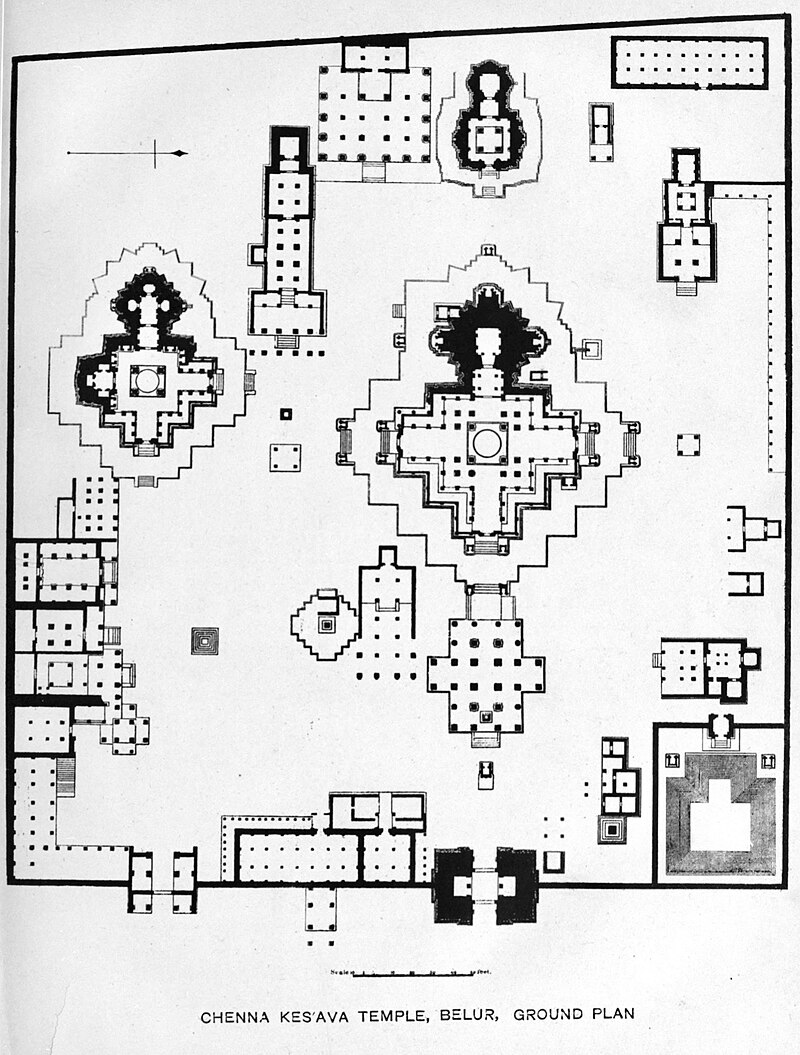
To understand why these temples were inscribed as World Heritage without getting bogged down in complex jargon, one need only look at their remarkable sculptural brilliance and inventive structural planning. The Hoysala sacred architecture is defined by its distinctive star-shaped floor plans, elevated circumambulatory platforms, and hyper-realistic stone relief work that completely covers the architectural surfaces. Between the tenth and fourteenth centuries, the Hoysala dynasty ruled over large portions of the Deccan plateau. By the end of the twelfth century, as the empire expanded its agrarian economy and established sophisticated taxation and administrative systems, the Hoysala monarchs sought to forge a clear and distinct imperial identity. They achieved this by becoming passionate patrons of literature, fine art, and above all, monumental temple construction.
The Hoysala master builders selectively gathered elements from diverse contemporary and historical architectural traditions across the Indian subcontinent. They synthesized the Dravida modes of the south, the Nagara traditions of northern and western India, the Bhumija styles of central India, and the Karnata Dravida innovations favored by the Kalyani Chalukyas. Combining these influences with their own ingenious structural solutions, they created an entirely new architectural dialect. Prepared through the collaborative efforts of the Archaeological Survey of India, the Department of Archaeology, Museums and Heritage of Karnataka, and the Indian National Trust for Art and Cultural Heritage, the World Heritage nomination honors these sanctuaries. Primarily consecrated to Hindu deities such as Vishnu and Shiva, these temples served both as spiritual sanctuaries and as enduring monuments to royal legacy.
Your journey today is thoughtfully structured into five sequential main spots designed to unveil the multi-layered beauty of this sacred heritage. We begin at the site entrance and outer grounds, where you will learn about chloritic schist, the remarkable soapstone material that made such unprecedented carving detail possible. We then move to the elevated stellate platform known as the Jagati, examining the multi-tiered horizontal friezes carved with lines of elephants, lions, mythical makaras, and epic narratives. From there, we inspect the magnificent outer wall sculptures, including the famed Madanika bracket figures, carved stone screens, and the proud signatures left by medieval sculptors. Moving inside, we explore the dimly lit central hall, or Mandapa, with its lathe-turned polished stone pillars and intricate ceiling domes. Finally, we reach the innermost sanctum, the Garbhagriha, reflecting on the historical trials of destruction and the meticulous conservation efforts that have preserved these treasures for posterity. Please take a slow, unhurried walk through the temple courtyard as we step into the extraordinary world of Hoysala artistic genius.
02 Spot 1
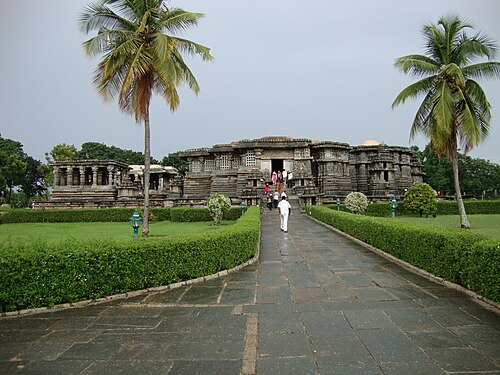
Did you know that these monumental stone temples were constructed using chloritic schist, commonly known as soapstone, a unique material that was as soft as wood when freshly quarried but hardened like iron upon exposure to air? Please pause your steps right here and take a slow, appreciative look across the outer gardens toward the magnificent main facade of the temple complex. …
03 Spot 2
Did you know that the intricate, zigzagging star-shaped contour of the temple base is far more than a decorative foundation? It is actually an elevated circumambulatory platform known as the Jagati, designed specifically for devotees to perform pradakshina, the sacred ritual walk around the deity. Please lower your gaze slightly and examine the horizontal multi-tiered friezes that run continuously around the base of the entire structure. …
04 Spot 3
Did you know that unlike most ancient sacred monuments across India where master craftsmen remained completely anonymous, the individual sculptors of the Hoysala court proudly carved their personal signatures and monograms directly onto the plinths of their statues? Please raise your eyes toward the upper exterior walls and scan the openwork stone lattice screens as well as the angled bracket figures mounted just beneath the projecting roof eaves. …
05 Spot 4
Did you know that the mirror-like polished stone pillars supporting the inner hall were crafted using sophisticated mechanical lathe-turning techniques, spinning massive raw blocks of soapstone against steel cutting tools to achieve mathematically flawless bell-shaped contours? Please step into the dimly lit central Mandapa hall and reach out your hand to feel the impossibly smooth, glassy surface of these stone columns while looking up at the deeply carved ceiling domes soaring above. …
06 Spot 5
Did you know that these sacred sanctums survived brutal plunder and structural destruction by invading armies of the Delhi Sultanate in the early fourteenth century, only to be resurrected through centuries of dedicated restoration supported by successive empires and modern conservation science? Please gaze through the darkened doorway of the sanctum toward the solemn, divine silhouette of the principal deity enshrined within. …
07 Closing
This brings us to the conclusion of our audio tour through the Sacred Ensembles of the Hoysalas, spanning the magnificent temple complexes of Belur, Halebidu, and Somanathapura. Built during the twelfth and thirteenth centuries in the heart of Karnataka, these sacred monuments stand as an everlasting testament to the artistic genius, technical ingenuity, and spiritual devotion of medieval South India. …