Contents
History & cultureBY TELLBY7 sections · numbered as on the map01 Orientation
Welcome to the Kostobe archaeological site located in the scenic Talas Valley of Kazakhstan. It is a true privilege to guide you through this historic location. The site before you was officially inscribed on the UNESCO World Heritage list in twenty fourteen as an integral component of the Silk Roads Changan Tianshan Corridor network. Beyond its prestigious designation Kostobe embodies the lived experiences daily routines and spiritual expressions of medieval townspeople and traveling merchants who navigated these routes centuries ago. Rather than functioning merely as a commercial transit station Kostobe served as a vital focal point where nomadic steppe cultures and settled agricultural communities interacted exchanging ideas crafts and long standing traditions.
This site offers extraordinary archaeological evidence regarding the spatial organization and construction techniques of medieval urban settlements in the Talas Valley. The ancient inhabitants skillfully utilized local earthen materials to erect formidable ramparts and inner structural complexes. Within the citadel walls residential areas were seamlessly integrated with ceremonial spaces dedicated to ritual practices. Most notably Kostobe preserves exceptionally well documented traces of the pre Islamic fire cult offering rare insight into the spiritual world of medieval Central Asian populations. For these early communities fire was far more than an instrument for heating or cooking it was revered as a sacred force associated with life vitality and protection from malevolent influences.
As Islamic practices spread across the region these ancestral beliefs were not erased but rather incorporated into the evolving cultural fabric of the local populace creating a unique syncretic tradition. Our guided tour today will lead you through key areas of this ancient complex. We will begin at the outer citadel ramparts and entrance path proceed to the flame shrine in Room B featuring its distinctive D shaped structure explore the residential living chambers observe the intricate mud plaster decorations along the internal corridor and conclude at the site overlook commanding a sweeping view of the Talas Valley.
As you step forward take a moment to leave behind the noise of the modern world and reflect upon the legacy of the people who once walked these grounds. Please proceed gently toward our first official stop the Citadel Ramparts and Entrance Path where our journey into the medieval history of Kostobe truly begins.
02 Citadel Ramparts and Entrance Path
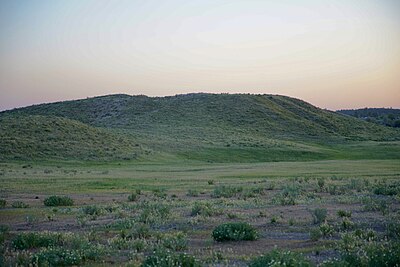
Although it may initially appear to be nothing more than an ordinary natural earthen hill beneath these unassuming ramparts lie layers of a thousand year old settled urban life and the quiet breathing of a once thriving medieval community. Please turn your gaze slowly toward the low earthen mound rising directly in front of you and observe the straight dirt path extending beneath your feet. …
03 D-shaped Flame Shrine of Room B
Long before the Islamic faith established its deep roots across this region there existed within the inner chambers of this structure a sacred shrine where fire was reverently enshrined and worshiped a remarkable testament to pre Islamic religious traditions. Please lower your gaze and carefully observe the D shaped mud structure preserved at the center of this room. …
04 Residential Chambers of the Central Citadel
The medieval inhabitants of Kostobe did not merely revere fire as an abstract or distant deity they cleverly integrated it into the central axis of their daily existence utilizing its heat and spiritual power to survive the regions freezing winters. Please lower your eyes toward the indented hearth feature situated in the corner of the earthen floor. …
05 Highly Decorated Mud-Plaster Corridor
The fact that the interior of this citadel constructed primarily from simple mud and earth was once filled with highly elaborate mud plaster decorations featuring exquisite artistic motifs presents a truly remarkable archaeological revelation. Please bend down slightly and carefully examine the smoothly finished mud plaster traces remaining on the lower portion of the wall. …
06 Talas Valley Archaeological Overlook
There lies a profound historical reality in the fact that this modest hill site before you actually functioned as a crucial crossroads along the trade routes connecting Central Asias vast open steppes with bustling oasis cities. Please turn your gaze slowly toward the distant horizon stretching to your left and observe the dramatic ridgelines of the Talas Valley. …
07 Closing
Today we have journeyed together along the ancient earthen ramparts sacred flame shrines residential living chambers and decorated internal corridors of the medieval Kostobe site exploring the remarkable legacy left behind by its ancient inhabitants a thousand years ago. The pre Islamic fire cult that once flourished within the citadel of Kostobe did not vanish with the arrival of Islam rather it underwent a fascinating cultural transformation surviving continuously within the living folk…