 Photo Wikimedia Commons
Contents
History & cultureBY TELLBY7 sections · numbered as on the map01 Orientation
Welcome to Dungonab Bay and Mukkawar Island Marine National Park, situated along the magnificent Red Sea coast of northeastern Sudan. This extraordinary protected area encompasses one of the most remarkable marine wildernesses in the world, lying in the northernmost tropical sea on Earth. Located approximately one hundred twenty-five kilometers north of Port Sudan, this expansive sanctuary covers nearly two thousand eight hundred square kilometers of pristine coastal waters, offshore islands, mangrove channels, and vibrant coral reef systems. Formally established as a marine national park in two thousand four, the site was inscribed on the prestigious UNESCO World Heritage List in two thousand sixteen alongside Sanganeb Marine National Park in recognition of its exceptional marine biodiversity, intact ecological processes, and natural beauty. The bay serves as a vital global sanctuary for rare and threatened marine species, maintaining pristine coral formations that have developed in the warmest and most saline body of open sea on the planet, where water temperatures range from twenty-four degrees Celsius in winter to thirty-two degrees in summer and annual rainfall remains below fifty millimeters.
As you gaze across the sweeping landscape before you, take a moment to admire the striking visual contrast between land and sea. Shallow turquoise waters stretch across broad embayments where exceptionally clear light penetrates down to the seabed, often affording underwater visibility exceeding thirty meters. Along the shoreline, lush green strips of salt-tolerant Avicennia marina mangrove forests fringe the tidal inlets, standing in sharp contrast against the arid, desert plain of the Sudanese coast. Offshore, the distinct silhouettes of Mukkawar Island and smaller uninhabited rocky islets rise from the turquoise water, creating a seascape of breathtaking visual harmony where arid terrestrial environments seamlessly meet vibrant marine life. Beneath this calm surface lies a dynamic underwater world where marine organisms originating from the Indian Ocean have adapted over millennia to the unique environmental conditions of the Red Sea rift basin.
Throughout this guided audio journey, you will be led through a series of distinct ecological zones that define this protected marine paradise. Our exploration begins along the arid shores where the Beja people have maintained maritime traditions for thousands of years and ancient trade routes once connected desert hinterlands with distant seas across the Red Sea. From the coast, we will move into the shallow lagoons to explore the vast underwater meadows of seagrass that support one of the largest remaining dugong populations in the Red Sea. We will then navigate through the winding mangrove channels that serve as sheltered nurseries for juvenile marine life, before visiting the remote white sand beaches, seabird nesting cliffs, and ancient uplifted coral terraces of Mukkawar Island. Finally, our tour will take us to the steep outer reef drop-offs where spectacular summer aggregations of giant manta rays glide through deep oceanic currents alongside hundreds of colorful fish species. Prepare to immerse yourself in the untouched natural wonder of Dungonab Bay.
02 Mohammed Qol Coast and Ancient Trade Paths
Thousands of years ago, intrepid maritime traders sent by the pharaohs of ancient Egypt during the Middle Kingdom period sailed along these exact arid shores of Dungonab Bay. Navigating their wooden vessels along the desert coast in search of gold, exotic incense, and precious trade goods, these early explorers forged maritime routes that connected the Sudanese hinterland with distant markets across the Red Sea and Arabia. …
03 Seagrass Meadows and the Dugong Refuge
Dungonab Bay is home to one of the most significant sanctuaries for the endangered dugong anywhere on the planet. Remarkably, this protected bay shelters a globally vital population estimated at over two hundred fifty individuals, representing the largest remaining concentration of dugongs along the entire western coast of the Red Sea and one of the most important conservation strongholds in the Indian Ocean region. …
04 The Salt-Tolerant Mangrove Forests
The dense mangrove forests fringing the sheltered tidal inlets of Dungonab Bay represent a marvel of botanical adaptation, surviving in marine conditions that are hotter and more saline than almost any other open coastal sea on Earth. The Red Sea is recognized globally as the warmest and most saline sea on the planet, yet these resilient trees have evolved extraordinary physiological mechanisms to thrive along its hyper-arid desert margins. …
05 Mukkawar Island Shorelines and Turtle Beaches
Approximately thirty million years ago, powerful tectonic forces began pulling the African and Arabian continental plates apart, creating the Red Sea Rift system and opening a geologically young ocean basin. As the Earth crust fractured and uplifted Precambrian basement rocks of the Arabian-Nubian Shield, ancient coral reef structures that had flourished underwater were elevated high above the sea surface. …
06 Outer Reef Walls and Summer Manta Ray Aggregations
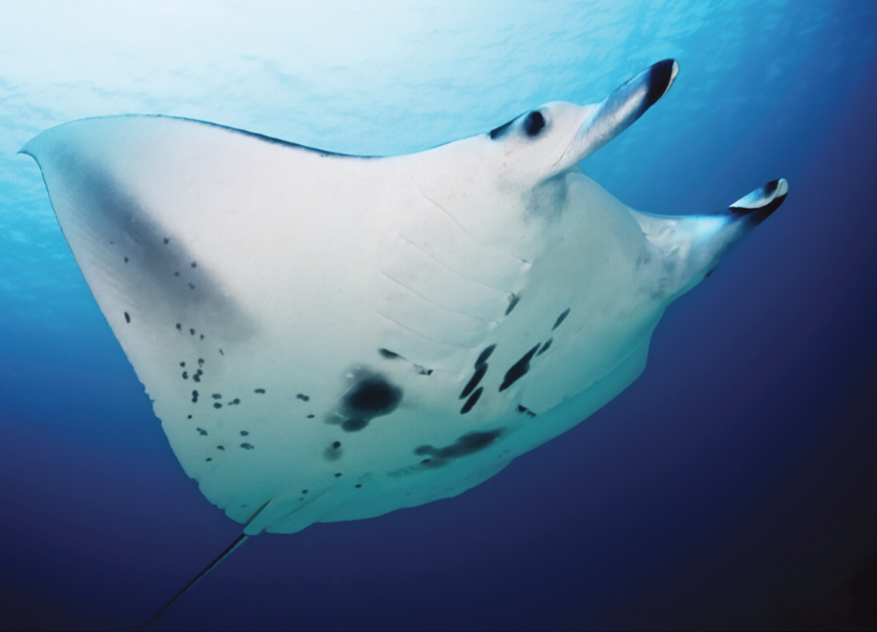
During the sweltering summer months from May through September, when water temperatures rise across the Red Sea, the outer reef walls of Dungonab Bay become the stage for one of the most extraordinary marine phenomena in the entire Western Indian Ocean region. Massive groups of giant manta rays assemble along these oceanic reef slopes in remarkable numbers, creating a spectacular marine aggregation found nowhere else along the African coast. …
07 Closing
As our guided audio exploration comes to a close, we reflect on the rare and remarkable wilderness of Dungonab Bay and Mukkawar Island Marine National Park. Here along the remote coast of northeastern Sudan, the stark, arid expanse of the desert meets the warm, vibrant turquoise waters of the Red Sea in perfect harmony. …