 Photo Wikimedia Commons
Contents
History & cultureBY TELLBY7 sections · numbered as on the map01 Orientation
Welcome to the historic Quartier France district of Grand-Bassam, a captivating coastal crossroads where the vibrant commercial legacy of West Africa intersects with the profound architectural and political memories of the modern era. The extraordinary urban landscape you are exploring today was officially inscribed on the UNESCO World Heritage list in June twenty twelve, celebrated globally for its outstanding universal cultural value. The fundamental justification for Grand-Bassam's UNESCO World Heritage designation lies in its remarkable urban synthesis: a meticulous integration of late nineteenth and early twentieth-century European colonial urban planning based on functionalist and hygienic principles, harmonious tropical bioclimatic architecture, and the deeply rooted living traditions of local African communities. Situated on a narrow, delicate sandbar surrounded by the Atlantic Ocean, the tranquil Ouladine Lagoon, and the mouth of the Comoé River, this environment was historically settled by the indigenous Abouré, N'zima, and Bétibé peoples. These communities originally relied on fishing and sea-salt production, eventually evolving into indispensable commercial intermediaries who orchestrated trade between European maritime merchants and inland African populations.
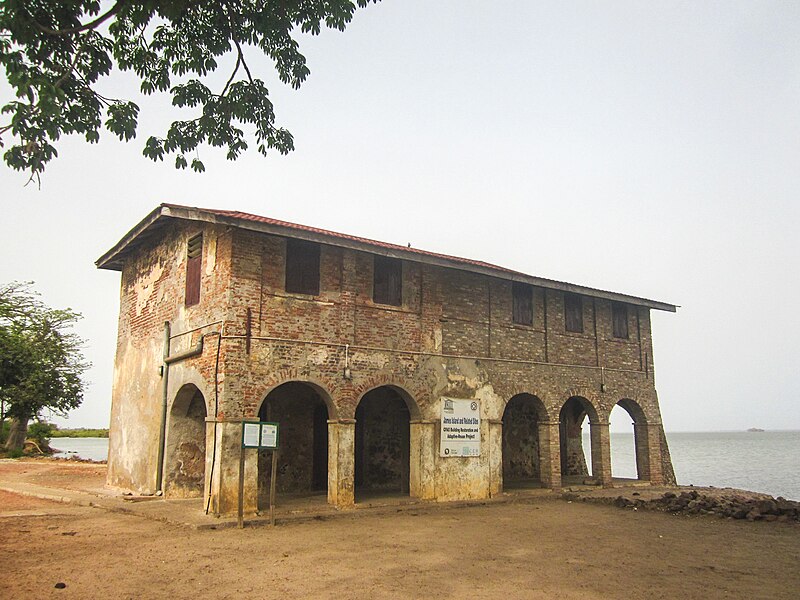
Our guided audio tour centers upon the monumental former headquarters of the Compagnie française de l'Afrique occidentale, universally recognized as the CFAO Building, while systematically exploring the defining historical landmarks of the surrounding French Quarter. Our walking journey begins directly in front of the grand arched facade and double-tiered arcades of the CFAO headquarters, where massive commercial networks spanning West Africa were once administered. From this historic trading portal, we will stroll toward the peaceful waterside of the Ouladine Lagoon to inspect the former dock and cargo warehouse grounds. Here, you will discover how imported manufactured goods arriving at the ocean wharf were transferred inland via lagoon waterways, while valuable mahogany timber logs, cocoa, and palm oil were assembled for international export.
Next, our route leads to the Former Post Office and Customs House, two prefabricated iron structures shipped directly from French foundries in eighteen ninety-four and subsequently linked by a central two-story bridge structure. This site became the epicenter of a telecommunications revolution when the submarine telegraph cable reached Grand-Bassam in eighteen ninety-three. We will then proceed to the Former Courthouse, a magnificent example of early twentieth-century reinforced concrete architecture that served as the judicial heart of colonial control. Finally, our historical walk culminates at Victory Bridge, where thousands of courageous women marched in December nineteen forty-nine to demand the release of political detainees. As you walk along these tree-lined grid avenues, you will witness how international commerce, architectural innovation, and the struggle for freedom intertwined to forge the enduring identity of Grand-Bassam.
02 Main Facade and Arcades of CFAO Building
The monumental structure standing directly before you today, the former headquarters of the Compagnie française de l'Afrique occidentale, serves as the most dramatic architectural testament to how an enterprise that originated from a modest peanut trading shop in eighteen fifty-two expanded into a colossal commercial empire spanning the entire West African continent. …
03 Lagoon Dock and Cargo Warehouses
Look out over the mirror-like, tranquil surface of the Ouladine Lagoon stretching peacefully before you. Though it appears today as a serene body of water framed by lush tropical vegetation, this exact waterfront was once the most vital logistics engine in West Africa, through which massive mahogany timber logs, thousands of sacks of cocoa, and heavy barrels of palm oil flowed continuously toward international markets. …
04 Former Post Office and Customs House
It is fascinating to reflect that the elegant architectural complex standing before you today was constructed entirely from prefabricated iron components engineered in French foundries in eighteen ninety-four, shipped across the Atlantic Ocean, and rapidly assembled on site as a pinnacle of late nineteenth-century building technology. …
05 Former Courthouse
The imposing Former Courthouse standing before you represents the most magnificent and definitive example of early twentieth-century reinforced concrete architecture constructed in West Africa. Built during the nineteen tens, this majestic structure marked a decisive transition from early wooden and iron prefabricated structures toward heavy reinforced concrete design, creating an unmistakable architectural statement of administrative and judicial authority. …
06 Victory Bridge
The bridge extending directly before your eyes is the legendary site of struggle where thousands of courageous women risked their lives on December twenty-fourth, nineteen forty-nine, marching forward to demand the immediate release of incarcerated political freedom fighters. While today it serves as a peaceful thoroughfare over which vehicles and pedestrians routinely pass, this structure witnessed one of the most brilliant victories in the history of West African national liberation…
07 Closing
We have now completed our comprehensive audio guide journey through the historic Quartier France district of Grand-Bassam, a unique urban landscape where the dramatic narratives of West African international trade and the resolute struggles for national emancipation intertw. From the iconic headquarters of the Compagnie française de l'Afrique occidentale, which evolved from a modest eighteen fifty-two peanut trading firm into an expansive commercial empire, to the serene shores of the Ouladine…