 Photo Wikimedia Commons
Contents
History & cultureBY TELLBY7 sections · numbered as on the map01 Orientation
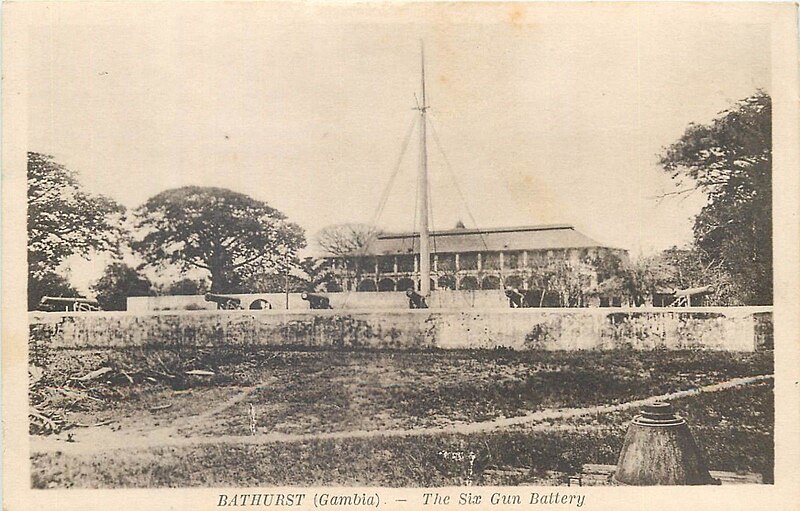
Welcome to the Six-Gun Battery, a historically profound military heritage site located at the mouth of the Gambia River in Banjul, inscribed as part of the UNESCO World Heritage property known as Kunta Kinteh Island and Related Sites. This location represents a pivotal turning point in the long and complex history of encounters between Africa and Europe along the Gambia River, a strategic waterway that served as the primary trade route reaching deep into the African interior. While earlier European fortifications constructed upriver were designed to facilitate, expand, and profit from the transatlantic trade in enslaved human beings and various raw commodities, the Six-Gun Battery stands as a rare and tangible monument to the subsequent era of military suppression and human liberation. In 2003, UNESCO designated this serial property, comprising seven distinct historic locations, including Kunta Kinteh Island, Fort Bullen, San Domingo, the Portuguese Chapel, the CFAO Building, the Maurel Frères Building, and this coastal battery. The overarching reason for its UNESCO World Heritage recognition lies in its extraordinary ability to illustrate a decisive historic turning point, marking the moment when European powers transitioned from actively operating the transatlantic slave trade to militarily enforcing its abolition along the Gambia River. As you stand here today, you are positioned near major civic landmarks in the heart of Banjul, the capital city of The Gambia, including the monumental Arch 22 and the official protected grounds of the State House. The settlement of Bathurst, which is known today as Banjul, was established in 1816 at the river mouth, and the Six-Gun Battery was built in that very same year to establish military dominance over the strategic estuary. As you look around, you can appreciate the unique geographic positioning of this battery, situated precisely where the fresh river current flows outward to meet the Atlantic ocean. This walking tour audio guide will lead you through a structured exploration across the battery enclosure. We will begin at the coastal fortification perimeter, examine the six heavy gun emplacements, gaze across the broad river estuary toward Fort Bullen at Barra, explore how the site is preserved inside the capital under the custodianship of national heritage institutions, and reflect upon its profound historical role as a counterweight to upriver slaving posts. Please prepare to step forward toward the coastal perimeter walls as we begin our exploration of this historic sanctuary dedicated to human freedom and rights.
02 The Coastal Fortification Perimeter
Welcome to the coastal fortification perimeter and entrance of the Six-Gun Battery. As you step into this historic military precinct, please direct your visual focus toward the solid stone walls and masonry structures that stretch along the coastal edge before you. The most surprising and fundamental historical fact to comprehend while standing at this spot is that, unlike the vast majority of historical forts, castles, and trading posts constructed by European powers along the West African…
03 The Six Heavy Gun Emplacements
Welcome to the spot of the Six Heavy Gun Emplacements. You are now standing at the primary firing line of the Six-Gun Battery, where heavy iron artillery was once strategically mounted to command the entrance of the Gambia River. As you look down at the semi-circular stone foundations and mounting positions where these heavy guns were positioned, the most striking tactical fact to appreciate is that these six guns were specifically paired with Fort Bullen, built a decade later in 1826 across…
04 The Strategic River Estuary
Welcome to the Gambia River Estuary Viewpoint. Direct your gaze outward across the wide, brownish river current flowing steadily from the African interior to merge with the rolling waves of the Atlantic Ocean. The most crucial geographic and historical fact to contemplate while standing at this viewpoint is that, for many centuries, the Gambia River served as the single most vital trade route reaching deep into the interior of West Africa. …
05 Preservation within the Capital
Welcome to the Preservation within the Capital section. This site offers a remarkable setting where the modern governance of Banjul meets well-preserved military heritage. The most striking preservation fact to appreciate at this spot is that while upriver heritage sites, most notably the fort on Kunta Kinteh Island, have suffered severe, continuous water erosion that has drastically reduced the island size and caused large portions of its ruined walls to collapse into the river, the Six-Gun…
06 The Turning Point of Human History
Welcome to the Turning Point of Human History section. At this location, please take a moment to turn around and view the entire battery structure from end to end. The most profound historical truth to comprehend while taking in this complete panorama is that the Six-Gun Battery stands as the direct historical counterweight to James Fort on Kunta Kinteh Island, located thirty kilometers upriver. …
07 Closing
As we bring our audio tour of the Six-Gun Battery to a close, we reflect upon the profound emotional and historical weight of this extraordinary World Heritage site. Constructed in 1816 following the abolition of the slave trade within the British Empire, this battery stands as a physical testament to a pivotal turning point in human history. …