Contents
History & cultureBY TELLBY7 sections · numbered as on the map01 Orientation
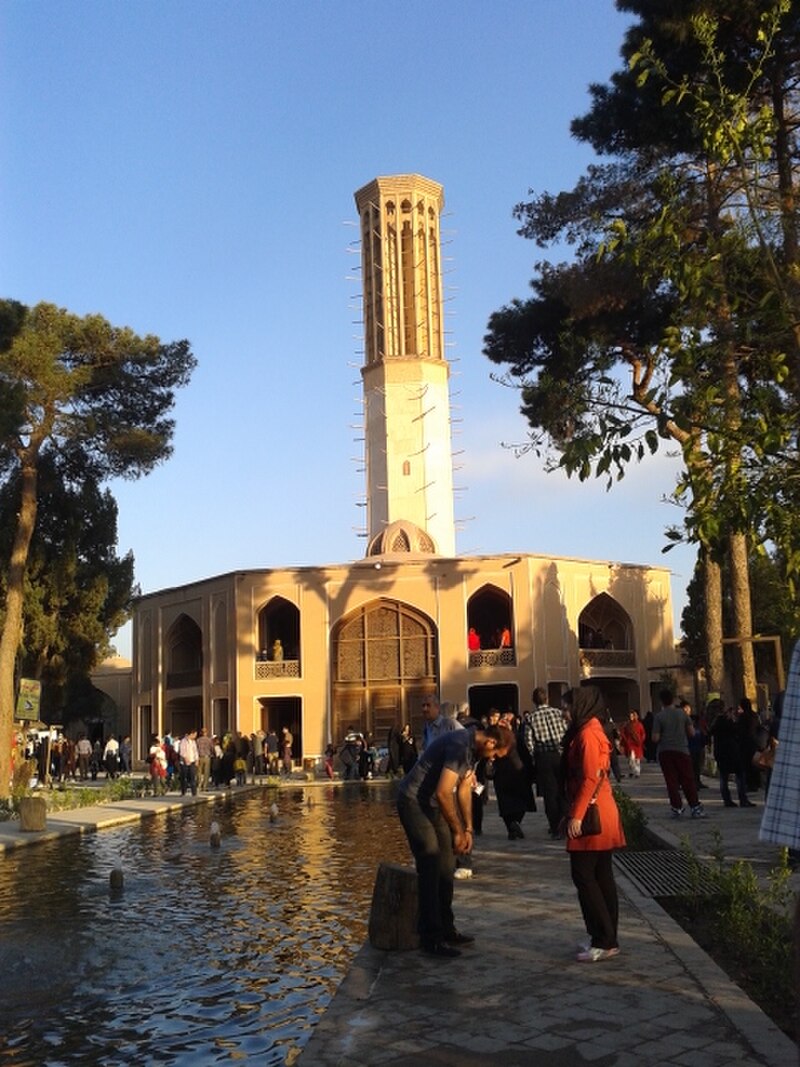
Welcome to Dowlatabad Garden, a lush oasis flourishing gracefully amidst the arid desert landscape of Yazd. As one of the nine historic sanctuaries that collectively comprise the Persian Garden inscribed on the UNESCO World Heritage list in 2011, and later re-recognized in 2017 as an integral component of the Historic City of Yazd, this site stands as a supreme monument to human ingenuity and environmental adaptation. Officially designated as Iran National Heritage Site number 774 in March 1968, the garden encompasses an expanse of approximately 40,000 square meters, representing a masterly synthesis of traditional Persian landscape design and passive desert architecture. Historically, the vibrant life of this sanctuary was sustained by an extraordinary subterranean qanat aqueduct system stretching 65 kilometers from the elevated mountain heights of Mehriz. Engineered with five principal feeder branches, this historic underground watercourse once traversed vast desert distances, powering hydro-driven watermills and irrigating expansive agricultural fields before reaching the estate. Although the ancient qanat no longer supplies water today, the complex continues to flourish using a semi-deep well situated near the eastern service precinct, ensuring that its monumental pools, bubbling fountains, and diverse botanical species remain continuously refreshed. Architecturally, Dowlatabad Garden is structured into two principal, mutually perpendicular rectangular zones: the Andaruni, which served as the private residential realm for the ruler and his family, and the Biruni, also known as the Jolokhan, which was designated for official state receptions, administrative governance, and public assemblies. Your guided audio itinerary will begin at the outer mud-brick entrance precinct of the Jolokhan and proceed down the prominent central axis dominated by an incredible 208-meter-long water channel. As you walk this path, you will explore the octagonal Hashti summer pavilion, crowned by its world-record 33.8-meter-tall adobe windcatcher, admire the luminous stained-glass Orosi windows, and conclude at the south-facing winter pavilion known as Behesht Ayin. Please follow our narrative steps to experience the sophisticated hydraulic engineering and passive cooling masterworks created by Persian architects centuries ago.
02 Outer Section & Main Entrance / Jolokhan
Around the year 1740, during the transitional period of the late Afsharid era coexisting with the reign of Karim Khan Zand, Mohammad Taghi Khan Bafqi, the esteemed governor of Yazd and head of the local Khans, established this monumental forty-thousand-square-meter garden estate in the middle of an otherwise arid desert landscape. …
03 Central Long Pool & Garden Axis
Stretching directly along the primary garden path before you, this prominent central water avenue holds the prestigious distinction of being the longest central pool among all surviving historic Persian gardens in Iran, measuring an incredible two hundred and eight meters in length. Please pause along the stone pathway and direct your attention down the expansive blue marble water channel extending into the distance. …
04 Hashti Pavilion & Mirror / Orosi Hall
As you step into the octagonal summer pavilion known as the Hashti building, direct sunlight passing through the latticed Orosi windows projects a brilliant mosaic of rainbow light across the marble floor, serving not only aesthetic elegance but also practical secrets such as deterring mosquitoes and according to local beliefs helping prevent depression and Alzheimer's disease. …
05 The Great Windcatcher / Badgir
Soaring majestically above the roof of the Hashti pavilion, this legendary windcatcher measures an extraordinary 33.8 meters in height, holding the supreme world record as the tallest adobe-made windcatcher in existence while operating entirely without electricity to convert scorching desert air into near-freezing breezes. …
06 Behesht Ayin Pavilion & Inner Courtyard
Positioned in precise axial symmetry directly opposite the Hashti summer pavilion, the Behesht Ayin pavilion possesses the remarkable architectural secret of being engineered specifically as a south-facing winter residence optimized to absorb maximum natural solar radiation during the cold desert months. Please step forward toward the stone-paved threshold of the Behesht Ayin structure and observe the geometric water basins and garden spatial layout before you. …
07 Closing
The journey you have experienced today through Dowlatabad Garden offers a profound encounter with one of the most remarkable achievements of Persian landscape architecture and environmental engineering. In an unforgiving desert climate characterized by extreme heat and scarce water, ancient Iranian master builders refused to be limited by natural constraints, ingeniously synthesizing water, wind, earth, and sunlight to cultivate an enduring paradise on earth. …