 Photo Wikimedia Commons
Contents
History & cultureBY TELLBY8 sections · numbered as on the map01 Orientation
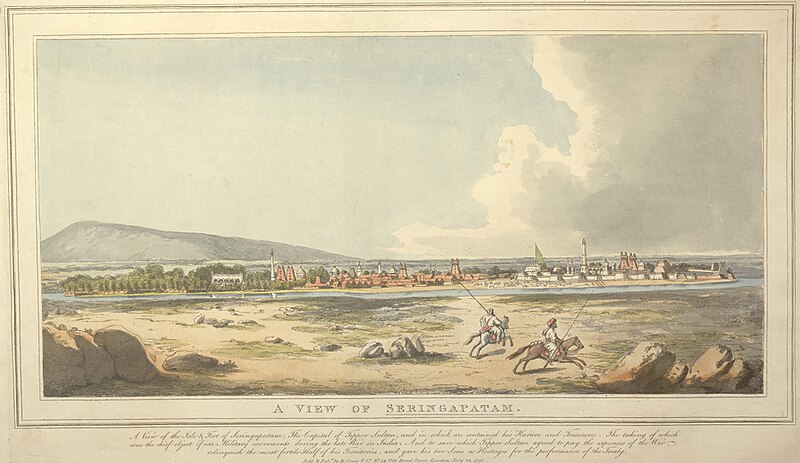
Located in the Mandya district of Karnataka state in southern India, Srirangapatna is a magnificent island town formed where the mighty Kaveri River divides into two flowing streams. Enclosed by the main Kaveri River to the east and the tranquil Paschima Vaahini segment to the west, the entire island stands as a formidable natural fortress. This revered land has carried deep historical and spiritual significance since ancient times, deriving its name from the grand temple consecrated in nine hundred eighty four CE by the patrons of the Western Ganga dynasty. During the high era of the Vijayanagara Empire, Srirangapatna served as a major seat of viceroyalty, overseeing neighboring vassal territories such as Mysore and Talakad. In sixteen ten, Raja Wodeyar the First vanquished the Vijayanagara viceroy Rangaraya and celebrated the ten day Navaratri festival here, establishing Srirangapatna as the ultimate symbol of sovereignty over the Kingdom of Mysore. From that moment onward, controlling this strategic fort and presiding over the Navaratri festival dedicated to the patron goddess Chamundeshwari demonstrated absolute royal authority. In the late eighteenth century, under the leadership of Sultan Hyder Ali and his eldest son Tipu Sultan, celebrated worldwide as the Tiger of Mysore, Srirangapatna rose to international prominence as the powerhouse capital of the sovereign Khudadad State. Tipu Sultan transformed his kingdom through extraordinary military innovations, diplomatic maneuvering, and progressive administrative reforms. Inspired by Ottoman technology, he created the specialized Rocket Corps, deploying iron cased Mysorean war rockets that revolutionized military tactics and influenced global rocketry for generations. He forged strategic alliances with foreign powers including France and the Ottoman Empire, bringing French military experts to modernize his armies and constructing formidable double ramparts around the island. However, the expanding ambitions of the British East India Company led to a series of intense conflicts known as the Anglo Mysore Wars. In seventeen ninety nine, during the Fourth Anglo Mysore War, a joint allied force of fifty thousand men under General George Harris and future Duke of Wellington Arthur Wellesley besieged the island capital. On May fourth, seventeen ninety nine, Tipu Sultan was slain while courageously defending his fort near the Water Gate. Though the fall of Srirangapatna marked the end of Mysorean independence, the timeless monuments of this historic island town remain nominated on the tentative list of UNESCO World Heritage Sites, preserving the heroic legacy of the Tiger of Mysore for all generations.
02 Sri Ranganathaswamy Temple: The Sacred Heart of the Island
Standing in quiet majesty in the northwestern section of the river island, the Sri Ranganathaswamy Temple is the sacred heart of Srirangapatna and the very origin of the town's historic name. This revered shrine was originally consecrated in nine hundred eighty four CE under the royal patronage of the Western Ganga dynasty. …
03 Srirangapatna Fort: The Last Bastion of Mysore
Dominating the western section of the river island, Srirangapatna Fort stood as the ultimate military bastion and the final line of defense for the Kingdom of Mysore. Surrounded by the natural water barrier of the surging Kaveri River, the fortress was fortified with massive double ramparts constructed from thick hand carved stone blocks. …
04 Colonel Bailey's Dungeon: Prisoners of War and the Final Breach
Nestled beneath the northern ramparts of Srirangapatna Fort, Colonel Bailey's Dungeon is a dark vaulted underground chamber that holds the sobering memory of prisoners of war and the tragic climax of the Anglo Mysore Wars. Built beneath the heavy stone arches of the fortress wall, this subterranean prison was characterized by damp conditions, low stone ceilings, and minimal natural light, where iron rings embedded in stone walls still mark where prisoners were chained. …
05 Daria Daulat Bagh: The Summer Palace of Teakwood
Set amidst lush manicured gardens on the eastern side of the island, Daria Daulat Bagh, meaning Wealth of the Sea, is the exquisite summer palace constructed by Tipu Sultan in seventeen eighty four. Built predominantly from high quality teakwood, this masterpiece of Indo Saracenic architecture rests upon a raised stone platform with a balanced rectangular layout. …
06 Gumbaz: The Final Resting Place of the Tiger of Mysore
Situated at the eastern tip of Srirangapatna amidst beautifully landscaped gardens, the Gumbaz is an impeccably detailed mausoleum holding the mortal remains of the Kingdom of Mysore's greatest historical figures. Tipu Sultan constructed this impressive Islamic mausoleum in seventeen eighty four to honor his father, Sultan Hyder Ali, and his mother, Fatima Begum. …
07 Wellesley Bridge: Historic Stone Engineering Across the Kaveri
Spanning the northern branch of the surging Kaveri River, Wellesley Bridge stands as a magnificent monument to early nineteenth century stone engineering and historical transition in Srirangapatna. The bridge was erected in eighteen hundred four by Dewan Purnaiah, the visionary chief minister of the Kingdom of Mysore who served during the transitional period following the death of Tipu Sultan. …
08 Closing
Thank you for joining this audio tour through the historic island town of Srirangapatna, cradled by the sacred waters of the Kaveri River. Today, we have traversed over a millennium of captivating history, beginning at the ancient Sri Ranganathaswamy Temple consecrated in nine hundred eighty four CE, through the formidable double ramparts of Srirangapatna Fort, the dark subterranean vaults of Colonel Bailey's Dungeon, the elegant teakwood summer palace of Daria Daulat Bagh, the somber mausoleum…