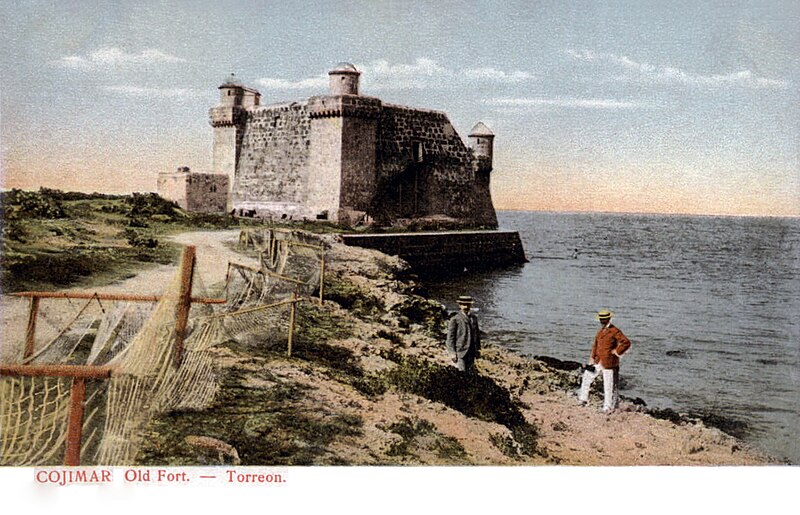
 Photo Wikimedia Commons
Contents
History & cultureBY TELLBY7 sections · numbered as on the map01 Orientation
Welcome to the serene seaside settlement of Cojimar, located approximately seven kilometers east of the lively historical heart of Havana, Cuba. You are standing before the evocative stone watchtower known as Torreon de Cojimar, an essential component of the UNESCO World Heritage property designated as Old Havana and its Fortification System in nineteen eighty two. Initially established by Spanish colonizers in fifteen nineteen on the northwestern shore of the island, Havana rapidly rose to prominence due to its extraordinarily sheltered bay and advantageous position along transatlantic navigation routes. In sixteen zero seven, Havana was officially named the capital of Cuba, serving as the compulsory assembly hub for the vast Spanish treasure fleets that gathered laden with immense wealth from Mexico and Peru before embarking on the perilous voyage back to Europe. To safeguard this invaluable maritime choke point against relentless raids by foreign privateers, corsairs, and competing imperial powers, Spanish engineers constructed the most formidable network of stone fortifications in the Americas. While monumental fortresses like La Cabaña and El Morro guarded the narrow neck of Havana Harbor, smaller coastal sentinels were positioned at strategic outer points along the shoreline. The compact bastion standing before you was erected precisely where the fresh current of the Cojimar River empties into the vast Atlantic Ocean, defending the vulnerable eastern maritime approach to the capital. By maintaining a constant garrison at this coastal river mouth, Spanish military commanders ensured that no hostile fleet could secretly anchor along these eastern beaches or deploy amphibious landing parties to bypass the primary city defenses. As you look out over the gentle coastal waters and breathe in the salty Atlantic breeze, you can sense the deep historical layers of defense, civic devotion, and coastal culture that define this picturesque sanctuary. Beyond its historic role as a military shield, Cojimar later transformed into a tranquil fishing village that captured the imagination of celebrated literary figures, most notably Ernest Hemingway, who found enduring creative inspiration along these very shores. Today, the weathered limestone masonry stands as a monument to human resilience, architectural ingenuity, and coastal heritage. This orientation introduces you to a site where colonial strategy, community dedication, and serene maritime beauty harmoniously converge. Prepare now to walk around the fortress grounds as we uncover the fascinating stories of the architects, local defenders, and literary legends who sculpted the enduring spirit of Cojimar.
02 The Stone Walls Built by Local Villagers
Remarkably, this formidable stone fortress was not financed by the royal treasury of the Spanish empire, but was instead directly funded by the local coastal villagers who collected twenty thousand ducats themselves when the imperial government lacked the funds to construct defenses. Look directly ahead at the thick, weathered stone blocks and heavy mortar joints that form the lower exterior walls standing right before you. …
03 The Heroic Resistance at the Central Tower
Astonishingly, in seventeen sixty two, during the epic British invasion of Havana during the Seven Years War, this single tower stood as the initial frontline defense against the massive fleet of English warships pounding the coastline. Direct your gaze upward toward the upper parapets, watchtower battlements, and observation balcony positioned right above the main fortress entrance. …
04 Guarding the Cojímar River Inlet
Astonishingly, the primary strategic reason for constructing this coastal fort was not merely to engage enemy warships in heavy artillery duels, but to aggressively prevent hostile pirates and foreign corsairs from plundering the vital fresh water supply of the Cojimar River. Direct your eyes toward the calm water inlet situated immediately adjacent to the fortress walls, where the clear fresh water of the river flows into the expansive Atlantic Ocean. …
05 The Seaward Battery & Coastal Cannons
Remarkably, as military technology evolved across the centuries, modern late nineteenth century breech loading artillery pieces such as the fifteen centimeter Ordoñez gun were added along this coastline at nearby Battery No 1 to maintain the region in a state of perpetual battle readiness. Direct your gaze toward the seaward stone embrasures of the platform and out toward the open field along the coastal highway just west of the tower. …
06 The Fisherman's Village & Literary Legacy
Astonishingly, this historic defensive fortress setting directly inspired the world famous author Ernest Hemingway to choose Cojimar as the home port for his wooden fishing boat El Pilar and as the primary setting for his Nobel Prize winning literary masterpiece, The Old Man and the Sea. Point your gaze down the shoreline toward the charming coastal promenade and the nearby waterfront restaurant known as La Terraza, situated right along the water edge. …
07 Closing
Today, we have journeyed together through the captivating history and timeless coastal charm of Torreon de Cojimar, a extraordinary military sentinel whose story began with the remarkable civic initiative and financial devotion of seventeenth century local villagers. Constructed through twenty thousand ducats collected by the community itself when colonial coffers were empty, this compact limestone watchtower initially served as a vital shield protecting the river mouth fresh water from…